A recent Washington Post editorial reports some good news about sub-Saharan Africa: the regional economy grew by an estimated 4.1 percent in 2025. The editorial argues that this demonstrates that while the “abrupt change” made to US foreign assistance last year was “messy,” it “forced governments to reform fast.” That dramatically underplays the “messy,” and there is little evidence for the reform claim.
To start with the good news, it is certainly true that “charity isn’t the main driver of Africa’s destiny,” as the editorial argues (though the choice of the word “charity” is worth questioning). In overall macroeconomic terms, the US aid cuts were fairly insignificant at the regional level. The editorial suggests that US aid fell to $7.86 billion in 2025, down from $12.1 billion in the last year of the Biden administration. Foreignassistance.gov suggests $17 billion of economic aid to the region in 2024 and (based on incomplete data from the State Department) $8.2 billion in 2025. But even assuming the decline was as large as $9 billion rather than $4 billion, as the editorial suggests, that’s still just 0.5 percent of the region’s GNI.
Furthermore, US aid was focused on health and humanitarian assistance: key to long-term stability and prosperity, but hardly a major factor in short-term growth outcomes. If you are looking for recent US administration actions that are likely to have more dramatic short- and medium-term economic consequences for the region as a whole, I point to trade policy, war, and, over the longer term, migration policy.
That’s all reason enough that it would be a surprise if the US aid cuts were driving general macroeconomic policy changes in many African countries, despite the editorial’s implication that, because of the cuts, “some countries, including Uganda, Kenya, Rwanda and Nigeria, have made revenue collection more efficient through digitization. Kenya, Nigeria, Angola, and Ethiopia, meanwhile, began removing inefficient fuel subsidies to free up money to cover the fiscal gap.” And indeed, the linked sources provide scant evidence to back that claim:
- A report from Uganda of various amendments proposed to the tax code in April last year, including tax exemptions for hydropower and solar lanterns, aircraft, local business startups, and income earned by the Atomic Energy Agency.
- An analysis of changes between 2023 and 2024 to the Kenyan tax regulatory framework that will allow tax returns to be checked against electronic databases in 2026.
- A blog post on the 2025 Mobile World Congress held in Rwanda that briefly refers to a study of “how digital payments and interoperable rails can be leveraged by tax administrations without deterring usage,” but doesn’t refer to any policy changes last year.
- A blog post on a 2025 forum held in Nigeria that included an analysis of subnational tax authority readiness to adopt digital public infrastructure, but reported no specific new legislation or action.
- A report on G20 and associated meetings in South Africa last year that notes the South African presidency put “digital transformation, fiscal resilience, and inclusive development at the center of the global agenda” but did not discuss any particular 2025 reforms.
- The 2026 Kenyan budget is opaque on fuel subsidies, but it appears that, if anything, fuel subsidies in Kenya were temporarily reintroduced last year.
- A report on Nigeria’s decision to end fuel subsidies in 2023, noting that for many Nigerians, the promised gains from subsidy removal remained distant and intangible.
- A report of a phased subsidy removal in Angola, which has been ongoing since 2023.
It is little surprise that none of the linked sources reference foreign aid cuts as driving any of the decisions involved. African reform is happening despite, not because of US aid cuts—indeed, USAID previously backed reform and modernization of tax systems in the region (a program that was fed into the wood chipper).
Again, the editorial suggests that “facing the aid cuts and forced into self-reliance, many African governments stepped up with long-needed reforms.” But that’s not the story told by the linked articles. The first link reports that Kenya’s ministry of health is looking for about $1 million to digitize health records and $230 million to sustain essential services previously supported by the US. The article quotes Kenya’s National Assembly Health Committee chair James Nyikal: “We are looking for [$230 million], and the money’s not there.”
The second link is to a blog by my CGD colleague Biniam Bedasso, who suggests the largest response to the cuts has been “governments focusing on immediate continuity and risk management in the face of disrupted external financing for essential [health] services” and a longer-term effort “channeled through multilateral programs and cooperation agreements with partners such as China.” Worryingly, Bedasso also notes that “humanitarian and social protection responses appear relatively limited, despite the large humanitarian footprint of US assistance.”
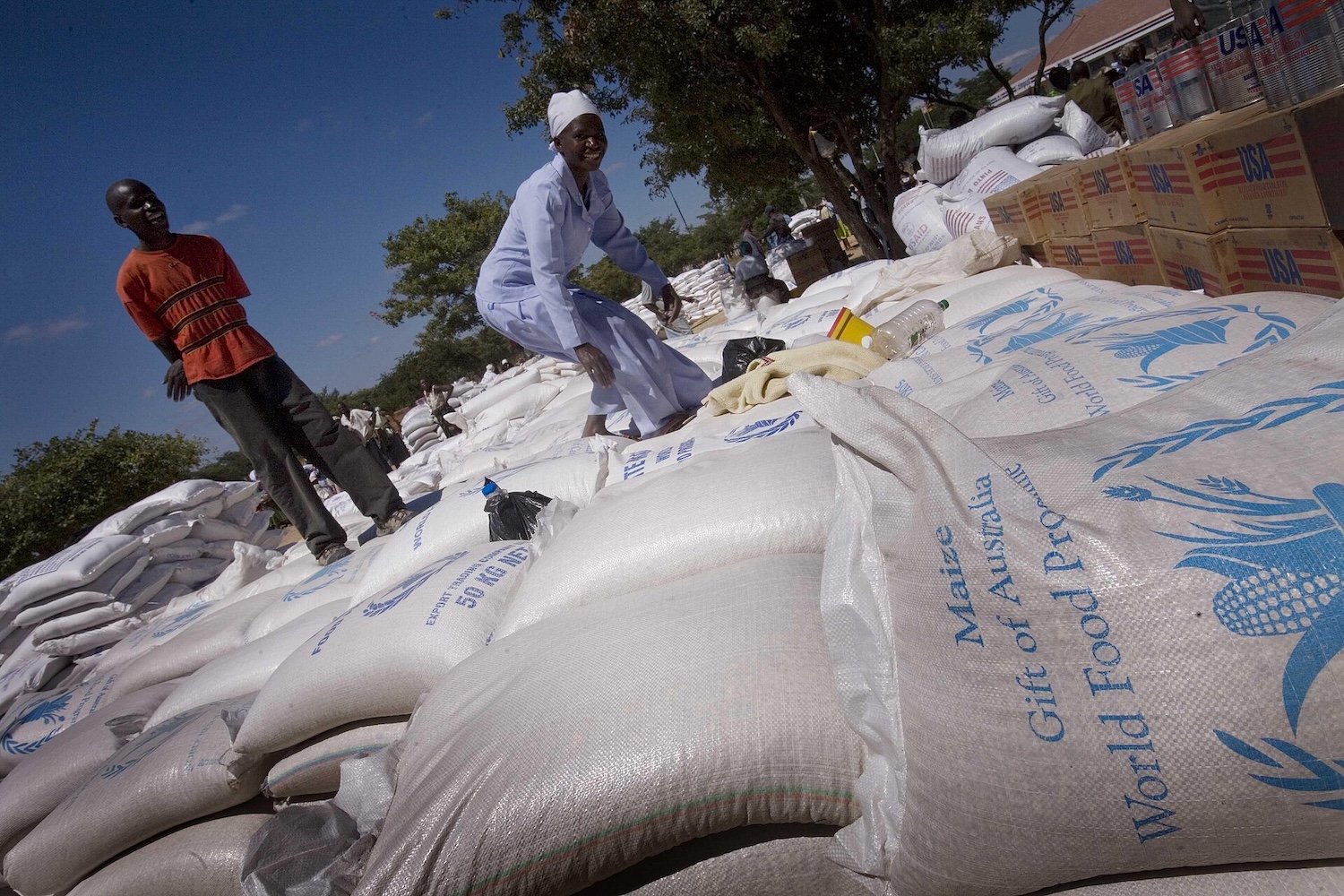
And that speaks to the “messy” bit. While US assistance and the cuts are small compared to the regional economy, they are much larger in particular countries. Based on 2023 data, CGD colleagues estimated last year that US assistance was about 10 percent of Somalia’s and South Sudan’s GNI, 4 percent of Liberia’s, and perhaps 2 percent of the Democratic Republic of the Congo’s. And the finance is concentrated on health and humanitarian sectors, providing basic lifesaving assistance. In those sectors in particular, US support was and is vital, with 2023 US health assistance larger than domestic government health expenditure in Somalia, South Sudan, and Malawi, for example.
The editorial accepts “there has been pain, particularly in health care.” It suggests “aid targeting dire needs in places like war-torn Sudan makes sense,” and notes funding for the PEPFAR program to combat HIV/AIDS “was drastically curtailed, despite saving millions of lives for relatively little expense to American taxpayers.” These caveats matter, even if the editorial argues that “apocalyptic” forecasts of impact were off target thanks to the region’s “remarkable resilience.”
I think the very patchy evidence we have so far does suggest that forecasts of the potential for many millions or hundreds of thousands of lives lost most likely haven’t (yet) materialized. Antiretroviral delivery has (apparently) mostly recovered from declines at the start of last year, and vaccine delivery has been sustained so far. The picture regarding humanitarian support and efforts to combat malaria is much less clear. That’s all due to a number of factors:
- Thanks in part to pressure applied by Congress and others, the administration did not cut programs as deeply as it had originally planned. There was some effort to preserve lifesaving assistance programs, reopen closed awards, or fund previously terminated activities through other awards. (You can tell this took outside pressure because the administration keeps trying to cut more).
- There was a strong local government response in some cases—in particular, South Africa moved to ensure lifesaving HIV/AIDS treatment programs were largely (far from completely) preserved.
- Providers focused on the most urgent needs and used their reserves: there were stocks of medications and treatments in the pipeline, and people were willing to work without pay. Individuals used coping mechanisms—such as selling off assets to avoid even worse hunger, for example.
- People don’t get sick or die at once: missing a vaccination doesn’t mean you’ll get sick today, for example, but it considerably increases the long-term risk of getting infected (as many Americans are learning).
But many people have already gotten sick, many have suffered from malnutrition, and many have died, as the Washington Post itself has reported. Life-saving services, especially those supporting hard-to-reach communities, have been shuttered. This is more than just “messy.” And it will continue, especially if greater support doesn’t arrive on time, as providers and individuals’ coping mechanisms fail.
Not least, the imminent collapse of a massive US-funded HIV/AIDS commodities and service delivery contract and delayed CDC funding for HIV/AIDS prevention and treatment programs both need urgent resolution if the chaos of early last year is not to resume. The administration should urgently restart funding for global vaccination programs. And it should publish the data it is meant to publish on the status of HIV/AIDS and malaria programmatic delivery, and provide information on how it plans to avoid a significant increase in global malaria burden, as well as malnutrition, disease, and death in humanitarian settings. These would all be worthy subjects for Washington Post editorials.