The architecture of global power is cracking, but Europe’s attitude to African engagement remains rooted in a past that cast the continent as an object of benevolence rather than a strategic partner. The Second Global Gateway Forum in Brussels made this painfully clear. The leaders of six African countries made the journey to Europe. Yet, from the European side, aside from the Commission’s leadership, only the Prime Minister of Luxembourg and the Deputy Prime Ministers of Poland and Belgium showed up. As one EU diplomat confessed to the South China Morning Post’s Finbarr Bermingham, “This was not a great look.” It was more than that: it was symbolic of the very low priority Europe assigns to its southern neighbor.
Europe’s strategic drift
The global order that sustained Europe’s prosperity is eroding. The US has turned inward, increasingly consumed by domestic division and economic nationalism. China, by contrast, projects confidence—assertively reshaping supply chains, building infrastructure, and setting new cost-effective and appropriate standards across the Global South. Europe sits between them, struggling for relevance, torn between dependency on the US for security, and competition with China for influence, while European products slowly but surely lose market share due to their expense and lack of innovation.
In this environment, Africa represents Europe’s best chance at renewal: a 1.3-billion-person market with vast resources, youthful demographics, and proximity that no other major bloc can match. Yet instead of building structural economic interdependence, Europe reaches reflexively for the language and instruments of development aid combined with anti-immigration sentiment. Its “partnerships” remain donor-driven, designed to announce disbursements rather than to build industries.
The result is a steady erosion of trust. African leaders see the contrast between Europe’s rhetoric and its action. Compare attendance at the Global Gateway Forum to China’s Belt and Road Forum. China offers loans and infrastructure—self-interested, yes, but concrete (excuse the pun). Europe offers talking-shop panels and pledges wrapped in conditionality, dressed up as environmental or social safeguards. In a world of collapsing certainties, Europe is missing the one strategic relationship that could anchor its future.
Reframing the relationship
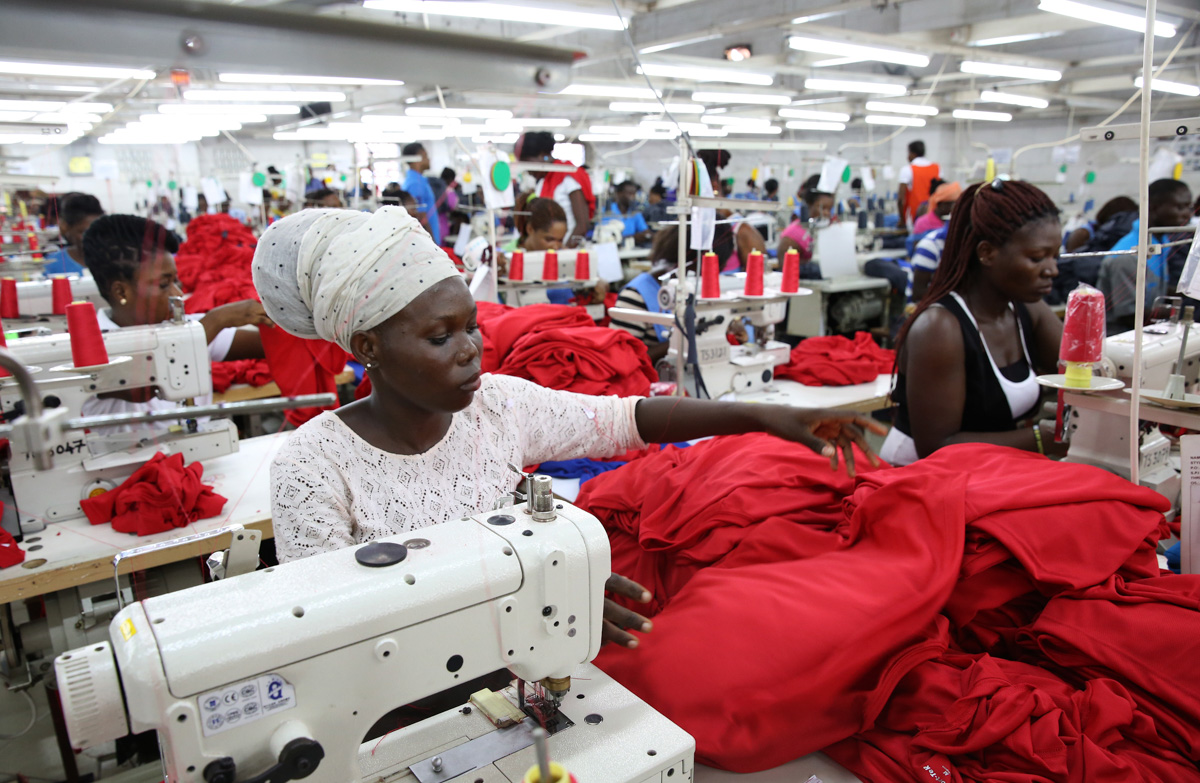
Europe’s path forward would mean embracing industrial partnership as the organizing principle of cooperation. That means equity investment and highly concessional lending, not charity. It means locating parts of Europe’s value chains in Africa—assembling machinery, processing raw materials, manufacturing intermediary goods—not merely extracting commodities or offering training workshops.
For example, Africa holds the minerals essential to Europe’s green transition—cobalt, manganese, graphite, nickel, lithium. Yet nearly all are exported unprocessed. The OECD reports that close to half of the countries in Africa have either issued outright bans or restrictions against the export of unprocessed commodities. There is thus an opportunity for a new relationship that would finance refining, precursor manufacturing, and component assembly in Africa, integrating African plants into European battery and automotive supply networks, and supporting the logistics to export across the continent as well as back to Europe. This would create jobs in Africa and diversify Europe’s supply chains—genuine reciprocity replacing token solidarity.
Europe’s risk paradox
European firms routinely cite “risk” as the barrier to investment in Africa. Yet that same capital rushes to Asia, Latin America, or the Gulf—regions that are no less volatile but where governments deliberately build predictable frameworks and regional markets. Africa’s Continental Free Trade Area is precisely such a framework. Europe should recognize it as the natural counterpart to its own single market and build trade and industrial agreements with the AU rather than piecemeal bilateral deals.
The Global Gateway could have been the instrument for this—Europe’s response to China’s Belt and Road Initiative. But when only a handful of European leaders appear to meet a full contingent of African heads of state, the message is unmistakable: Europe still sees Africa as an audience, not an equal.
The power of collective leverage
Africa also bears responsibility for this state of affairs. No single African country can negotiate as a peer to Europe. Fragmentation ensures weakness. The continent’s experience during COVID-19 illustrated that well: when pharmaceutical firms dismissed African vaccine requests as too small to matter, the African Union and Afreximbank created the Africa Vaccine Acquisition Task Team (AVATT). By pooling orders, they transformed dozens of marginal buyers into a single, irresistible client. Vaccines followed.
This model of collective leverage must now be applied to infrastructure, energy, digital, and industrial negotiations with Europe. Whether securing technology transfer or access to climate finance, Africa’s power lies in acting as one. Europe understands this logic—it is how the EU itself became formidable. Africa should learn from it, not plead before it.
Shared survival
For Europe, the fact is that closer ties with Africa are not an act of altruism; they are a matter of survival. The European continent’s aging population, energy dependence, and declining industrial base demand access to younger labor markets, natural resources, and growth frontiers. Africa offers all three. For Africa, partnership with Europe provides access to advanced technology, standards, and capital that can accelerate structural transformation.
Both sides therefore face a simple choice: reimagine the relationship or drift into irrelevance. China will continue building; the United States will continue retreating. A Europe that fails to anchor itself economically to Africa will find its voice fading in the new order. And an Africa that continues to negotiate as supplicants will remain trapped in extraction and aid.
Mutual accountability
Ultimately, both sides must also reject the moral theater that has defined their interaction. Europe hides strategic self-interest behind the language of “good governance” and “capacity building.” Africa, in turn, sometimes reflexively leans on pity and helplessness to extract aid without strategic planning. The result is stagnation. True partnership demands transparency: African ownership stakes in European-backed projects, European acceptance of African oversight, and mutual accountability for outcomes.
Development should no longer be measured by grant flows but by shared assets—industrial parks, energy corridors, logistics chains, and digital infrastructure co-owned by African and European entities. That is what equality looks like.
The way forward
A meaningful reset would involve:
- Recasting the Global Gateway as an industrial-investment platform, not a grant window.
- Negotiating continent-to-continent frameworks between the African Union and the EU, aligned with the AfCFTA.
- Embedding technology transfer, local equity, and joint Research & Development into every project.
- Adopting pooled African bargaining across sectors—replicating the AVATT model.
- Institutionalizing African representation in EU decision-making forums on trade and energy.
These are measurable, concrete steps—not slogans. The world is shifting from a rules-based order to a power-based one. In that transition, equality is not granted; it is asserted. Europe must decide whether it will share power with Africa or merely preach partnership while practicing paternalism. Africa must decide whether it will act as one or continue as a discordant chorus of weak voices.
If both rise to the challenge, they could build the most consequential north-south alliance of the 21st century—rooted not in guilt or gratitude but in shared interest. If they fail, history will record that even as the old order crumbled, Europe and Africa clung to the habits of a dying world.