Recommended
VIDEO
Methane Reduction for Climate and Development
As part of a CGD project on methane reduction and health outcomes, we’re distilling lessons from natural gas flaring in countries like Brazil and Nigeria, identifying the major challenges ahead, and highlighting effective policies to curb emissions. We begin with Brazil, whose experiences and challenges with gas flaring—and relative success so far—offer important lessons on opportunities for improved policies to limit wasteful emissions. Such action increases government revenues and energy access while protecting the health and livelihood of local communities and the world at large.
Background
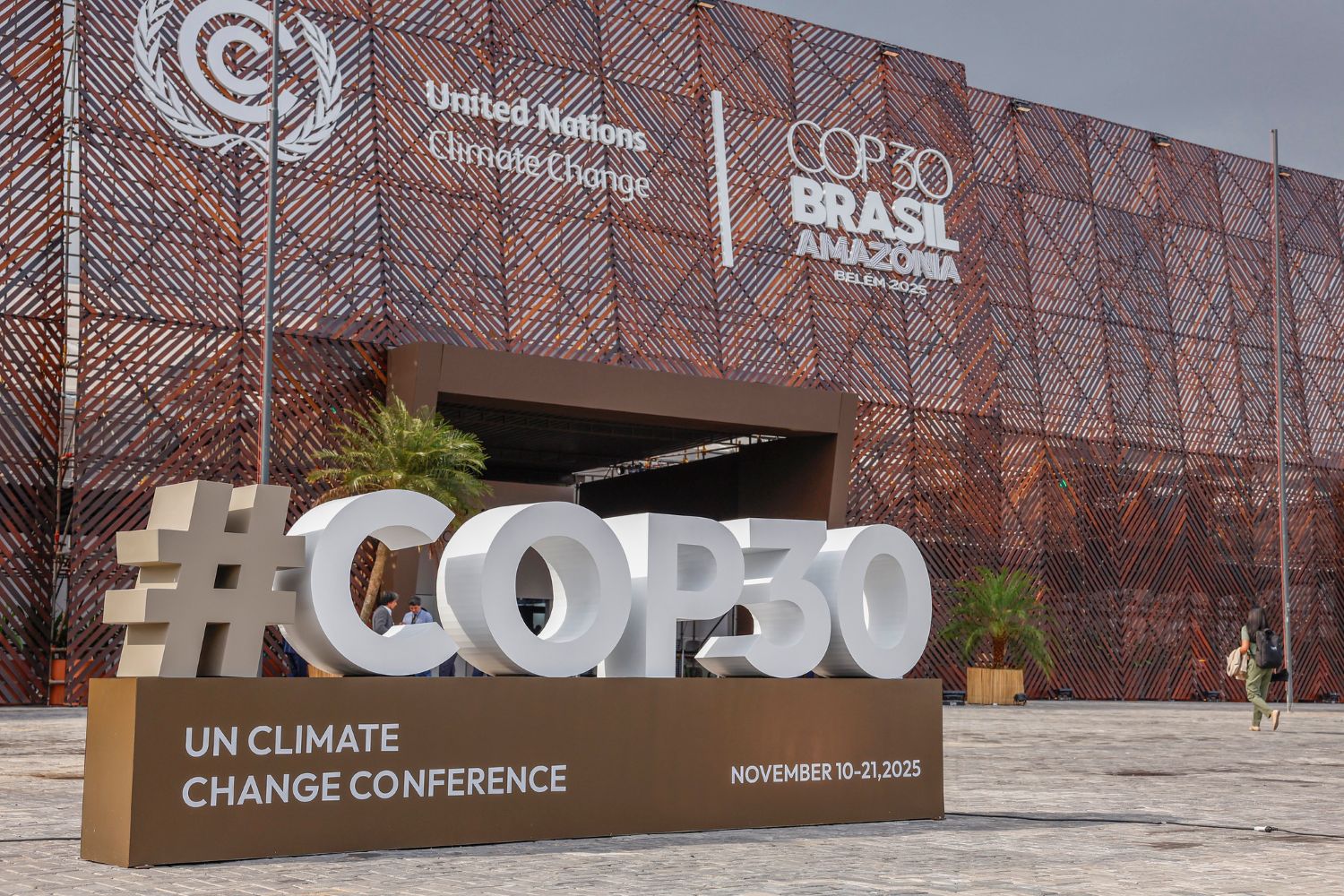
Brazil’s leadership at COP 30 has brought to the fore a key dilemma facing many emerging market and developing countries: how to spur economic development through oil and gas production and benefit from the higher revenues it brings, without causing pollution and damaging the environment. Faced with large debt, pressures for higher public expenditure, and a desire to stimulate investment and economic growth, Brazil, like many other countries, sees the attraction of higher revenues from increased oil and gas output. At the same time, preserving the environment, including the Amazon region, is a fundamental policy goal. Brazil has taken the leadership role at COP 30 in advocating for a global fund to protect forests. It does so while having oil and gas operations in the Amazon, allowing significant additional exploration in mostly undisturbed rainforest, and planning a major offshore expansion at the mouth of the Amazon. Brazil will decide how to pursue these various aims and mitigate the risks; similar balancing acts and trade-offs will be determined by many other countries as they chart their own development course.
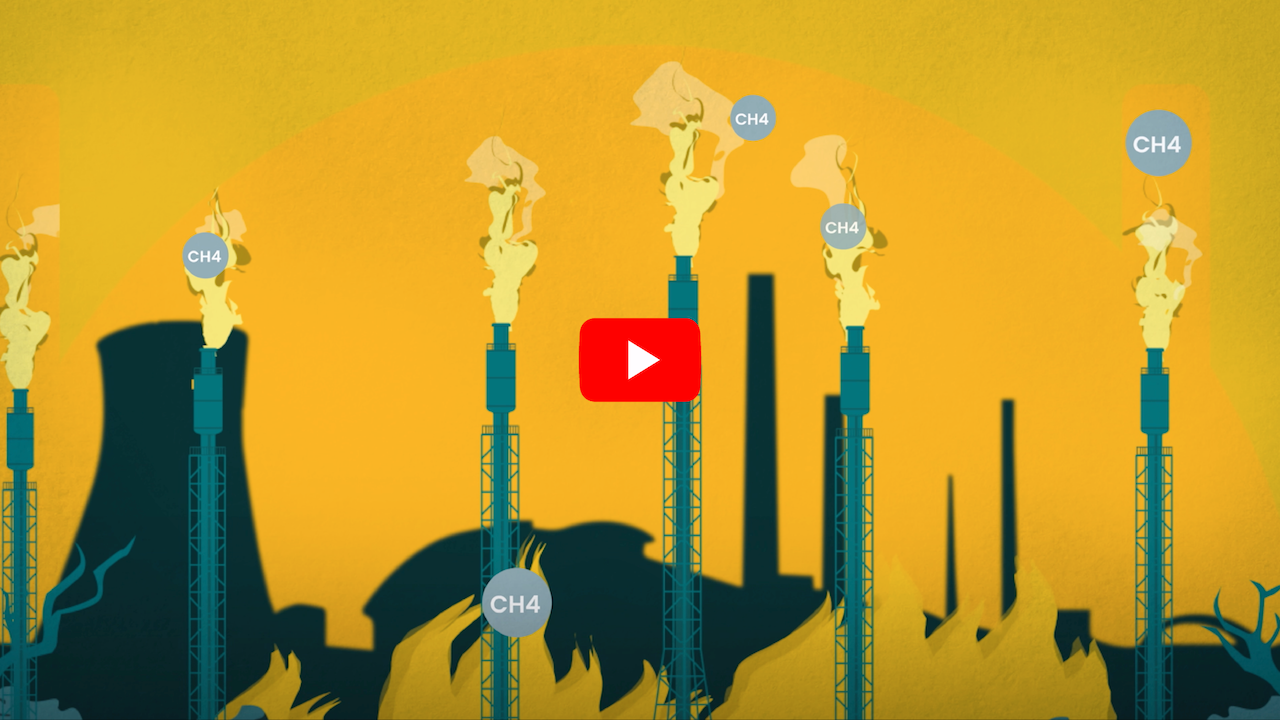
Irrespective of the choices countries make to prioritize or limit oil and gas production, one proposition deserves unanimous support: there is no justification for the wasteful flaring and venting of gas often associated with oil and gas production, whatever the level of production and in whichever country it takes place. Such waste is enormously consequential: an estimated 8 percent of the gas production worldwide is wasted, worth over $100 billion a year at current prices. The social cost is much higher. Flaring and venting in the oil and gas industry contribute one-quarter of methane emissions caused by human activity. “Dirty flaring”—incomplete flaring that, instead of emitting just carbon dioxide, allows unburned methane and other harmful emissions to enter the atmosphere—harms human health and exacerbates global warming effects. Despite this damage, commitments by countries and companies to end routine flaring have proved ineffective in aggregate, since global flaring emissions are now higher than a decade ago with marked increases in the last two years. Stopping this waste would have huge local and global benefits: higher revenues and greater energy access when the gas is captured; better health and livelihood for people living near the flare sites and farther afield; and a significant contribution to limiting global warming.
Lessons from Brazil
Given Brazil’s leadership role at this year’s COP, its experience with gas flaring will set an example for both established and new oil and gas producers. This CGD project has already yielded important preliminary findings:
- Brazil has successfully limited gas flaring over the past decade. Flaring has declined by about a third, even while oil and gas production has increased markedly. Brazil’s performance measured by flare intensity—the ratio of gas flare volume to oil production—has more than halved and now compares favorably with that of many other oil and gas producers. By 2024, Brazil ranked as the world’s 26th largest flarer despite being the world’s 9th largest oil producer; and none of the country’s 106 flare sites remained in the world’s 300 top “super-emitter” flares.
- Several factors lie behind Brazil’s relative success. Most notable is the leadership role played by Brazil’s national oil company, Petrobras, which produces some three-quarters of the country’s oil and gas. It has set ambitious targets for emissions reduction and ties executive compensation to performance. It has incorporated gas monetization schemes, for example, by installing an extensive pipeline in 2009 from the Urucu oil and gas facility in the Amazon to Manaus that has reduced wasteful flaring and improved energy access to towns along the way.
- Brazil pioneered an early model of responsible resource development in the Amazon. Guidelines—known as the Manaus Charter—were established to minimize environmental damage from Petrobras’s Urucu development and to respect local communities. The emphasis on the environment is critical since Brazil is one of the world’s largest methane emitters, mostly from agriculture rather than oil and gas activity. Notably, Brazil built a pipeline without a road to protect the Amazon from encroachment and logging that often accompany the development of oil and gas infrastructure, threatening not only the fragile environment but also adversely affecting the health and livelihood of indigenous communities.
- Despite Brazil’s relative success in controlling emissions, detailed analysis of satellite data finds evidence of wasteful flaring, some in environmentally fragile areas, including in Amazonas State. For example, episodes of high flaring rates were observed at Urucu in 2015-16 until “take or pay” penalties were imposed that encouraged gas exports; and again in 2019-20 when it appears that production rates were stressed in anticipation of an asset sale that eventually fell through. These examples illustrate the challenge to provide consistent disincentives for wasteful flaring.
Challenges ahead
The ability to zero in on flaring activity at individual sites and monitor performance over time will allow more detailed analysis. Data can reveal not only the location and quantity and dollar value (the revenue foregone) of gas from each individual flare, but also potentially the extent to which a flare is of poor quality, and by extension, the health effects and estimates of the social cost of such emissions. Collection of health and other data can help assess the extent of the impact on local communities. Even before such analysis can be made, the initial scoping of Brazil’s flaring reveals at least three potential challenges that justify further action:
- The constraints that Petrobras has imposed on itself to disincentivize flaring and respect the environment and local communities may be harder to impose on other operators. Monitoring the performance of all operators will therefore be vital and will help assess not only whether the policies adopted by Petrobras can be enhanced but also whether they can be replicated for other operators.
- A particular concern is the vast acreage granted to Rosneft in western Amazon. Exploration on such a vast scale would require significant expansion of infrastructure to access sites for seismic acquisition and the drilling of wells, and then to manage subsequent operations and minimize emissions, including pipelines to export gas. Moreover, roads and other transport infrastructure are also enablers for others (loggers, farmers, squatters), to seek commercial benefits from pristine areas. Such threats underscore the importance of the constraints used earlier by Petrobras at Urucu and raise the question of whether such exploration should take place at all.
- International operators, such as those who may be involved in the greatly expanded offshore operations, should consistently be held accountable for wasteful flaring. This will require increased government intervention, which in part can be done by a fiscal regime that taxes flaring. Despite commitments and obligations in other countries not to flare routinely, existing regulatory action has been insufficient to ensure accountability, for example, in the documented case of Nigerian offshore assets. The mechanisms to ensure compliance in Brazilian waters will be a significant test of Brazil’s regulatory and fiscal regime.
Highlighting effective policies to curb emissions
Previous work underscores the importance of an integrated four-pronged approach to curbing emissions: improved measurement of gas venting and flaring; accountability, transparency, and reporting of emissions; gas monetization technologies; and regulation and taxation. Since the circumstances of each of the 60 or so oil- and gas-producing countries are different and change over time, the effective set of policies will vary. However, the recent global trends make clear that voluntary pledges and weak enforcement are insufficient in many countries. A key challenge for reducing atmospheric emissions through regulation is the “burden of proof” of the extent of the emissions. This burden should be placed on the emitter, not the regulator. Hence, one promising addition to the policy toolkit for many countries would be the assessment of taxes—assessed on deemed emission levels—to provide a consistent incentive to reduce emissions. If the operator can prove through third-party verification that it had reduced emissions, the penalties would be rebated.
Through the combination of policies specific to each country, cutting out wasteful flaring leads to threefold benefits: higher marketed output and government revenue; better health outcomes; and greater energy access—the so-called “win-win-win” solution. Our continuing work on Brazil, an update on flaring compliance in offshore Nigeria, and an assessment of links between emissions and health, will highlight what further action can be taken and how examples of good policy can be applied to many other countries. But whatever the level of production, whatever the country, wasteful emissions must be curtailed.
We are grateful to Mark Plant for comments and suggestions.
John Hicklin is a non-resident fellow at the Center for Global Development.
Kathryn McPhail is CEO of EnergyCC, based in Singapore.
Etienne Romsom is president of EnergyCC, based in Singapore.
Information about EnergyCC’s work and partnerships is available at energycc.com.
Topics
DISCLAIMER & PERMISSIONS
CGD's publications reflect the views of the authors, drawing on prior research and experience in their areas of expertise. CGD is a nonpartisan, independent organization and does not take institutional positions. You may use and disseminate CGD's publications under these conditions.
Thumbnail image by: Carl Young via Wikimedia