Recommended

When the next pandemic hits, the question won’t just be whether scientists can design a vaccine quickly. We’ll also want to know whether the world can manufacture that vaccine at speed and scale, and whether those doses will reach people everywhere, not just those lucky enough to live in countries that manufacture vaccines or their key components.
Today, we have published a new CGD paper on what the world currently knows—and still doesn’t know—about global vaccine manufacturing capacity. It synthesises evidence from 17 major studies and five stakeholder interviews. This work shows that global vaccine manufacturing operates with far too little visibility. Policymakers, donors, and even technical agencies do not have the information they need to plan a fast, equitable rollout.
So here are six issues that should worry you before the next pandemic, followed by six actions that could fix them.
Six issues that should worry you
1. We don’t agree on what “manufacturing capacity” means nor how to measure it
You might assume global health agencies are all using the same definition of capacity. But no: some count theoretical maximum output (this kind that exists only in perfectly behaved spreadsheets), others count last year’s production which doesn’t count surge capacity, while others focus on installed equipment or fill-finish throughput. Different studies measure different things, and the numbers are rarely comparable.
2. The biggest bottlenecks are upstream inputs, no one is properly tracking this
Vaccines rely on hundreds of upstream inputs— such as filters, lipid nanoparticles, adjuvants, vials, stoppers, single-use bags, and enzymes—many of these very difficult to manufacture in their own right, with complicated supply chains. During COVID, shortages in these components were often binding constraints on global supply, limiting output alongside the availability of manufacturing facilities. Yet most global assessments still don’t systematically track input production or supply-chain fragility.
One interviewee noted that there are “200–300 components… [they’re] really difficult to track.” In short, vaccine supply chains have dozens of potential failure points that we barely monitor.
3. Mothballing surge capacity won’t work
Surge capacity is often talked about as if it’s simply a matter of “turning production lines on” when needed, but real-world manufacturing doesn’t work that way. A factory that isn’t producing anything can’t magically spring to life: equipment needs re-qualification, supply chains have to be rebuilt, staff must be rehired or retrained, and regulatory processes restart from scratch.
As one interviewee put it, “If you build that capacity, it will sit there idle… it takes longer to set something up from scratch, or that’s been sitting mothballed, than it does to scale something already running.” In practice, genuine surge capacity requires factories that are already manufacturing products, just not at full tilt, something that is difficult to finance and sustain. Manufacturers usually get paid more when they produce and sell more vaccines, but there is no mechanisms in place to reward manufacturers who hold some capacity back. The problem is not a lack of goodwill but a lack of routine activity; without it, so-called surge capacity is mostly theoretical.
4. Vaccine factory flexibility isn’t incentivised and rarely measured
It’s tempting to picture vaccine factories as inherently flexible, able to switch from one platform to another as soon as a new pathogen appears. But true fungibility comes with a price tag. Equipment that can handle multiple platforms, or be reconfigured quickly, is often significantly more expensive than single-purpose machinery. Manufacturers have little incentive to choose these costlier, more adaptable options unless someone helps pay for them.
And the truth is, we don’t even have a clear picture of how adaptable today’s factories are: most assessments fail to capture switching timelines, infrastructure requirements, or the real-world constraints on repurposing production lines. As one stakeholder put it, “Platform switching is not easy,” and without deliberate incentives—and better information—the world cannot assume factories will be ready to pivot when the next pandemic arrives.
5. Fill–finish capacity is essential gap and must align with upstream manufacturing
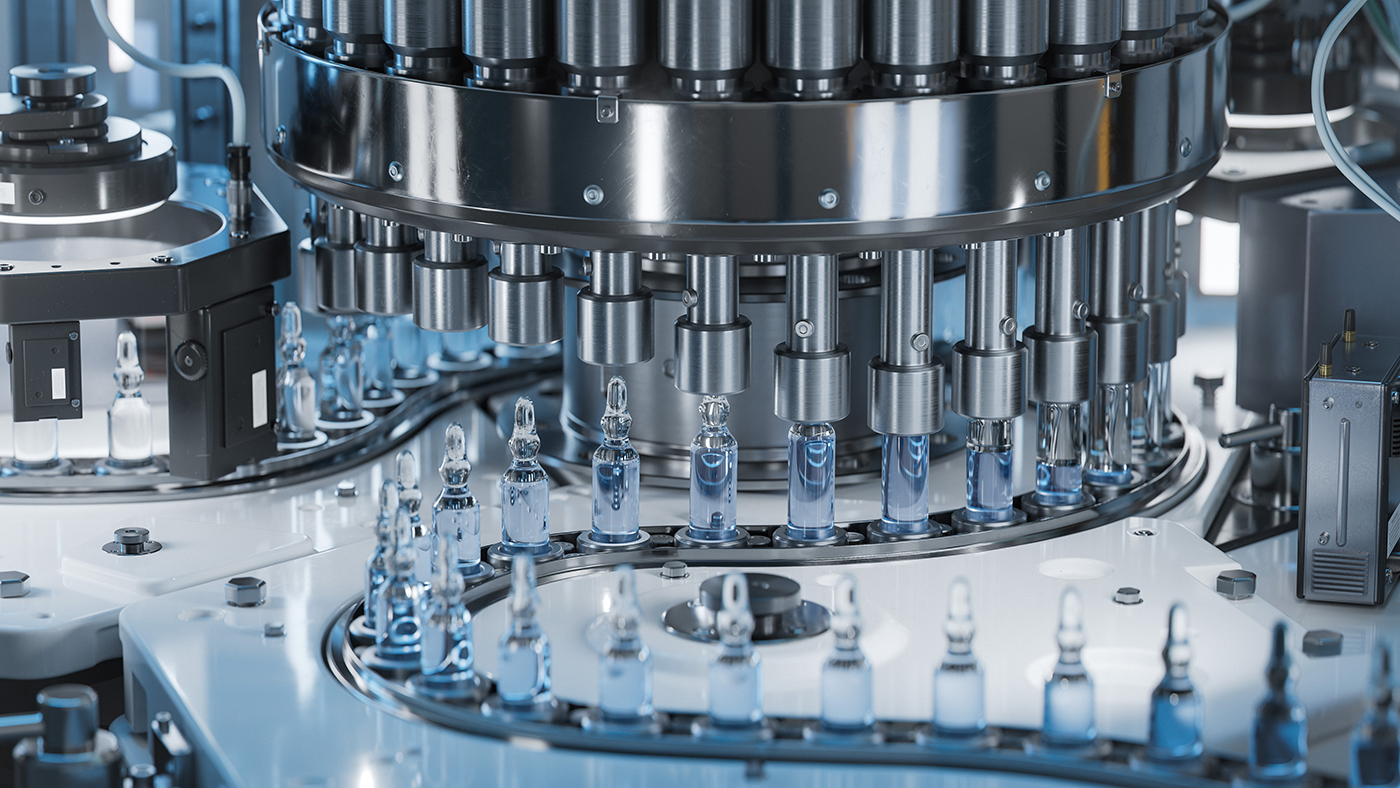
Even if the world can make bulk antigen (active pharmaceutical substance), we can’t vaccinate anyone until that material is filled into vials or syringes, sealed, labelled, packaged—a process known as fill-finish—and then moved through a cold chain. In Africa, the challenge is often the inverse: recent investments mean fill–finish capacity is comparatively strong, but there is far less locally produced antigen to fill, leaving facilities dependent on technology transfer and imported bulk product. Fill–finish and upstream production cannot be planned in isolation. From a global preparedness perspective, fill–finish still frequently determines how quickly doses leave factories, but without aligned antigen production and coordination across the chain, capacity at either stage can sit idle. When one link misaligns, the whole system slows.
6. Where vaccines are made strongly shapes who receives them
Financing and at-risk purchase agreements—where buyers commit to purchasing vaccines without full information, such as results from clinical trials—clearly mattered during COVID, but they operated within hard geographic constraints. Countries hosting manufacturing facilities or critical input suppliers retained leverage that contracts alone could not override. India’s export ban is the clearest example: once domestic priorities shifted, vaccine exports stopped regardless of existing agreements. Similar dynamics played out elsewhere, where regulatory oversight and control over key inputs shaped allocation decisions. Countries that had factories or manufactured key inputs had leverage.
As one interviewee told us, by having different inputs in different countries we might get the best of both worlds, with both the lower prices coming from the economies of scale generated from large factories, whilst also giving many countries leverage when it comes to purchasing vaccines.
Six ways to fix these problems

Before anything else, we need a standardised, agreed-upon definition of what “capacity” means. A core set of indicators—platform-specific drug-substance capacity, fill–finish throughput, input availability, surge readiness, switching timelines—would allow all actors to report in compatible ways without forcing a rigid one-size-fits-all system. This shared language is the foundation for everything else.

Manufacturers aren’t going to publish their sensitive data on the internet, and nobody should expect them to. But they would share with a neutral, secure broker that aggregates and anonymises information, releasing only high-level insights. Whether housed in WHO, CEPI, a partnership, or a specialised data trust, the goal is the same: a living, regularly updated picture of global capacity that policymakers can rely on.

Mapping current capacity is useful, but insufficient. We also need clarity on what should exist: how much mRNA production is required to support a 100-day response, what viral-vector capacity regions need, how fill–finish should be distributed, and what input redundancy is essential. These targets convert capacity tracking from a descriptive exercise into genuine preparedness planning.

Static inventories tell you almost nothing about how the system behaves in a crisis. Instead, we should run regular scenarios: disruptions to lipid supply, export controls on single-use bags, simultaneous regulatory approvals, and sudden demand surges. Much like the banking sector’s stress tests, these exercises would identify vulnerabilities that no annual capacity map could ever reveal.

No country can or should try to make everything. Economies of scale matter, and over-concentration is dangerous. The most resilient model spreads critical steps—drug substance, inputs, fill–finish—across several countries within regions, encouraging cooperation while avoiding single points of failure. This approach blends efficiency with redundancy and gives countries practical leverage in crises without expecting unrealistic autonomy.

Manufacturing lines cannot sit idle for years and then magically roar into action. Facilities need ongoing production to retain staff, maintain quality systems, keep supply chains active, and stay regulator-ready. To achieve this there needs to be, a better incentives in place that reward the ability to quickly scale manufacturing in the future. Such a system must also be combined with an ability to measure this capacity.
Conclusion
We don’t need perfect foresight before the next pandemic. But we would benefit greatly from better visibility into how global vaccine manufacturing works—and where it could break down. If we can identify the real bottlenecks, adopt common metrics, build a trusted dashboard, stress-test the system, distribute capacity wisely, and keep facilities active between crises, the next pandemic will be shorter and less painful than if we leave these things to chance.
Topics
DISCLAIMER & PERMISSIONS
CGD's publications reflect the views of the authors, drawing on prior research and experience in their areas of expertise. CGD is a nonpartisan, independent organization and does not take institutional positions. You may use and disseminate CGD's publications under these conditions.