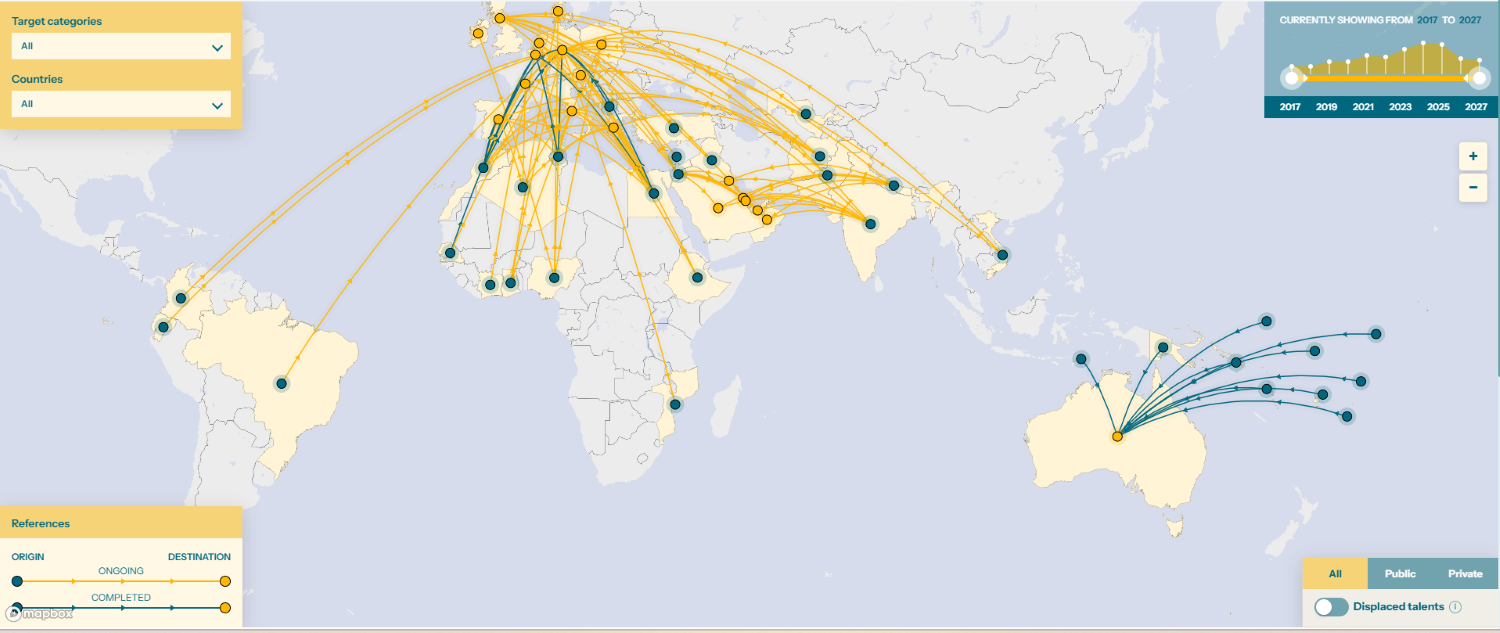
This paper examines six projects that link green-skilled training with international labour migration, looking at lessons learned in terms of design, implementation, and scale. Drawing on a literature review, stakeholder interviews, and a roundtable of experts, it identifies five factors crucial to success: political and financial buy-in; strong multi-stakeholder collaboration embedded in the project structure; private-sector engagement; effective skills mapping and training; and support for migrant workers. Public-funded pilot projects dominated the landscape, with emerging private-sector innovations offering scalable models. Projects enhanced institutional capacity; built trust foundational for working relationships between countries and institutions; and demonstrated the potential for how linking training and migration can effectively expand the global stock of green-skilled workers while supporting equitable development. However, complex governance, financing challenges, subsequent size-limited project structures, and fluctuating employer demand continue to constrain scale. The paper concludes with practical recommendations for designing sustainable partnerships that balance labour needs, development objectives, and green transition goals across countries of origin and destination.