Recommended
Blog Post
How Big is the Risk of Epidemics, Really?
Blog Post
Five Steps MDBs Can Take Now to Unlock Pandemic Financing
We are, again, in the midst of an Ebola outbreak. Caused by the Bundibugyo virus, for which there is currently no approved vaccine, it is the fastest growing on record, and as of October 1, has killed more than 4,000 people.
Between us, we have worked on the 2014–2016 West Africa Ebola outbreak (open access here) and its aftermath, on accelerating the vaccine response to Covid-19, and on pandemic and epidemic preparedness since. Here, we ask whether lessons have been learned from these previous outbreaks and whether, as a result, we were better prepared to tackle this one.
There are six lessons we draw from our previous work on Ebola and epidemic preparedness:
- Act early. In West Africa during the 2014 Ebola outbreak, large-scale action was taken only months after alarm calls were made, and the disease was much harder to contain once it reached large cities like Freetown.
- Messaging must use behavioral science, not fear. Messaging should focus on the practical actions people can take (e.g., prevention) and use trusted messengers. It shouldn’t exaggerate the death rate or economic impacts as was the case in West Africa, as this deters treatment and economic activity, exacerbating the health and economic costs.
- Vaccines can be produced much faster when there is R&D before the outbreak, even when the potential new virus is unknown. Vaccines can sharply reduce spread even when not 100 percent effective. Covid-19 vaccines came rapidly in part because researchers had done a lot of work on related coronaviruses.
- Invest in broad spectrum responses. There are huge benefits to developing broadly protective vaccines and therapeutics that cover a range of threats, including yet-to-emerge ones, as they are ready when outbreaks start. One of us (Rachel), with colleagues, estimated that a universal Covid-19 vaccine would deliver more than $900 billion in additional health benefits in the US over variant-specific boosters. Another study found that a universal influenza vaccine could save $3.5 billion a year in direct US medical costs.
- Manufacture vaccines before regulatory approval. Covid-19 showed the benefit of manufacturing at full speed even before regulatory approval.
- Commercial incentives on their own are not enough to get vaccines developed. One of us (Rachel) and colleagues estimated the value of a course of Covid-19 vaccine capacity in early 2021 was $5,800, but vaccines sold for between $6 and $40. This gap between social and firm benefit deters entry into the market.
So, how does the current Ebola response fare against these six lessons learnt from previous outbreaks?
1. Act early
Catching the outbreak early would have made it much easier to contain. But the shutdown of USAID and broader cuts led to a reduction in surveillance efforts. Partly as a result, the Bundibugyo Ebola virus appears to have circulated for many weeks undetected, delaying response efforts.
In addition to investing in surveillance programs that enable a rapid response, policymakers should act quickly in taking measures that could help control the outbreak. In August, Saloni Dattani pointed out that despite the potential for cross-protection against Bundibugyo Ebola virus, the World Health Organization (WHO) only recommended the Ervebo vaccine (licensed for the Zaire Ebola virus) be prioritized for inclusion in a Phase III trial at the end of July, more than two months after the outbreak was confirmed. Even a moderately efficacious vaccine may have huge value because each infection it prevents also averts the infections that would have followed from it.
2. Messaging using behavioral science
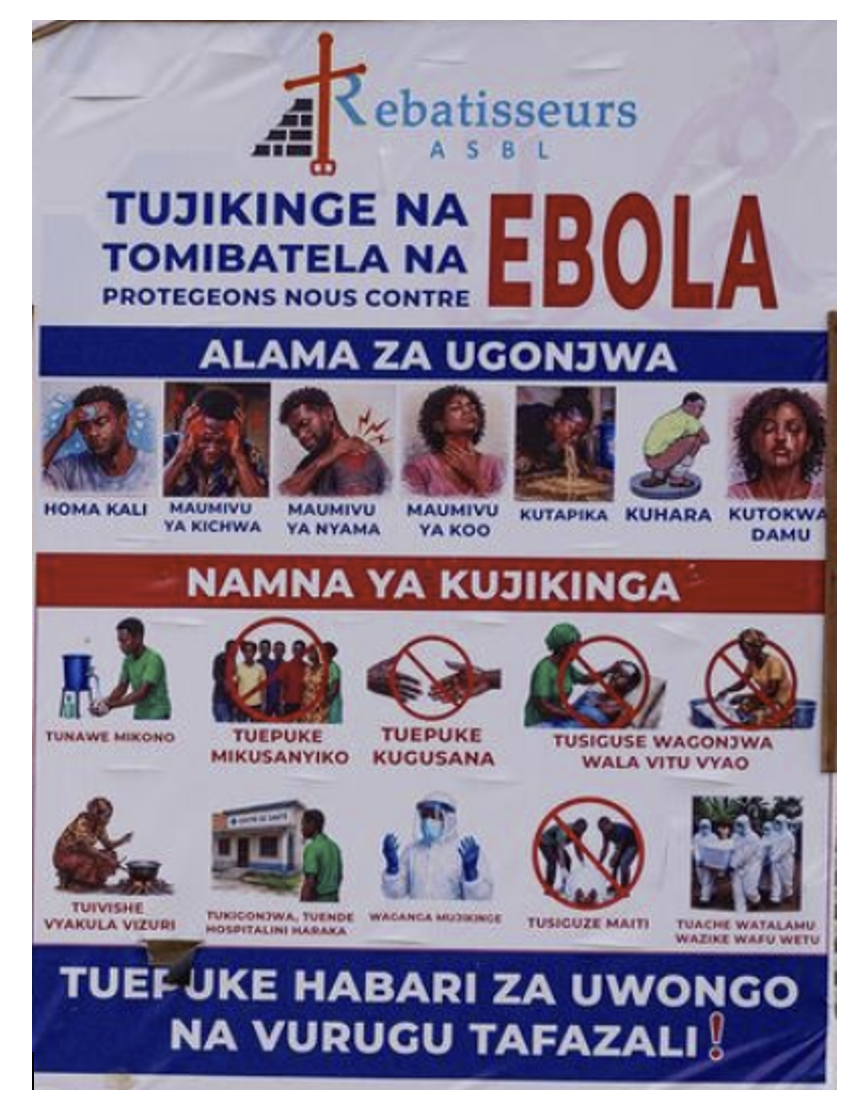
One of us (Rachel) was in Sierra Leone during the 2014–2016 West Africa Ebola outbreak. There were posters everywhere, along with radio messages saying if you have fever, diarrhea, or vomiting (very common symptoms in normal times) you have Ebola and must go to a clinic (Figure 1). At the same time, the messaging stated that the death rate was up to 90 percent, according to the World Health Organization (WHO). This broke every rule in behavioral science for effective persuasion. There was nothing on how to take control via prevention, and no reason to go to a clinic if the messaging told you that you would die anyway. The death rate turned out to be closer to 40 percent. Economists at the International Growth Centre and Innovations for Poverty Action produced slides on prevention for their staff and were inundated with requests as it was a rare source of prevention information. The posters used in the Democratic Republic of the Congo (DRC) during the current outbreak seem to be better on prevention (Figure 2). WHO death rates also appear to be more realistic.
Figure 1. Poster used in Sierra Leone during the 2014–2016 West Africa Ebola outbreak
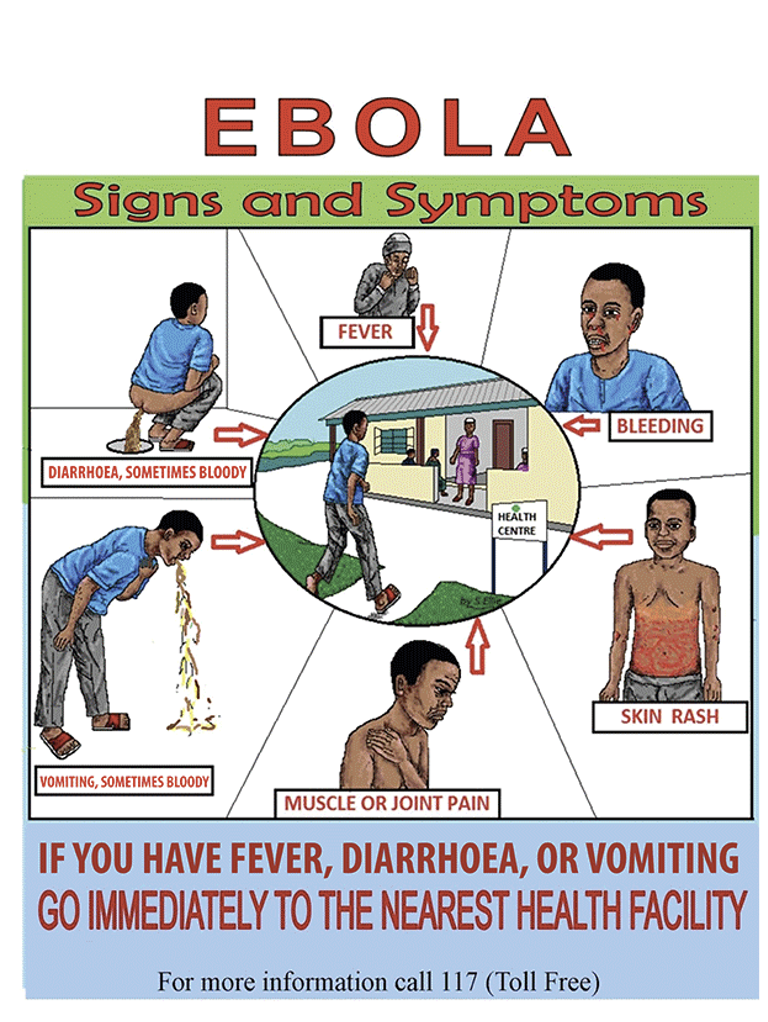
Figure 2. Poster used in DRC during the current Ebola outbreak
3. Vaccine development
The first volunteer for the Bundibugyo-specific vaccine was injected on July 24, 2026, 70 days after the outbreak was declared on May 15. In contrast, during the West Africa outbreak, the first Phase 1 injections of any Ebola vaccine came on September 2, 2014, more than five months after WHO was notified of the outbreak on March 23—and the vaccine that became Ervebo, which already existed with primate efficacy data published in 2005, was not injected into a volunteer until October 13.
This speed reflects prior investments in vaccine R&D. CEPI notes that all the underlying technology platforms of the candidates it invested in “have extensive safety data and have been used to develop vaccine candidates that have shown preclinical or clinical efficacy against related filoviruses such as Zaire Ebola virus, Sudan virus and Marburg virus.” Both Oxford’s and Moderna’s Bundibugyo candidates apply technologies used to develop Covid-19 vaccines.
4. Invest in broad-spectrum R&D
Krutika Kuppalli and Placide Mbala make the case for investing in broad-spectrum tools. Early diagnostic tools were focused on the Zaire virus and were less able to detect the Bundibugyo virus. Broad-spectrum tools such as “broadly protective and multivalent vaccines” mean we will be better prepared for the next outbreak, rather than the last one.
5. Manufacture vaccines before regulatory approval
Investing in manufacturing before regulatory approval allows firms to build capacity and produce doses in parallel with clinical trials. This enables everybody to get vaccinated more quickly once regulatory approval comes through, accelerating the end of the outbreak. The Serum Institute of India's manufacture and stockpiling of 620,000 doses of Oxford's candidate vaccine, within two weeks, shows what this looks like in practice.
Countries need financing to invest in manufacturing before regulatory approval. But the multilateral development banks (MDBs) imposed restrictions on low- and middle-income countries using MDB financing to buy vaccines before regulatory approval during Covid-19. This needs to change. The current outbreak is a clear reminder of the need for the World Bank to finalize its Day Zero Financing Framework.
6. Inadequate commercial incentives
Social and political pressures holding down vaccine prices are not the only reason commercial incentives are inadequate. Vaccine coverage helps curtail the spread of the disease, reducing demand for vaccines. The social value of a vaccine that quells an outbreak early is enormous—it would avert the loss of life, schooling, and disruption of economic activity. But firms would only capture a small fraction of that value in profits, which reduces their incentives to invest.
In line with our fourth recommendation above on broad-spectrum tools, CEPI is investing in broadly protective vaccines against Ebola and other filoviruses. But we should invest an order of magnitude more. CEPI’s 2024 call for proposals had a very modest budget (€50 million). We should be committing to reward firms much more for investing in innovation to tackle this problem.
In sum, the current response incorporates some of the lessons above—particularly on using better messaging. But we have a long way to go to fully incorporate all of these lessons, especially on investing in broad-spectrum tools and in manufacturing vaccines before regulatory approval. Investing in the resources to prepare for outbreaks before they occur will mean fewer lives lost, less disruption to schooling, and less impact on economies in the future.
We thank Sara Viglione for her comments and Akhil Bansal for his input.
Topics
DISCLAIMER & PERMISSIONS
CGD's publications reflect the views of the authors, drawing on prior research and experience in their areas of expertise. CGD is a nonpartisan, independent organization and does not take institutional positions. You may use and disseminate CGD's publications under these conditions.