
Recommended
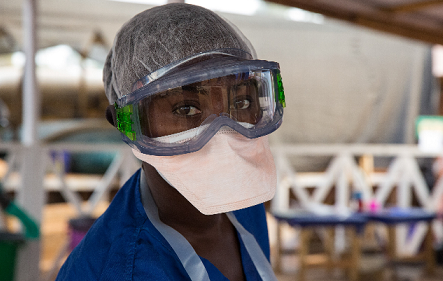
Rachel Glennerster: Hello, and welcome to The CGD Podcast. I'm Rachel Glennerster, President of the Center for Global Development. Today we're talking about Ebola. We are once again in the midst of an Ebola outbreak. It's the fastest-growing on record. As of October 19th, we have confirmed deaths of more than 4,600 people in the DRC. Also, the outbreak has spilled over into many of DRC's neighboring countries and beyond.
As of recording, Kenya had confirmed nine cases and one death from the disease. Just this morning we heard about new cases in Nigeria. This outbreak has been particularly hard to contain because it is a different species of the virus from that which we were more familiar with from the West Africa outbreak. Today I am joined by Professor Charlotte Watts, Executive Director of Solutions at Wellcome.
Charlotte and the Wellcome Trust have been involved in many of the trials, I think all of the trials to deal with the current outbreak. She was Chief Scientific Advisor at the UK's aid agency during several of the previous Ebola outbreaks. We also have Jeremy Konyndyk, President of Refugees International and former director of USAID's Office of US Foreign Disaster Assistance and very involved in the 2014 Ebola outbreak, where I was also very involved on the economics, although not the health side.
Together, we'll explore how scientific progress since 2014 has strengthened our ability to respond to Ebola, how aid cuts are undermining that progress, and what this means for today's response and preparedness for future outbreaks. Thank you for joining me, Charlotte and Jeremy. We're now more than five months into the outbreak. Charlotte, what's the latest situation on the ground?
Charlotte Watts: You mentioned about the scale of infection. Most of those infections are in DRC. It's a highly complex country and setting in which to try and control the outbreak, and because this was a less common species, it wasn't detected early, and so in a way where the response is trying to catch up with an infection that's spreading rapidly. On the positive side, DRC has a lot of experience of dealing with Ebola outbreaks. It's had a number of successes in containing infection.
There has been some progress in some areas in reducing numbers, but this is not an outbreak that's under control. As you mentioned, we are seeing spillover cases to other countries. Again, those countries might well manage to contain imported cases but that persistent risk for wider spread is very strongly there.
Rachel Glennerster: Turning to you, Jeremy. Charlotte mentioned the late detection here. Maybe that's partly because it's a different species or rarer species, but also people are concerned that USAID cuts may have impacted that. What's your sense of how much the closure of USAID has affected both the ability to detect but also to respond to this outbreak?
Jeremy Konyndyk: Very substantially is the headline there. I wrote a piece for Zeteo News a few months ago, laying out some of the ways that the closure in the absence of USAID and the programs that USAID used to fund in this part of Eastern Congo almost certainly contributed to the very, very delayed detection. I think it's important to be crisp about just how delayed the detection was. There's some interesting research that was done a couple of months ago.
This was published in, or at least there was a report in Nature journal about it, where some WHO researchers went to the town of Mongbwalu, which is the mining town that is perhaps the epicenter. We don't definitively know, but certainly the earliest known epicenter of this outbreak, and found that as far back as January of this year, the community knew something was up. That there was an unusually large volume of deaths to the degree that cemeteries were being filled up. That certain taxi drivers in the area were avoiding certain neighborhoods because it was known that there's a mystery illness going on there.
Then of course, a few months later, in other parts of Congo, as it spread out, MSF and other NGOs started seeing cases in their clinics that appeared to be viral hemorrhagic fever, but were testing negative for the standard Zaire strain or Sudan strains of Ebola, which are what most of the tests were geared towards. Yes, the diagnostics issue was a problem because those tests were not optimized to test for the Bundibugyo species.
Where that leaves you is still in Eastern Congo, which we know is a hotspot for virus spillover events, where we know as a world of global health, we need to keep our eye on the ball for those sorts of events. There was a syndromically detectable outbreak that was known to these communities. MSF, at least a month before the formal confirmation of Ebola, had begun adopting Ebola handling procedures in its clinics because they knew whether this was Ebola, it was something. Still, it was not confirmed for what it was. I think that raises some very natural questions of why. All of the component opportunities were there to detect this earlier, and it was missed.
I've talked with people who used to work for the USAID mission in DRC about what was in place prior to DOGE and prior to the aid cuts and how that might have interacted with a situation like this. The former director of the health office there said to me, "Look, I would talk every couple of weeks with the hospital directors, lab directors across Eastern Congo. There was a lot of that informal back and forth. We had programs to support disease surveillance."
A lot of that got shut down, so we lost both the formal support to official systems for disease surveillance that might have caught this earlier and lab specimen transport and things like that, but also the informal networks, a critically important component to how you detect things like this. If you have a stray comment from a hospital director to the USAID health office director in Kinshasa that, "Yes, we're seeing something weird. It's not Ebola, but it looks like Ebola," that's like a five-alarm fire report in Eastern Congo.
If I'd gotten a report like that when I was in government, my next phone call would have been to the White House and then to the CDC. The problem is there's now no one to make that call and no one to take that call on the US government side. Then, of course, the response that was mounted was slow and underpowered because most of the partners that the US had had in that area that would be in position to pivot to support the response had either shut down or badly degraded their activities, and so had to build back up, which took longer.
There was a lot of uncertainty about the resources from the US government to even do that in the early phase of the response. Late detection, slower response, and as we're seeing, still a very underpowered response relative to what's needed.
Rachel Glennerster: We're seeing a number of cases around the world where it's really being shown that there are these real impacts from these aid cuts. This is a very sobering example of that. I do have to say, though, from my experience in the West Africa Ebola outbreak, we actually knew that Ebola was there. We still didn't respond very rapidly initially. There were many months before there was a really big, full-scale response. I think DRC, there were more things in place because of that.
Jeremy Konyndyk: I think that's an important distinction. We also didn't know in that early phase in West Africa that Ebola could do this. The biggest Ebola outbreak in history prior to that was 425 cases in Gulu in 2000 in Uganda. For those early months in West Africa, it really looked like that outbreak was playing out along that pattern. It wasn't until three months in that it began to really explode. I think with this one, we didn't even detect it until it had reached that point of explosion.
Charlotte Watts: Because USAID was such an important supporter of the health system in DRC, how much even basic things like water sanitation in hospitals, the core foundations of the services that might reduce risk of transmission, were weakened as well. There's, I suspect, an underpinning element that has also made the whole context more vulnerable to infection spread.
Rachel Glennerster: I want to come back to this point of that we have learned a lot over the last few years about pandemics in general. Unfortunately, we've all experienced going through one. We've had these lessons that Ebola can get really out of hand too. There were a number of things that we learned over this time. We've learned rapid development of vaccines for new pathogens, is really effective in controlling the spread.
Now, we had got an Ebola vaccine for the 2014/'16 outbreak. It was developed at the time, but it has been less effective on this. It wasn't developed for this kind of Ebola. Charlotte, what do you think have been some of the lessons from the West Africa experience that we've learned well and employed, and which ones do you think we haven't learned and haven't managed to pick up?
Charlotte Watts: One of the core lessons that we have learned is just how important it is to get behind local responses. DRC has a lot of experience of dealing with outbreaks, and my sense is, in this current response, systems are trying to get behind the DRC as well as Africa CDC as a key player, playing a far more central role than previously. There's also a lot of preparedness on the scientific side. The thing about the Bundibugyo virus is that we have no vaccine, we have no therapeutic, so our toolkit to tackle this is very limited.
Actually, WHO has a thing called the WHO Blueprint that essentially has protocols for how you would go ahead and test therapeutics when you do have an outbreak. Similarly, there's been major investments in CEPI, the Coalition for Epidemic Preparedness and Infection. There are a range of candidate vaccines that similarly, and a sense from the West Africa outbreak of how you do those trials.
Those systems are kicking in, and research funders like Wellcome Trust and others are getting behind trying to support those studies happening very quickly in the field. For example, there are therapeutic trials happening already. There's been investment in the infrastructure. A lot is ready to go before the outbreak happened. Actually, there's likely to be a readout in weeks or months on some of those products.
Similarly, we've got with vaccines, some candidates start in trials, but coming from an early base, moving from early products, but quite quickly through to potentially phase two, three trials.
Rachel Glennerster: How soon before do you think some of those therapeutics or vaccines can be put in arms or used on the ground at enough scale to address this?
Charlotte Watts: There's two questions, is when will we get the readout of the trial and when will product be available? They're two separate things. I think if there's an ISARIC trial that is testing therapeutics, they are making good progress. That was because the WHO groups very quickly identified what's the priority products that then moved into those trials. I think the readouts, I don't know the specifics, but you're talking about months or so. Actually, that's pretty quick.
I think on the vaccines, similarly, it's from an earlier stage, but there is progress and there is, I think, a hope that phase two, three vaccines will move ahead. It'll be slightly after the therapeutic trials, but they will move ahead quite quickly. There's also trials to test the provision of therapeutics as a preventive method as well. The issue that I'm concerned about is that actually, while we're moving ahead with trials, the systems to ensure access aren't so mature.
Actually, how do we ensure at-risk financing that can, for example, start to build up stockpiles of candidate products before we know whether they work or not? Particularly for therapeutics, that gap is particularly stark. I think for vaccines, the system is more mature and developed, but for therapeutics, it's less straightforward where the financing will come from, but we do need that coordinated financing to come into play.
Rachel Glennerster: Absolutely. There's huge economic and health benefits from making sure that you are scaling up the production of these, even while you're testing them. I am sad to hear that that continues to be a lesson that we have not sufficiently learned, although we at CGD are pushing as hard as we can to make sure that people do fund the scale-up at-risk. Jeremy, what lessons have we effectively learned, and what have we not learned that we should have learned by now?
Jeremy Konyndyk: It's really the key question about what we're seeing, because you do look at the response right now and say it is not, I wouldn't say it's failing, but it's definitely not succeeding. It is not keeping pace with the scale of the outbreak. I think one lesson that as a world we have not sufficiently learned is that with a disease like Ebola, when it's outpacing the response, you need to overreact.
If you try to calibrate the response to what you're seeing now rather than a worst-case scenario of where this could go, you're going to fall short. That was a lesson we learned really, really badly the hard way in 2014. The virus got out way ahead, and we had to then scale up a massive response. The US and the UK deployed large contingents from their aid agencies and their public health agencies and their militaries. The governments in the region did a huge amount, particularly Sierra Leone and Liberia. We ended up collectively spending billions and billions of dollars.
If we had overreacted earlier, we would have saved a lot of money and effort and a lot of lives. I think what we're seeing in the response right now is a lot of Western donor countries are doing something. No one's looking at the totality of it and saying, "Is the job getting done?" Clearly, the job's not getting done. I think that necessity of consciously overreacting as response strategy, that really was a core lesson of 2014, and it has been lost in this one.
I think a few things that have been retained were some of what we learned in 2014 about how do you respond at scale. I wrote a paper when I was a CGD fellow called Struggling with Scale about that experience in 2014. I called it Struggling with Scale because the biggest challenge we had was not knowing what to do. Ebola was a well-known virus by that point. We knew how it was transmitted. We knew how you could prevent it. We knew what the toolkit looked like. What we didn't know was how you scale that toolkit when you've got exponential spread, which is what we had in that summer of 2014.
We learned a lot about where was the superspreading happening, how do you target the superspreading. That was what was really driving the exponential spread. Scaling up burial teams to ensure safe burials to then turn off a lot of the superspreading, we didn't really know at the front end of that which interventions were going to be the difference-makers and which would not.
In retrospect, it certainly looks like the burial teams were one of the key interventions to slow down the exponential spread so that we could then scale up the clinical interventions to then catch up with the rest of it. There was no way to just scale up the clinical interventions if we couldn't blunt the superspreading. That lesson has very much been learned. You can see that in the response strategy they're rolling out now. Burial teams are always one of the very first things to be scaled up, and rightly so.
I think we've learned a lot about community engagement and building community trust and the absolute criticality of that. If you don't have that, you'll fail on everything else. There are definitely some of those lessons, but the scale at which they're being deployed now still is really falling short. No one is fully taking ownership of supporting that either on the DRC level or at an international level. Maybe one last thing I would say is just on travel bans.
We had furious debates within the Obama administration about whether to ban travel from West Africa. Ultimately, we did not. At USAID and at CDC, we pushed back really hard on any suggestion of a travel ban because we feared that would undermine the response. That if you put a travel ban in place, people won't stop traveling, but they will try to circumvent the travel ban, so you actually end up having less visibility on what you want to have visibility on, which is travelers at risk. You don't want to give people an incentive to hide, which a travel ban does.
I serve on an advisory board for WHO. They asked me to go out on a response assessment mission in August, and I couldn't do it because I couldn't then take the next three weeks out of the US before being allowed to enter the US again. If you're a doctor in an emergency room deciding whether to go out and deploy to support Ebola in Eastern Congo, and in addition to whatever time you're taking off of your job to go do the response service, you also need to tack on another three weeks before you'll even be allowed back into the country, that's a pretty big deal breaker.
Charlotte Watts: Rachel, you were asking about vaccines. Clearly, if we get an effective vaccine, that would be really helpful. Similarly, therapeutics, we've got a 50% case fatality rate. We need effective treatments. Actually, I think what Jeremy is highlighting is there is not a magic bullet. It's about how do you work with communities; how do you understand the basic epidemiology; how do you really use that data, that insight, to really control spread in multiple ways. The tools that Wellcome invests in is part of the solution, but actually, it's much more complex. It's very much working in partnership with the communities on the ground in a coordinated but front-facing way that's trying to get ahead of the outbreak.
Jeremy Konyndyk: That was a big lesson of 2018 in Congo where we had the vaccine at our disposal, and it was still a huge outbreak.
Rachel Glennerster: Experiencing the messaging when I was in Sierra Leone during the West Africa outbreak, it was extremely bad. It wasn't just that people weren't working with communities, but the messaging broke every single behavioral science rule that there was. It was basically, if you vomit and have a fever, go to the hospital, you will die because there's no way to recover from Ebola.
You constantly got up to 90% death rates, being told on the radio again and again. There was just no reason for an individual to deal with the health system because they're like, "If we admit that we might have Ebola, then we're going to die, and what's the point of going to the hospital?" I have seen some of the messaging recently for this outbreak, and it's just so much better, which I think helps with that community response too.
Charlotte Watts: The related issue, of course, is Ebola might be the issue that we're talking about as the critical health issue in DRC, but there are all the other day-to-day killers, malaria and other things. I think that's the other lesson, is actually how do you not stop doing the other type of preventive activities, childhood vaccination or whatever, or ignore that there is a risk from malaria or other killers as well when you're thinking about that response.
Rachel Glennerster: Jeremy, how do you make the case for helping countries like the DRC detect and contain outbreaks in donor countries? How do you make the case that the US ought to be caring about this?
Jeremy Konyndyk: It's the right thing to do. If we have the ability to stop a major outbreak with a 50% to 90% case fatality rate, if it's within our power to help do that, we ought to do that. What more fundamental purpose is there for foreign assistance than something like that? It shouldn't just all be about, "Well, it's going to come here, and therefore, we need to stop it there," but I think that is part of it too.
Look, there is an inherent risk when you let a novel virus reproduce unfettered, and that's basically what's happening right now in Eastern Congo. I think the world is taking a giant gamble, not necessarily consciously taking this gamble, but taking a giant gamble right now by basically trying to keep a lid on this thing but not actually extinguish it, because we're not doing enough to extinguish it.
We're arguably not even doing enough to keep a lid on it, and I don't think you can keep a lid on it. We've seen new introductions into Kenya. Now we've seen a new introduction into Nigeria, which is really scary, and that introduction is, in fact, not from Congo. It's from Uganda, which also raises some questions about what's going on in Uganda, because it appeared we passed the 42-day mark and there weren't more cases in Uganda.
Now you have to wonder too, "Are there undetected chains in Uganda that have been flying under the radar?" The risk has always been if you let the forest fire burn for long enough, it's going to shoot off sparks, and it's going to spread, and I think we're seeing it's now starting to shoot off sparks. If it shoots off sparks into South Sudan, that's a whole other front that's going to be even tougher in some ways than Congo is. A lot less capacity in the health system there than Congo has.
The risk, in part, is if you don't solve the problem early, you have to solve a bigger problem and a tougher problem later. I think there is a strong impulse from a lot of Western donor countries that they don't want even any cases of Ebola to reach their own shores. If you don't want that, the best way to avoid that is not through travel bans. It is by extinguishing the outbreak at source.
There's also, and this is a little bit more of a hypothetical risk, and it's kind of unknowable, but I think after what we saw with viral evolution and variants with COVID, that's another pretty strong reason not to let a virus like Ebola reproduce and potentially mutate. Could this thing actually mutate in ways that would make it more dangerous if it's given enough opportunities to do so?
We didn't really know the answer to that question, and fortunately, it didn't happen. Everything we see of the Bundibugyo species suggests it's behaving very similarly to the Zaire and Sudan species of Ebola, but yes, you don't want to give it infinite opportunities to spawn something different, because initially the conventional wisdom was COVID didn't have that kind of potential, and then we found it did.
Charlotte Watts: Rachel, the other lens, when you're saying what's the case to intervene, if you think about pandemic preparedness and the work and effort that the world has put into pandemic preparedness coming out of COVID, every major outbreak is a test case of actually is our system fit for purpose for the next pandemic. If I look at where we are from the R&D side, at one level, we have candidate products, but actually, we don't have them ready to go.
They're needing further development before they're actually ready, for example, for vaccines to get trialed. On therapeutics, like I said, we haven't got the financing mechanisms. There isn't a clear lead for that, so actually, if you use this as a scorecard for pandemic preparedness, we've learned from COVID, we've learned from previous Ebola outbreaks, but actually, we're really not ready. This is not a good example of the world is ready to nip a future, very threatening outbreak in the bud. That's a really important reality check when we think about DRC, is actually, these are all the tests of the systems that we should have in place, if we are really learning from COVID.
Rachel Glennerster: We should care about it for its own sake. We have the ability to help, because these pandemics are going to happen in future, and we need to be ready, but also, I really take your point, Jeremy, about worrying about mutation because if you had something that was easier to transmit and as deadly as Ebola, we would be in a very bad way in the world.
What is the single most important change you would prioritize to ensure that we are better prepared for future outbreaks of Ebola or much more generally, for epidemics and pandemics? Is it surveillance? Is it more R&D on potential treatments, or something completely different? Where would you put your funding?
Jeremy Konyndyk: The former Ebola czar for the Obama administration, Ron Klain, who later went on to be chief of staff for the Biden White House, used to say there is no greater global catastrophic risk against which we are less prepared than pandemics. You look at the amount of money that the US government spent on counter-terrorism cooperation globally after 9/11, which killed orders of magnitude fewer people than COVID did.
COVID killed more than a million Americans. If a terrorist attack had killed a million Americans, I don't even know what our political system would make of that. He's right. We need to invest against this risk to a level commensurate to what the risk is, and we're nowhere close to that, not as the US and certainly not as a global system. A first step would be even just trying to build back some of what has been dismantled over the last two years.
We are in a worse place now globally in terms of pandemic preparedness than we were before COVID. The systems, like, WHO is weaker than it was then, largely because of the US pullout and other donors also reducing funding. CDC, especially CDC Global Health, is a shadow of what it was. USAID is gone. These were pillars of the global pandemic readiness system that are now either badly hobbled or completely gone, and it is coming from a mentality that fails to grapple with and recognize the risks of doing so.
There's an old aphorism that you never knock down a wall if you don't know what it was keeping out. We're knocking down a lot of those walls right now, and we're going to learn, or are learning, what they were keeping out. We need to reverse that. I find the terrorism parallel to be instructive because it was a risk that the US took so seriously, and the US posture when they were working on counter-terrorism cooperation in the years after 9/11, and there was a lot of bad to that, don't get me wrong, but the mentality to that was, if we're investing in anti-terrorism potential in a partner country, we're doing that because it serves our interests.
We're not just doing it as charity to help that country defeat terrorism in their country. We need a similar kind of mentality with this kind of risk, and it's just completely absent, and you can see the effects of that now in how Ebola is being handled in DRC.
Rachel Glennerster: Charlotte, what would you prioritize?
Charlotte Watts: I think three elements. One, building back better. We should clearly be looking at what's the lost capability, particularly CDC, WHO, but actually, what we learned and then what we're seeing is actually African countries building their capacity similarly alongside that. The new model shouldn't be the old model. It should be one that has much more distributed capability and strengths to respond to outbreaks.
I think the second point is, we had this conversation about vaccines. We shouldn't prepare for the future of pandemic by just focusing on the response for the last one. Why I'm raising it in this conversation is actually if we're thinking about preparedness and the research tool. The health technologies we need is not going to be only vaccines. It's got to be therapeutics. It's got to be diagnostics. That whole infrastructure has to be there.
I do think at times there's this assumption we'll be able to get a vaccine for everything. My first pandemic was HIV, and we still haven't got an HIV vaccine. If you're thinking about systems, they've got to be across the spectrum of technologies that might play a role. Then lastly, I was at the World Health Assembly in Berlin last week, and Professor Muyembe spoke, and he was reflecting on the current outbreak.
The thing he said was, "It's really hard to be controlling infection in hospitals because we haven't got basic water and sanitation." We can think about surveillance. We can think about medical tools, but again, actually how important core health infrastructure is as part of our pandemic preparedness. In a way, if you were going to give me a big wish, that would be probably the core one I would focus on actually rather than the technical tools.
Rachel Glennerster: Thank you for a fascinating discussion. I have learned a lot more about the situation on the ground. I think there was a lot of coverage of Ebola a month or so ago, and it's come out of the headlines, but actually, we've learned that that is not because it is all under control. That it is spreading, and it's just that some of the news organizations have moved on, but it's spreading to other countries, so we really need to focus on it.
Also, as Charlotte said, this is a measure of how well we are prepared for other pandemics, and we are not doing so well. At CGD, we've been doing a lot of work on the economic costs of pandemics and how to prepare for them, what are the most cost-effective ways to prepare for them. We are calculating, based on the frequency of pandemics and the economic cost, we are losing on average a year several trillion dollars in lost economic output to pandemics because when they come, they are very large.
As Charlotte, you pointed out, it's not like they are that rare, actually. We've had COVID, we've had H1N1, we've had HIV, and we've had various Ebola outbreaks. This is not something that is going away. In fact, we know that climate change is making it worse. Very important topic, lots to worry about, but also lots to work on, and where progress is being made, which is great. We've had really two of the top experts on Ebola here. Thank you, Jeremy and Charlotte, for joining us. Thank you to our guests and listeners.
Charlotte Watts: Thank you.
Jeremy Konyndyk: Thank you.
Topics
DISCLAIMER & PERMISSIONS
CGD's publications reflect the views of the authors, drawing on prior research and experience in their areas of expertise. CGD is a nonpartisan, independent organization and does not take institutional positions. You may use and disseminate CGD's publications under these conditions.