Recommended
You break it, you buy it? While administration officials would argue they inherited a broken system, the dismantling that took place last year left much of the prior US foreign aid architecture in shambles. In its FY26 budget request, the Trump administration sought deep cuts across the international affairs budget and promised to claw back further funds through rescissions. Congress largely balked, delivering a much higher topline figure. But if the FY26 spending deal was lawmakers’ way of signaling a continued commitment to delivering US development and humanitarian support, the FY27 request suggests the administration wasn't listening. The White House is back with another round of deep funding cuts and additional cancellations, while seeking even greater flexibility in how the remaining aid dollars are spent. Relative to last year’s request, the president’s international affairs budget comes in slightly higher and outlines a somewhat more proactive vision.
In recent months, we’ve heard more from the administration about how its approach to international assistance will be different from what came before. Plenty of questions remain about priorities, partners, mechanisms, and staffing. The president’s budget request offers at least partial answers—let’s delve in to see what we can learn about plans for key accounts.
A new prescription for global health—will Congress fill it?
The White House budget would provide $5.1 billion in flexible funding to the global health account. Even after Congress curbed last year’s proposed rescissions and delivered only a modest reduction in the account’s topline figure in the January spending deal—preserving typical spending directives—the administration is proposing a nearly 46 percent cut in funding.
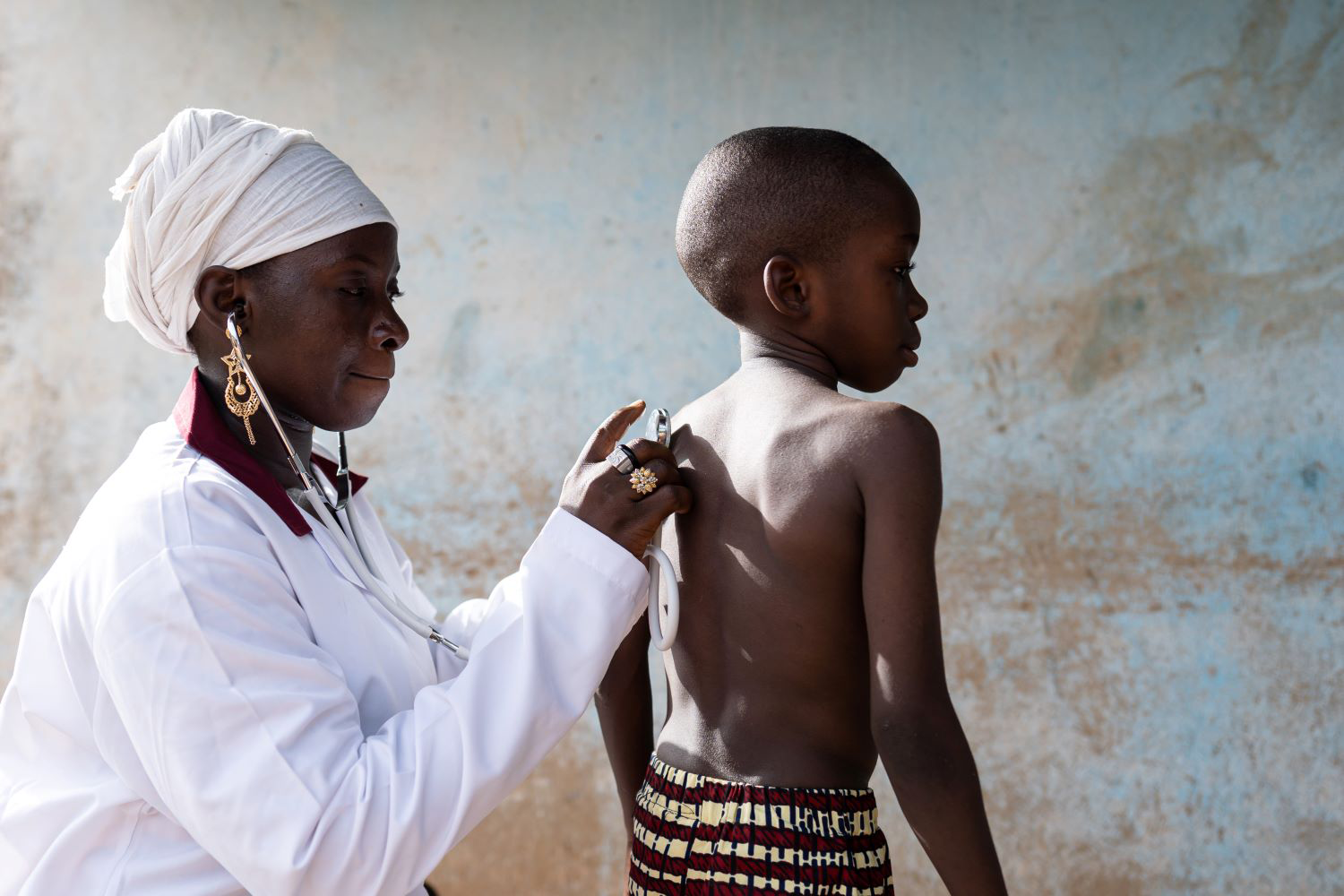
The president’s budget lands as the administration races to implement an ambitious new global health strategy through a flurry of bilateral agreements signed since December. The America First Global Health Strategy positions bilateral health cooperation agreements as a programmatic anchor: dramatically scaling back US assistance while seeking to shift more health aid to country systems and pressing countries to pick up a larger share of their own health costs. The administration wants to move at breakneck speed, but advancing such a massive transition takes time. To date, few countries are ready for implementation, and global health spending obligations fell sharply in 2025, contributing to concerns about the State Department's ability to spend existing funds—let alone program new money without established procurement vehicles. Partnering more directly with governments has real merit—a meaningful shift from prior US health support, which relied heavily on parallel delivery systems. But US global health assistance is lifesaving, and responsible transition planning to preserve service continuity remains critical. The request eliminates disease-specific funding lines and establishes a uniform three-year period of availability across all global health funds.
Maximal flexibility and uniform availability of funds—so the argument goes—will allow the State Department to tailor health assistance to local priorities and align strategies across disease areas. But that justification is unlikely to persuade Capitol Hill, where lawmakers have used spending directives to preserve support for certain global health priorities and to fight specific diseases. Those directives have also served as a policy tool to preserve US leadership in more controversial, yet potentially cost-effective areas, such as family planning and reproductive health.
While the White House request eschews funding lines for individual disease areas and health challenges, it touts plans for America First Global Health Strategy investments across HIV/AIDS, maternal and child health, tuberculosis, malaria, and global health security. The Global Fund receives a promise of support without a specified commitment figure, but other major health multilaterals—the World Bank-hosted Pandemic Fund, the Coalition for Epidemic Preparedness Innovations, and Gavi—appear to be left out. The State Department’s Congressional Budget Justification stipulates that any resources for Gavi would be “contingent on the organization making necessary reforms and meeting certain benchmarks on vaccine safety.”
National Security Investment Programs versus America First Opportunity Fund
Despite large rescissions—pocket and otherwise—of funding from traditional bilateral economic assistance accounts, the deal reached by appropriators early this year provided more funding than requested for aid-supported development programming, albeit under a new name. The FY26 spending package officially merged the Development Assistance and Economic Support Fund accounts, delivering a $7 billion allocation for a new National Security Investment Programs (NSIP) account and authorizing just $575 million for the requested America First Opportunity Fund (A1OF). The president's FY27 proposal again seeks funding for A1OF, which would continue US support for Jordan and Egypt (longstanding partnerships) and otherwise focus on the Western Hemisphere and Indo-Pacific, through initiatives intended to bolster US competitiveness, leaving questions about whether US assistance will fund interventions in areas of longstanding bipartisan interest, such as conservation and education. Food security has seen some signs of life through the State Department’s $40 million commitment to agricultural research at the world-renowned CIMMYT (also known as the International Maize and Wheat Improvement Center) and a funding opportunity for domestic land-grant universities championed by lawmakers.
We have yet to see a Treasury Account Symbol or TAS for the new NSIP account to appear in any of our data repositories, so we’ll have to wait to see how—or whether—these funds have been obligated.
Hedging on humanitarian assistance
Congress shored up US humanitarian leadership in its FY26 funding package by providing more funding than the administration requested. And with the recent announcement of a newly constituted Bureau of Disaster and Humanitarian Response at the State Department—successor to USAID’s Bureau of Humanitarian Assistance—the administration's vision for US leadership in overseas disaster response is starting to take shape. The president’s budget would provide only $4 billion in International Humanitarian Assistance—the newly created central humanitarian account—while rescinding $1 billion in previously appropriated, no-year International Disaster Assistance.
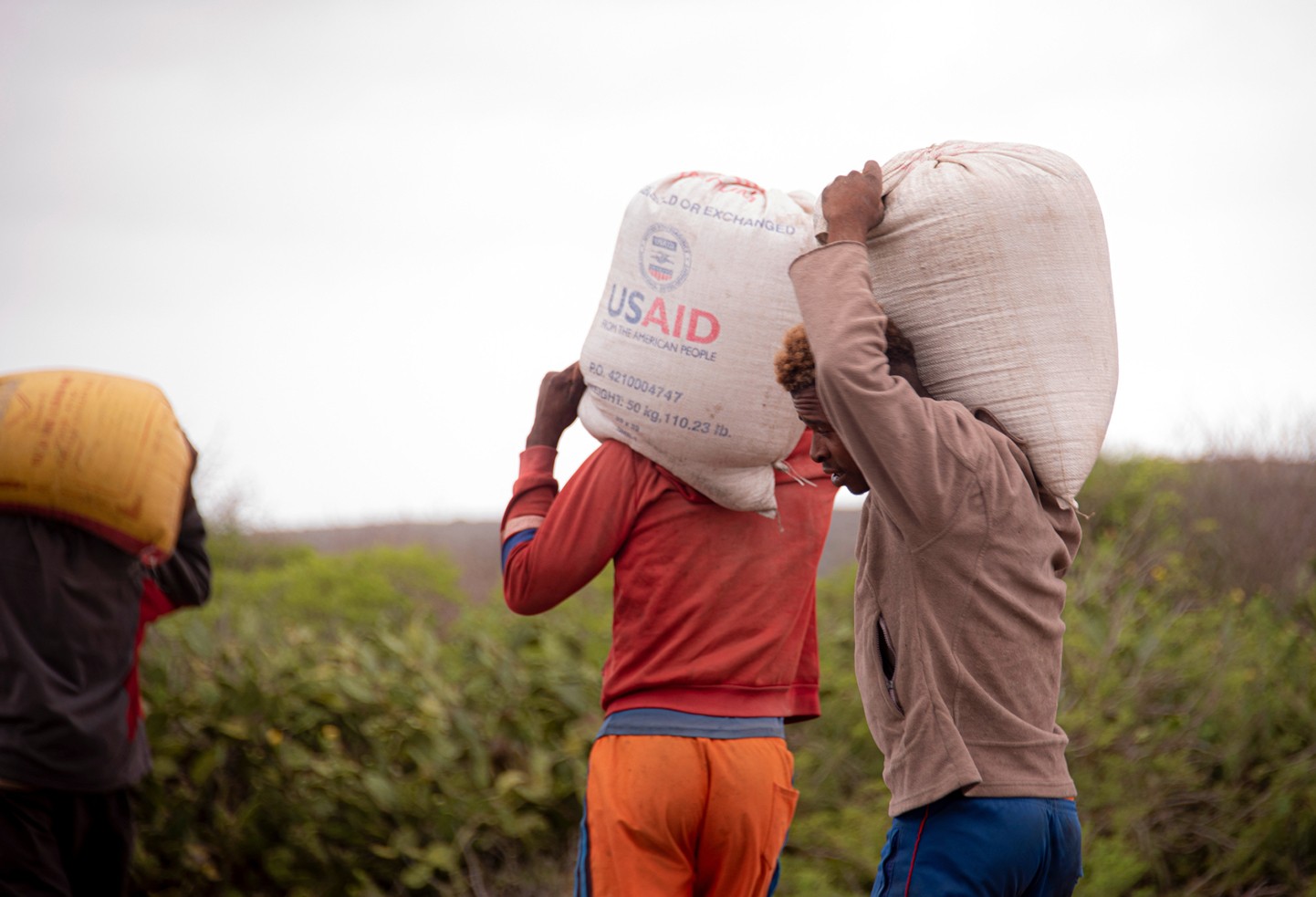
The administration has been explicit about its attempt to install a leaner and more efficient humanitarian architecture. Reporting on an internal reorganization plan suggests a drastically smaller footprint relative to USAID’s humanitarian apparatus—potentially about 80 percent fewer personnel—with new overseas positions consolidated into regional assistance hubs. The bureau joins disaster response, humanitarian aid and policy capacities, and some food security programming under one roof, while maintaining international migration-focused work in its longstanding home: the State’s Bureau of Population, Refugees, and Migration. The US Department of Agriculture (USDA) has assumed administrative responsibility for the largest US international food assistance program, PL 480 Title II, pledging to ensure it benefits US farmers and shippers. Despite this emphasis on the procurement of American-grown food, the FY27 budget request again proposes eliminating the Food for Peace program in its entirety.
Fragmentation has long dogged US humanitarian programming for years, leaving ample room for reform. A “humanitarian reset” framework centered on the United Nations Office of the Coordination of Humanitarian Affairs could hold appeal—but a string of one-off aid announcements belies a serious slowdown in humanitarian spending. With the emerging fallout from the war in Iran and ongoing crises worldwide, there is no shortage of need.
The one area where the administration hopes to boost funding is through the Emergency Migration and Refugee Assistance account, which the president can draw down at his discretion. The budget justification notes IHA resources could fund “voluntary returns of illegal aliens, incentivizing governments to implement Safe Third Country Agreements, and building the migration management capacity of other countries”—as well as potential contributions to Trump’s Board of Peace for reconstruction in Gaza.
Feeling a bit iffy on the IFIs?
Recissions have come calling for US support for select International Financial Institutions (IFIs), which until now had escaped the funding cancellations that many other accounts had weathered. While the administration would deliver on US commitments to several core IFIs, the White House is hoping to claw back $387.2 million in previously appropriated funding for Treasury’s international programs—including resources to fulfill pledges to the African Development Fund and the Global Environment Facility, along with resources appropriators directed to the Global Agriculture and Food Security Program.
Under the request, the administration would further revise down its pledge to the World Bank’s concessional lending arm, the International Development Association (IDA). Upon taking office, President Trump promised $3.2 billion over three years to IDA, compared with $4 billion pledged by his predecessor. The president’s FY27 budget includes an installment of only $866 million—a decline from the $1.067 billion requested and delivered by Congress in FY26—and the budget appendix suggests a new total pledge to IDA’s last replenishment of $3 billion. IDA is the largest source of development finance for the world’s low-income countries and plays a critical role in responding to economic shocks that threaten hard-fought development gains. A $3 billion pledge for IDA21 would keep the US in the top donor slot—and dependable provision of resources to IDA has historically allowed the US to play a leading role in shaping its policies and programs.
In a change from last year, the president’s budget would fund the International Fund for Agricultural Development (IFAD), which finances agriculture projects in rural areas of the world’s poorest countries. President Trump declined to request funds for IFAD in his first term or for FY26. But the White House seems to have had a change of heart, requesting $47 million for the third payment toward the US pledge during the fund’s last fundraising cycle, an auspicious sign—even if the figure represents a cut to FY26 enacted levels—amid ongoing negotiations for its next replenishment, IFAD14.
In the meantime, the administration requests funding to preserve US shareholding at the African Development Bank, the European Bank for Reconstruction and Development, and the Inter-American Investment Corporation, while honoring its recent pledge to the Asian Development Fund. Treasury also looks to preserve $32 million in flexible funding for emerging issues, touting the potential of loan guarantees—which found support in the last administration—to provide massive leverage with more limited resources. Finally, the administration re-ups its request to authorize quota reform at the International Monetary Fund. A negotiation under the previous administration yielded an agreement for a 50 percent equiproportional increase in quota resources, meaning the US will retain its quota and vote shares.
MCC: Not dead yet
The Millennium Challenge Corporation (MCC) had a roller-coaster of a year, barely dodging the DOGE axe and surviving in large part thanks to bipartisan support on the Hill. Still, the agency didn’t emerge unscathed, undergoing significant workforce reductions, a slew of program terminations, and further rescissions. Mere months later, however, the agency had reworked its country scorecards and made a fresh round of partner selections, a signal that the administration views the MCC model as worth keeping.
At $609 million, the White House’s topline request for the agency continues a decline from $930 million enacted in FY25 and $830 million enacted in FY26—but the full picture is more nuanced. The administration previously proposed clawing back $1.2 billion in prior-year unobligated balances, but Congress held it to $661 million in the package approved early this year. This year’s proposed rescission of $385 million is smaller still, meaning the agency’s net budget authority would edge up from $169 million to $224 million if enacted as requested. Not yet a ringing endorsement, but a marked improvement.
DFC: Dollars without deals?
Despite a recent reauthorization that more than tripled the development finance institution’s portfolio cap and gave the agency greater investment flexibility, the US International Development Finance Corporation (DFC) has been relatively slow to ink new commitments. Recent project announcements have been light on details, or touted larger, geopolitically motivated frameworks or letters of intent. Most recently, DFC promised $40 billion in reinsurance for vessels transiting the Strait of Hormuz, but the situation in the region is evolving rapidly and questions about the arrangement’s feasibility persist.
The FY27 budget request includes $804 million in combined funding for DFC’s program account and administrative expenses—to be shored up with $3 billion in mandatory spending to capitalize DFC’s new revolving fund—a workaround to the treatment of direct equity authority included in the agency’s recent reauthorization. In concept, the fund was blessed by Congress, but getting lawmakers on board with new mandatory spending is always a lift. The Biden administration tried the same tactic in FY24, pointing to the need to out-compete China, with $2 billion reserved for DFC; the Trump administration tried to secure the $3 billion in FY26—pre-reauthorization—lawmakers declined both times.
What’s left?
There is plenty more to dig into compared to last year’s skinny budget. With that in mind, here are two cross-cutting issues we’re watching.
In its budget justification, the State Department offered some reassurances on two fronts: data transparency and evidence. Through its statement on performance and evidence-based policy, it pledged to continue improving the quality and availability of data on the US government’s flagship ForeignAssistance.gov website. Woot! Here’s hoping for more timely and comprehensive project-level data.
Congress previously signaled its desire for more details regarding plans for foreign assistance, including specifics on organizational changes and staffing. The FY26 spending measure and accompanying report directed briefings and notification requirements. Yet the president’s budget doesn’t offer much additional insight into how the administration is rebuilding capacity after the State Department retained only a fraction of USAID’s staff to manage billions in programming and create new procurement, oversight, and monitoring systems. Many questions remain about the administration’s intent and progress toward establishing the staffing and systems needed to manage new (and existing) resources.
What’s next?
The president’s budget is always part wish list, part messaging document. The real test will be whether the administration can translate the budget request into credible policy—and whether Congress has the appetite to hold it accountable. The request represents an increase in foreign assistance and international engagement compared to last year’s austere request, but it’s likely to put the administration at loggerheads with appropriators. Officials are set to brief Congress on the request in the coming weeks, and given the limited transparency around major shifts in US development programming and policy, we expect lawmakers to have questions about both current and future spending, especially since preliminary data released last Thursday showed US official development assistance in calendar year 2025 fell by 56.9 percent from 2024. If the figure holds, it would amount to an unprecedented drop—and mean Germany would unseat the US as top bilateral donor!
In addition, we’re still waiting to see whether the administration will request emergency funding for any of these accounts related to the war in Iran, which could be used to respond to the humanitarian and economic fallout. Finally, appropriators—and their long-suffering staff—pulled a rabbit out of a hat last year in securing agreement on all but one spending measure (albeit a few months behind schedule). With midterm elections on the horizon, time on the Congressional calendar will be short, and deals may prove more elusive. Still, we’ll continue to follow the (current) money and eagerly await signals from Capitol Hill.
Topics
DISCLAIMER & PERMISSIONS
CGD's publications reflect the views of the authors, drawing on prior research and experience in their areas of expertise. CGD is a nonpartisan, independent organization and does not take institutional positions. You may use and disseminate CGD's publications under these conditions.
Thumbnail image by: Herve Irankunda/USAID