Recommended
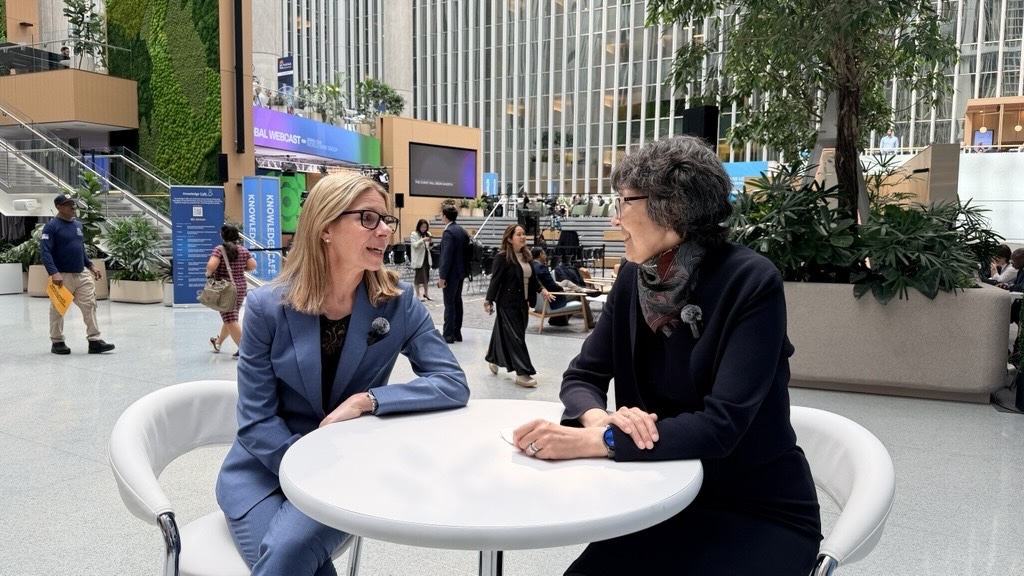
CGD at the 2026 IMF / World Bank Spring Meetings
The IMF-World Bank Spring Meetings are underway, bringing together finance ministers, central bankers, and other top officials from around the world as they grapple with war in the Middle East amid long-simmering global challenges. CGD experts share what they’re watching this week.
CGD is also hosting events this week covering everything from building shock absorbers into debt clauses, to rewriting the case for aid, to financing for education, and more. Learn more and register here.
Balancing crisis response with long-term challenges
I’ll be watching whether the series of crises experienced this year (tariffs, aid cuts, wars) entirely displaces discussion and action on longer-term challenges like structural change, human capital investment, and climate change. The short-term challenges are real and important, and we have written about them extensively: see, for example, our work on tariffs, aid cuts, and the Iran war. But the international community also needs to make decisions and investments for the long term. We have to walk and chew gum at the same time. If policymakers keep an eye on the long term, a crisis can be used to move policy in the right direction: uncertainty around fossil fuel supply and higher prices should lead to more investment in renewables, lower aid budgets should encourage more efficientuse of aid, and tariffs from the US should prompt countries to promote trade with others by reducing barriers.
Unfortunately, we are seeing the opposite. Many countries are increasing general subsidies (or cutting taxes) on fossil fuels. This is much more expensive than targeted relief to those in need, and short-term relief has a nasty tendency to lead to long-term subsidy. Cuts have not (in general) made aid budgets better targeted: Africa saw big cuts while aid to the small, well-off, UK territories doubled, with a projected £32,000 per head per year, compared to 48p per head to Africa. But at CGD we will keep working to generate positive reforms out of crisis.
Will creditors step up for debt suspension?
The Iran war comes as debt service trends in low-income countries and lower-middle-income countries have been worsening, not improving. In 2025, African governments spent nearly 1/5 of their revenues on interest. Four out of five spent more on debt service than on health or education. The fiscal squeeze will now be compounded by intense pressure on international reserves as they struggle to pay dollar and euro debt and much higher import costs. All eyes will be on IMF and MDB efforts to mobilize emergency finance. IMF Managing Director Kristalina Georgieva says near-term demand for IMF finance could reach $50 billion. World Bank President Ajay Banga is talking about $20-$25 billion in rapid financing. They are rightly stepping up to their countercyclical role.
But the envelope for finance from international financial institutions (IFIs) on concessional terms for poorer countries is tightly constrained. And there are real costs to shifting a lot of finance from support for long-term development and growth to emergency finance. It’s fair to ask what role other creditors will play—bilateral creditors like China and private creditors. More IFI finance does not protect the most vulnerable if it mostly goes to pay external debt service. But no one gains if more countries fall into default. So I will be watching to see if emerging proposals gain traction for giving countries breathing room through temporary debt service suspension during this kind of crisis (as well as climate- and health-related shocks). And will both private and public creditors join in this effort?
Food prices, food markets, and who pays the price
As the World Bank doubles down on jobs and private sector development as its organizing framework, food markets are an underappreciated part of that story. Local food markets are where much of the employment and economic activity of the poor happens, and where market fragility shows up first. The World Food Programme estimates 45 million people could be pushed into acute hunger if the Iran war persists—because oil prices translate into food prices through transportation and fertilizer costs. Poor households in low- and middle-income countries spend two-thirds of their budgets on food, so food price spikes hit them hardest and first. But the food price challenge didn't start with the Iran conflict, and it won't end with it. In remote, poorly integrated markets, supply chains for nutritious foods—proteins, fruits, vegetables—are already thin. This same thinness undermines other policy tools too: for instance, health taxes on sugary and ultra-processed foods can't do much when affordable, nutritious alternatives simply aren't on the shelf. Across all three issues, the answer points in the same direction: investments in rural market infrastructure and supply chains are not separable from investments in social protection, health policy, or, for that matter, a jobs agenda that actually reaches the poorest.
The donors, institutions, and governments gathering this week should resist the institutional siloes that keep infrastructure, social protection, agriculture, and health in separate funding streams and separate conversations. They should pre-fund emergency cash transfer top-ups through existing platforms now, before higher fertilizer prices hit harvests later this year. And they must treat rural market development as a first-order priority, not an afterthought to the organizing agenda du jour.
As aid collapses, Africa's $4 trillion in domestic capital can't afford to sit idle
For the past year, one question has dominated African policy discourse: how to finance the continent's future as external support shrinks. The answer just got more urgent: global aid fell by 23.1 percent in 2025, the largest annual drop on record, with bilateral aid to sub-Saharan Africa down by 26.3 percent. Yet the development finance community keeps behaving as though the answer is mobilising more foreign private capital, while domestic financial systems stay shallow and long-term local savings go underused. Africa is not capital poor; it’s capital is misallocated—a point we make in our new CGD note on G20 priorities for private capital mobilisation. Domestic capital pools alone are conservatively estimated at around $4 trillion, alongside vast natural-resource wealth, including critical minerals. Far too little of this local capital is being channelled into productive investment at home. I'll be watching for signs that MDBs, DFIs, and donors are finally treating local capital mobilisation and capital market development as central to Africa's financing future, not peripheral to it, a question we'll explore this week at CGD's event, How Can Africa Finance Its Own Transformation?
Navigating the 2026 G20 "gap year"?
The world is in a period of extreme uncertainty and volatility. A fragile ceasefire has at least temporarily halted fighting in Iran, but the conflict has rattled markets and pushed many countries to the brink. Governments, especially in the world’s most vulnerable countries, face a delicate balancing act between insulating their populations from major price shocks and protecting their balance sheets. Their ability to do both will largely hinge on the duration of the crisis—and it's more likely than not that some dams could break.
This is precisely the kind of economic moment where the G20 has been most effective, including as a body that can credibly instruct the IMF and World Bank. But we aren't in normal times. The United States—the host of this year’s G20, which some are already facetiously calling the “G20 gap year”—is the instigator of much of the disorder that the world now confronts, from tariffs to wars.
I don’t expect the April 16 gathering to even muster a communiqué. The constellation of governments that form the G20 agree on too little. But members cannot let the “gap year” become the terminal year. The world is too fragile, too on edge, and too interconnected for the G20 to simply cease to matter. Coordinated leadership is not optional — it is the difference between a crisis contained and a crisis that cascades.
Will the IMF deliver for Africa?
Sub-Saharan African countries are being hit hard by the fallout from the Iran conflict, with sharply higher fuel prices and rising food and fertilizer costs pummeling already vulnerable low-income, net fuel importers in particular. I’ll be watching how muscular the IMF’s financial response will be—through augmentations, new programs, and emergency financing to cushion the shock. I’ll be looking for clear assessments of the impact on debt vulnerabilities in low-income countries—both liquidity and solvency risks—and whether some countries are being pushed over the edge, alongside robust discussion of concrete proposals to address mounting debt pressures. Beyond the immediate crisis, I’ll be interested in messaging on energy security and the implications for the green transition. And more broadly, what message will the IFIs send to policymakers increasingly wary of international financial and trade integration, as fragmentation and global shocks intensify?
What the Ukraine financing deadlock means for developing countries
This week, I’ll be watching what the Ukraine financing deadlock means for developing countries. With Hungary and Slovakia blocking the EUR90 billion EU loan and Ukraine's funds running out by June, European governments are being forced into bilateral gap-filling that directly competes with development budgets already under severe pressure and now even more so from the Iran energy shock. I'll also be watching what the unanimity chokepoint means for the EU's credibility as a long-term development partner if two member states can veto a package agreed by 25, approved by Parliament, and urgently needed, without consequence. The EU's next multi-annual budget proposes EUR200 billion in external action financing for developing countries; if the bloc cannot deliver on a commitment of this visibility and urgency, those promises will ring increasingly hollow. A Ukraine financial crisis would ultimately hurt developing countries by consuming institutional bandwidth, triggering market volatility, and eroding confidence in the multilateral system at precisely the moment it is needed most.
Topics
DISCLAIMER & PERMISSIONS
CGD's publications reflect the views of the authors, drawing on prior research and experience in their areas of expertise. CGD is a nonpartisan, independent organization and does not take institutional positions. You may use and disseminate CGD's publications under these conditions.
Thumbnail image by: Simone D. McCourtie / World Bank