Recommended

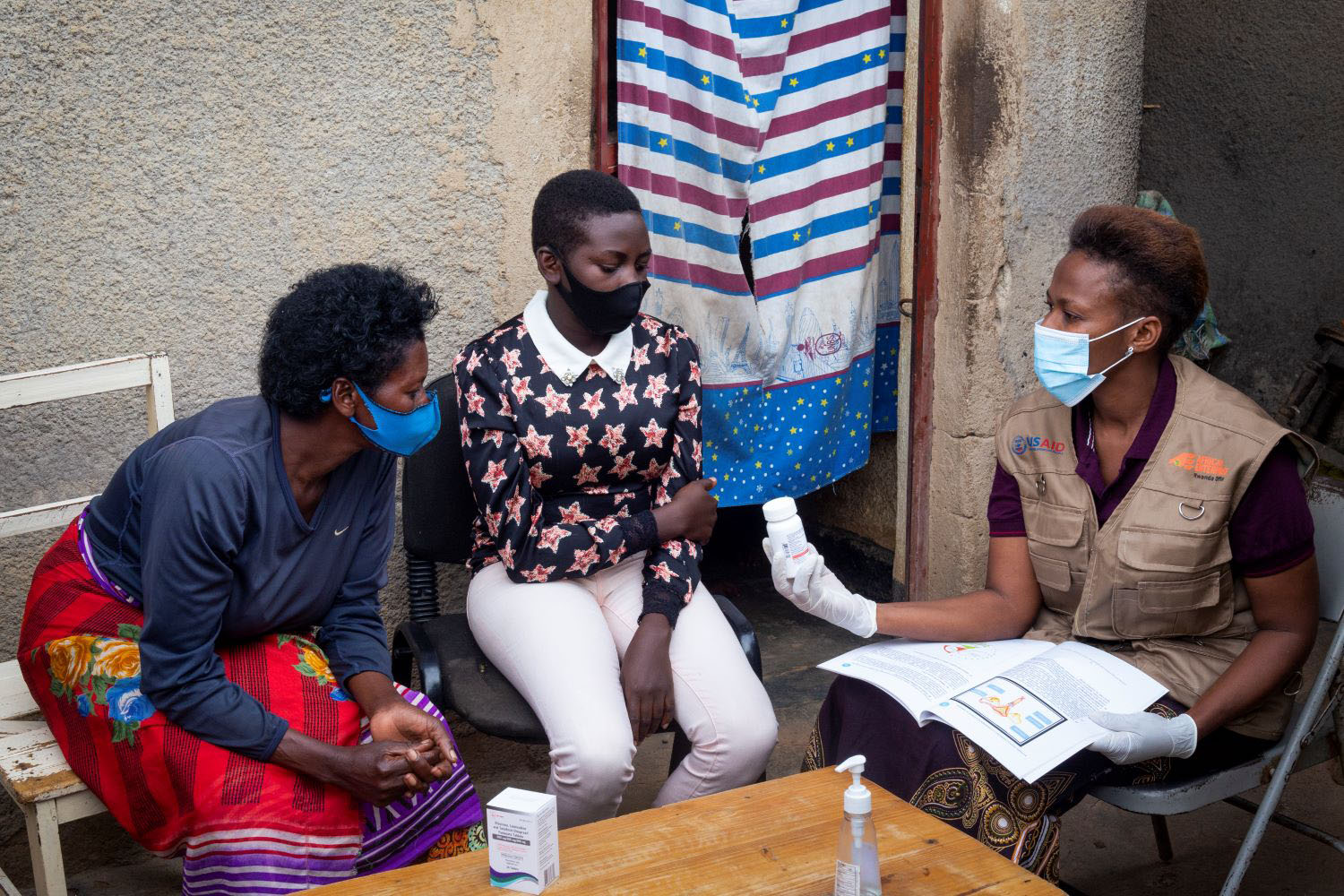
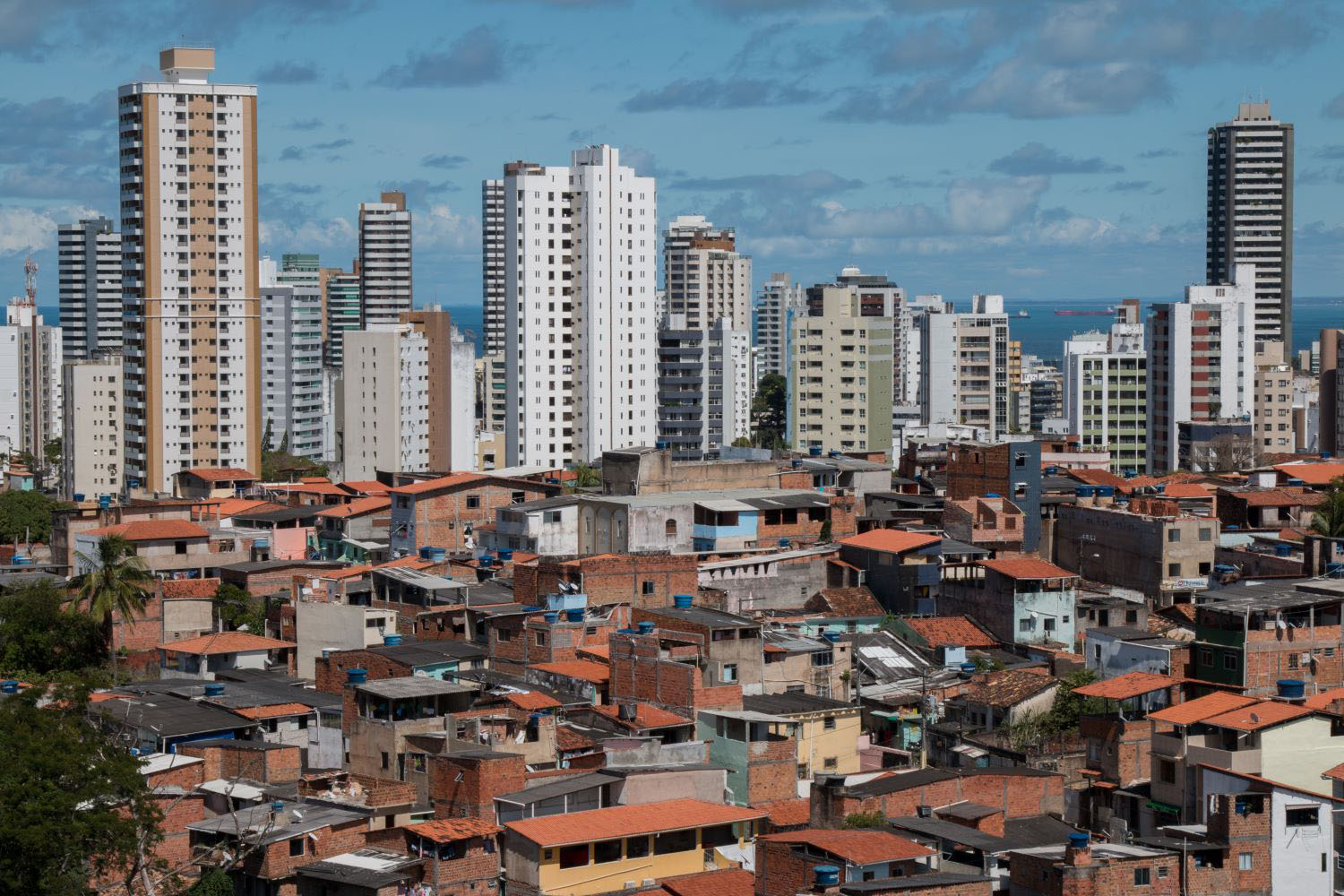
Recent US foreign aid cuts have severely impacted life-saving health and humanitarian programs in low- and middle-income countries (LMICs), with sectors such as education, reproductive health, and maternal care facing substantial funding reductions. These cuts are likely to reduce service delivery in the short term, as many LMICs are grappling with shrinking fiscal space and high debt burdens, limiting their capacity to make up the gap left by the cuts. In 25 countries, US aid for health and education programs was equal to more than 10 percent of domestic spending in these areas in 2022, highlighting the risk of serious service disruptions (for a list of these countries, see Table 1 below).
USAID programs are primarily delivered in-kind by implementing partners, including for-profit contractors and non-governmental organizations. To maintain service delivery, countries must either find new donors or fund programs themselves. This blog argues that the outlook for social service provision in many LMICs exposed to USAID cuts is concerning, as these countries have limited capacity to mobilize additional domestic resources in the near term. The prospects for offsets from other bilateral donors are also dim, given rising fiscal pressures in high-income countries and increased defense spending needs amid shifting geopolitical dynamics. In this context, additional support from international financial institutions (IFIs) and private philanthropies may be the only viable path for USAID-exposed LMICs to sustain essential social services in the short term.
In the longer term, LMICs will need to strengthen their policy frameworks to improve their fiscal circumstances and sustainably fund core domestic programs. There is significant untapped potential to raise more domestic revenue—levels of which have stagnated since 2012—and to improve spending efficiency. These steps are crucial for creating fiscal space to sustain and scale long-term investments in health, education, and social protection.
Table 1. 25 countries exposed to US aid cuts in social services
25 countries exposed to USAID cuts face a challenging fiscal outlook
The pandemic triggered a rise in government spending to expand social protection programs and implement stimulus measures even as revenue generation declined. As a result, fiscal deficits rose from 4.1 percent in 2019 to 5.5 percent in 2020 and averaged 4.5 percent between 2020 and 2024 among this group of countries (Figure 1). This persistence is partly due to external shocks, notably Russia’s invasion of Ukraine in 2022, which drove up food and energy prices and prompted governments to implement tax cuts and extend subsidies.
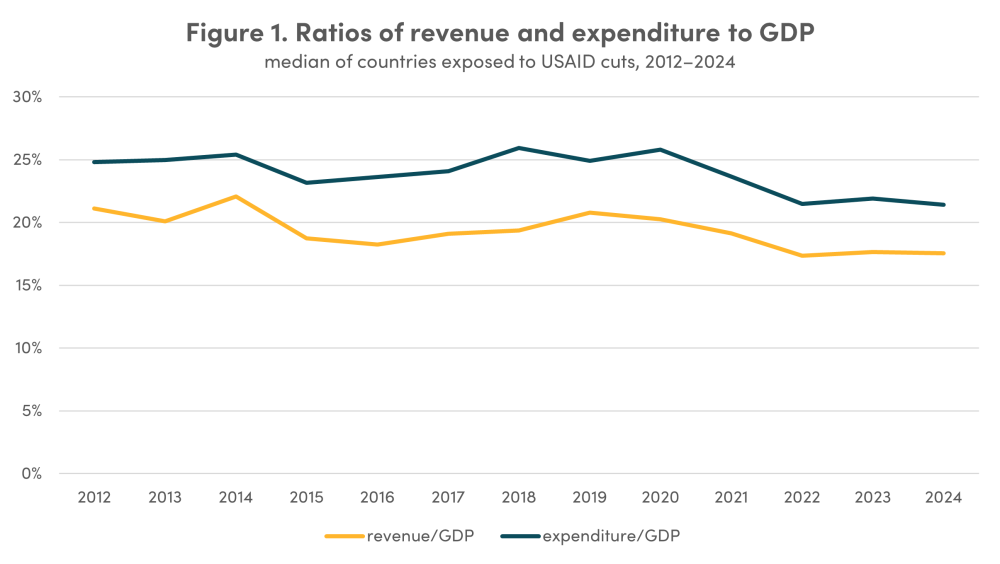
Source: IMF WEO Database
Reflecting increased borrowing during the low-interest rate environment of the 2010s, many of these countries continued to finance their widening deficits, even as rising interest rates and a stronger US dollar increased their debt servicing costs. Their median public debt-to-GDP ratio doubled, rising from 27.0 percent in 2012 to 54.3 percent in 2024 (Figure 2). According to the IMF, 21 of the 25 most USAID-exposed countries are now either in debt distress or at moderate to high risk of debt distress.
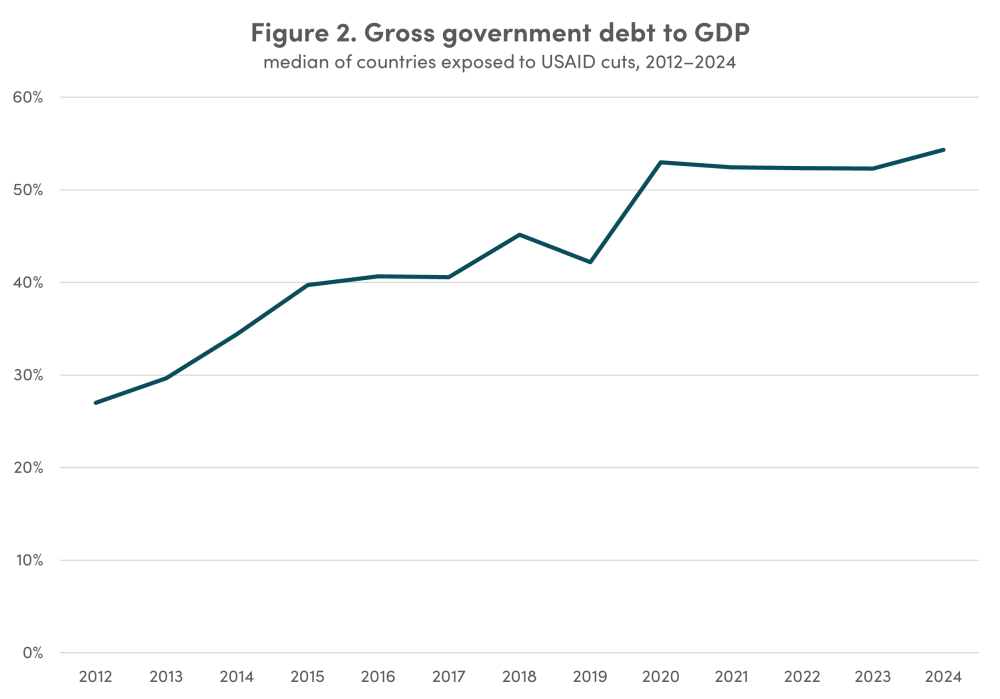
Source: IMF WEO Database
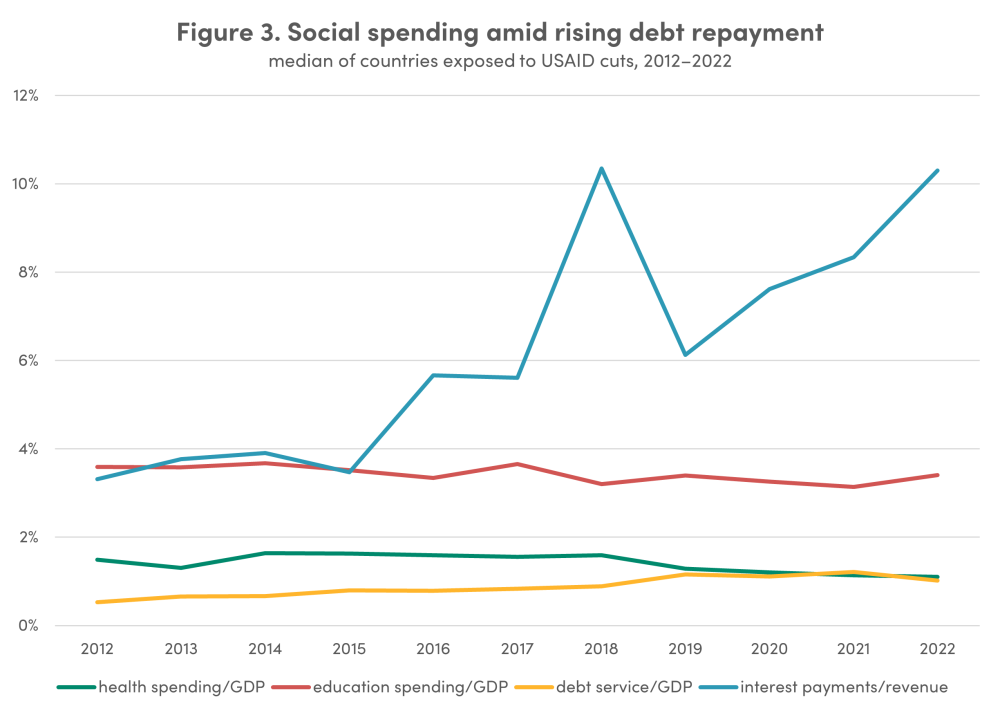
Rising debt burdens are forcing many countries to allocate a growing share of their revenues to interest payments, potentially crowding out essential services. In countries exposed to USAID cuts, health spending has declined as a share of GDP since 2012, and it remains below 2 percent of GDP in LMICs broadly. Education spending also declined over the same period in countries exposed to USAID cuts. Meanwhile, interest payments as a share of revenues increased more than threefold between 2012 and 2022, rising from 3.3 percent in 2012 to 10.3 percent in 2022. Amid tightening fiscal constraints, interest payments squeeze public spending, including critical health and education programs.
Source: World Bank WDI, World Bank International Debt Statistics
Outlook for donor and concessional aid
The prospects for replacing US aid with funds from other advanced-country donors appear bleak. US aid cuts are not an isolated case but part of a broader trend among traditional aid providers, driven by shifting priorities, fiscal pressures, and rising defense spending and costs tied to aging populations. Germany, the largest non-US bilateral donor in 10 of the 25 countries most exposed to USAID cuts, has indicated it will cut development aid under the newly elected centrist coalition. France and the UK have also announced cuts to their aid budgets by 37 percent and 40 percent, respectively. Moreover, remaining aid is increasingly being redirected away from traditional humanitarian programs toward areas aligned with donors’ strategic interests, like securing access to critical minerals and controlling migration. In this context, it is unlikely that other bilateral donors will offset US aid cuts.
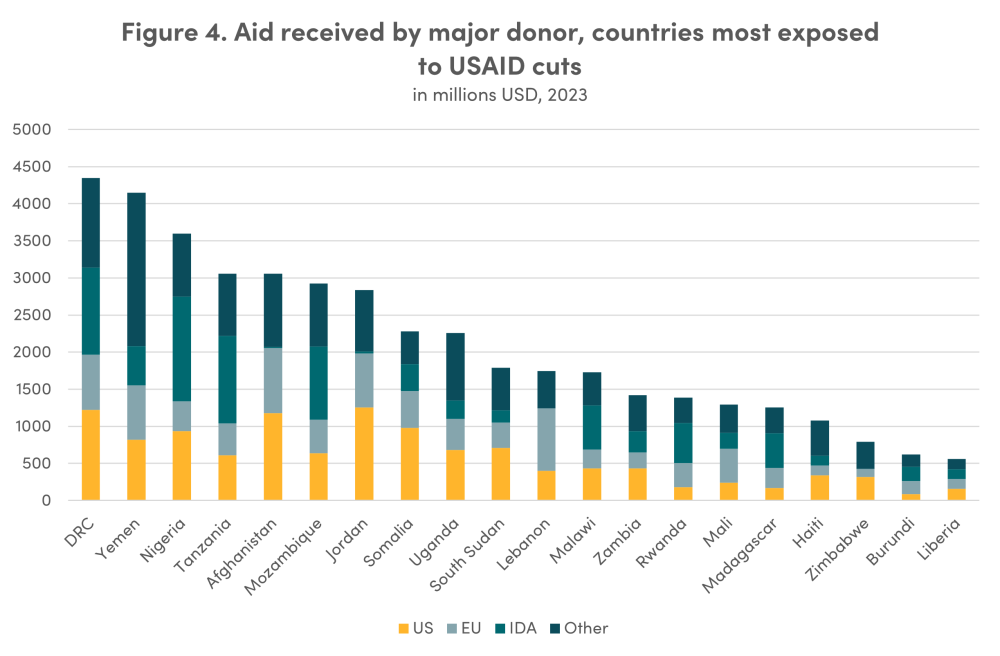
Multilateral aid providers are also facing budget cuts in donor countries. The International Development Association (IDA), the World Bank’s concessional financing arm that supports many of the world’s poorest countries, is the largest source of aid for 18 of the 25 countries most exposed to USAID cuts (Figure 4). The Trump administration has proposed cutting $800 million from the US’s original $4 billion pledge to IDA’s most recent replenishment, while the UK’s $2.7 billion commitment is under review. The US has also withdrawn from the World Health Organization (WHO) and dramatically cut funding to the UN World Food Program (WFP), both of which provide life-saving humanitarian support in many LMICs.
Source: OECD DAC Database.
Charting a sustainable path forward
In the absence of offsetting support from other donors, the only sustainable and lasting solution is to strengthen domestic capacity to fund and deliver essential public services. It is well-documented that a heavy reliance on external grants may reduce governments’ incentives to collect taxes (see here, here, and here). Given this, there is scope for raising revenues over time in the countries most exposed to cuts. Among this group, the median tax revenue-to-GDP has consistently remained below the 15 percent threshold that the IMF identifies as necessary to support development and growth. In several countries, including the Central African Republic, the Democratic Republic of Congo, and Ethiopia, tax revenue is less than 10 percent of GDP, well below the minimum level associated with long-term development. Legislators in Ethiopia have already implemented a new tax on individual and business revenue to pay for projects previously funded by USAID.
While raising revenues in these contexts is challenging due to high levels of informality and weak governance, there are feasible and politically sensitive reforms that can yield additional revenue over time. According to the IMF, low-income countries (LICs) could potentially raise up to eight percent of GDP in additional tax revenues through institutional and policy reforms. These reforms include reviewing and rationalizing tax expenditures, including exemptions, special deductions, and tax credits, which are often costly, poorly targeted, and nontransparent. Available estimates suggest these tax expenditures account for at least 2.5 percent of GDP or 20 percent of revenues in many countries. Most exemptions are concentrated in corporate taxes and value-added taxes (VAT), undermining the performance of both. More precise targeting of tax expenditures and improved VAT efficiency could yield substantial revenue gains. In addition, countries could consider implementing or strengthening excise taxes on petroleum products, alcohol, and tobacco, which would provide a stable source of revenue while addressing negative externalities.
These efforts must be accompanied by improved efficiency in public spending, which would help strengthen fiscal positions and maintain social services amid widespread aid cuts. Prior research has estimated that LMICs could generate up to three percent of GDP in new resources by adopting efficiency-enhancing spending measures. As much as one-third of public investment is lost to inefficiencies, and vast disparities in the efficiency of education and health spending suggest that significant gains in outcomes are possible without increasing current spending levels. In many LMICs, fossil fuel subsidies consume substantial resources disproportionately benefiting upper-income households while contributing to environmental degradation. Governments should undertake spending reviews to identify country-specific inefficiencies that can be cut or streamlined to increase spending on health, education, and other critical services. Implementing efficiency-enhancing measures will not be easy, and they will require sustained political commitment and time to build consensus. However, the potential gains are significant.
By combining stronger domestic resource mobilization with efficient spending, countries could generate resources to more than replace lost aid programs. In the long term, these reforms will deliver broad and self-reinforcing benefits; a more equitable and efficient system will increase tax compliance as taxpayers see their contributions put to better use, while increased investment in human capital will drive economic growth, bolster resilience, and reduce long-term dependence on external assistance.
Topics
DISCLAIMER & PERMISSIONS
CGD's publications reflect the views of the authors, drawing on prior research and experience in their areas of expertise. CGD is a nonpartisan, independent organization and does not take institutional positions. You may use and disseminate CGD's publications under these conditions.
Thumbnail image by: Dominic Chavez / World Bank