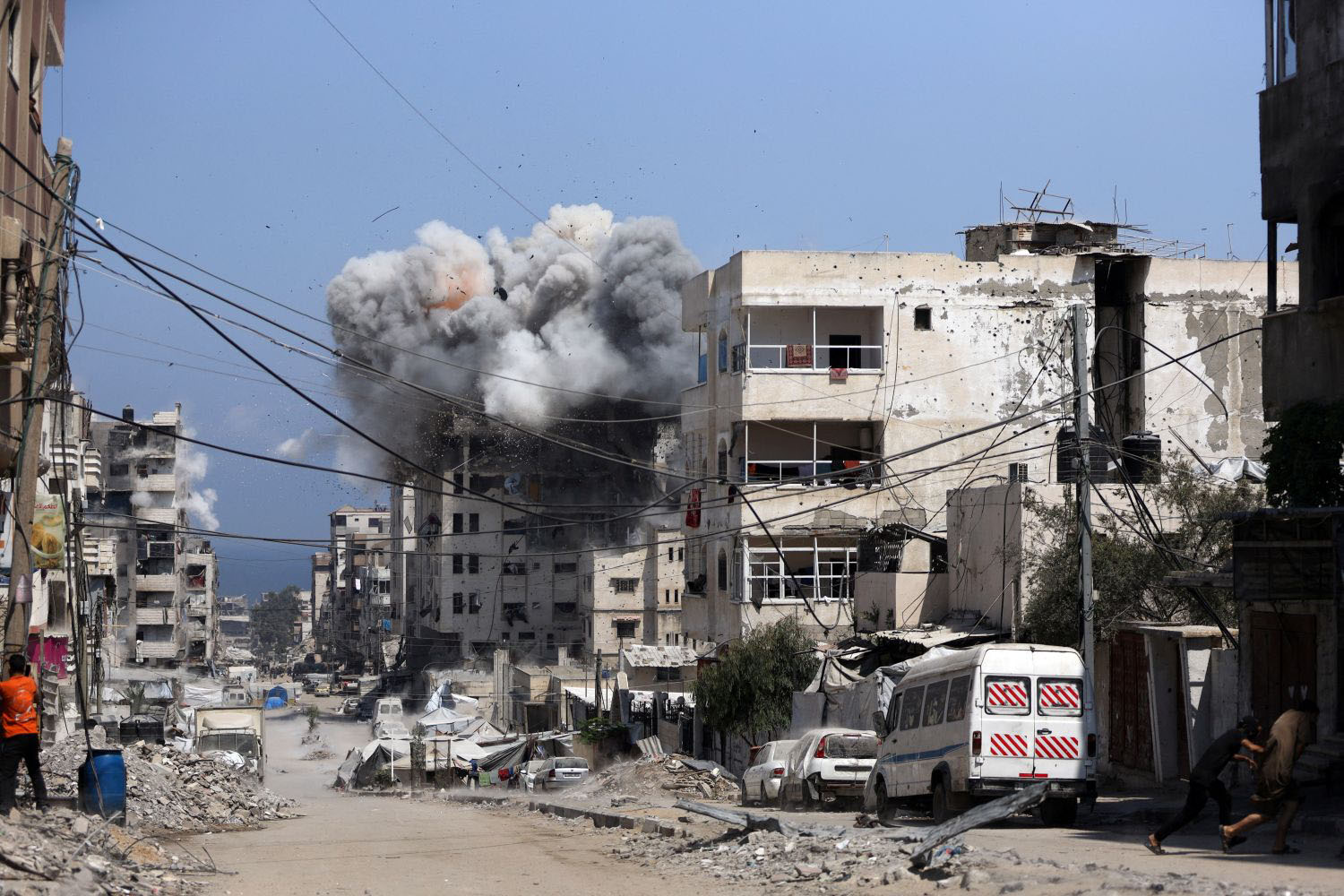
The conflict in the Middle East will weigh heavily on public finances across the region for years to come. Destruction of public and private assets will ripple through economies in multiple ways: private consumption will likely weaken, while trade, tourism, and business confidence could suffer significantly. Together, these effects are likely to slow growth over the medium term and place mounting pressure on government budgets. A recent IMF study shows that output losses from conflict typically exceed those from financial crises and natural disasters combined.
Slower growth erodes the tax base, since government revenues move closely with overall economic activity. Meanwhile, reconstruction needs and rising military spending would push public expenditure higher. The result would likely be wider fiscal deficits and rising public debt.
For many governments, military spending may become an immediate budget priority. In some countries, this could crowd out ambitious plans for economic diversification, modernization, and long-term development. Some oil exporters in the region, however, possess sizable financial buffers that could support reconstruction once the conflict ends and help limit longer-term damage. Even in these cases, higher hydrocarbon revenues may be partly—or fully—offset by conflict-related costs and broader macroeconomic disruptions.
Strengthening economic resilience will therefore become increasingly important. Governments will need stronger fiscal frameworks, more efficient public spending, and greater efforts to mobilize revenues. Reconstruction requires revenue—and that places tax reform at the center of the region’s long-term recovery strategy. All countries in the region have potential—though of varying magnitude—to raise additional revenues.
A timely new volume
The recently published IMF volume, Taxation in the Middle East and North Africa: Prospects and Possibilities, arrives at a critical moment. Covering 21 countries, it brings together a wide range of analytical and policy perspectives on taxation in a region whose fiscal systems have historically received less scholarly attention than those of Latin America, Europe, or East Asia.
Recognizing the diversity of the region, the book groups countries into three broad categories—hydrocarbon exporters, hydrocarbon importers, and fragile and conflict-affected states—and examines how tax policy and administration can be strengthened in each setting. This framework could help countries address mounting revenue pressures once the conflict subsides.
Hydrocarbon wealth has long reduced the incentive for oil exporters to build robust non-resource tax systems, and the transition away from this dependence remains uneven. The book offers a candid assessment of recent reforms in the Gulf Cooperation Council countries, where the introduction of a value-added tax (VAT) marked a historic shift away from exclusive reliance on oil revenues. VAT performance still varies considerably across countries, however, and the volume discusses several ways to improve revenue efficiency. While political constraints remain important, the post-conflict environment may create opportunities for gradual reforms to broaden the VAT base.
The role of excise taxation in the region has declined since the mid-1990s, largely because rates on fuel and tobacco remain low despite these being among the region’s largest excise tax bases. Raising excise taxes could generate meaningful revenue while also delivering health and environmental benefits: higher tobacco taxes would improve public health, and higher fuel taxes would cut pollution and carbon emissions. All countries in the region are parties to the Paris Agreement, yet only a few tax fossil fuels at all, and none fully prices in the environmental costs of fossil fuel consumption. Liberalizing fossil fuel prices and bringing them within the VAT system would raise revenue while improving air quality and energy efficiency.
Personal income taxes remain similarly underdeveloped—they play little or no role in most countries and often yield less than 2 percent of GDP. Wealth transfer taxes, including inheritance taxes, generate negligible revenues due to high exemption thresholds. The post-conflict environment may present a political opening to broaden the base for both income and capital taxation.
In fragile and conflict-affected states, a different approach is needed. Tax systems there should initially remain simple, with gradual movement toward more modern, comprehensive structures as stability returns.
Across all contexts, stronger tax administration and digitization will be essential—to improve compliance, reduce leakage, and make revenue collection more efficient.
Looking ahead
The fiscal consequences of conflict will not end when the fighting stops. Reconstruction, social stabilization, and economic recovery will require governments to mobilize revenues on a scale greater than in the recent past. For many countries in the region, that means gradually moving away from hydrocarbon dependence toward broader, more resilient tax systems.
The challenge is not simply to raise more revenue. It is to build fiscal systems capable of supporting diversification, strengthening social contracts, and sustaining long-term economic recovery.