More from the series

Event
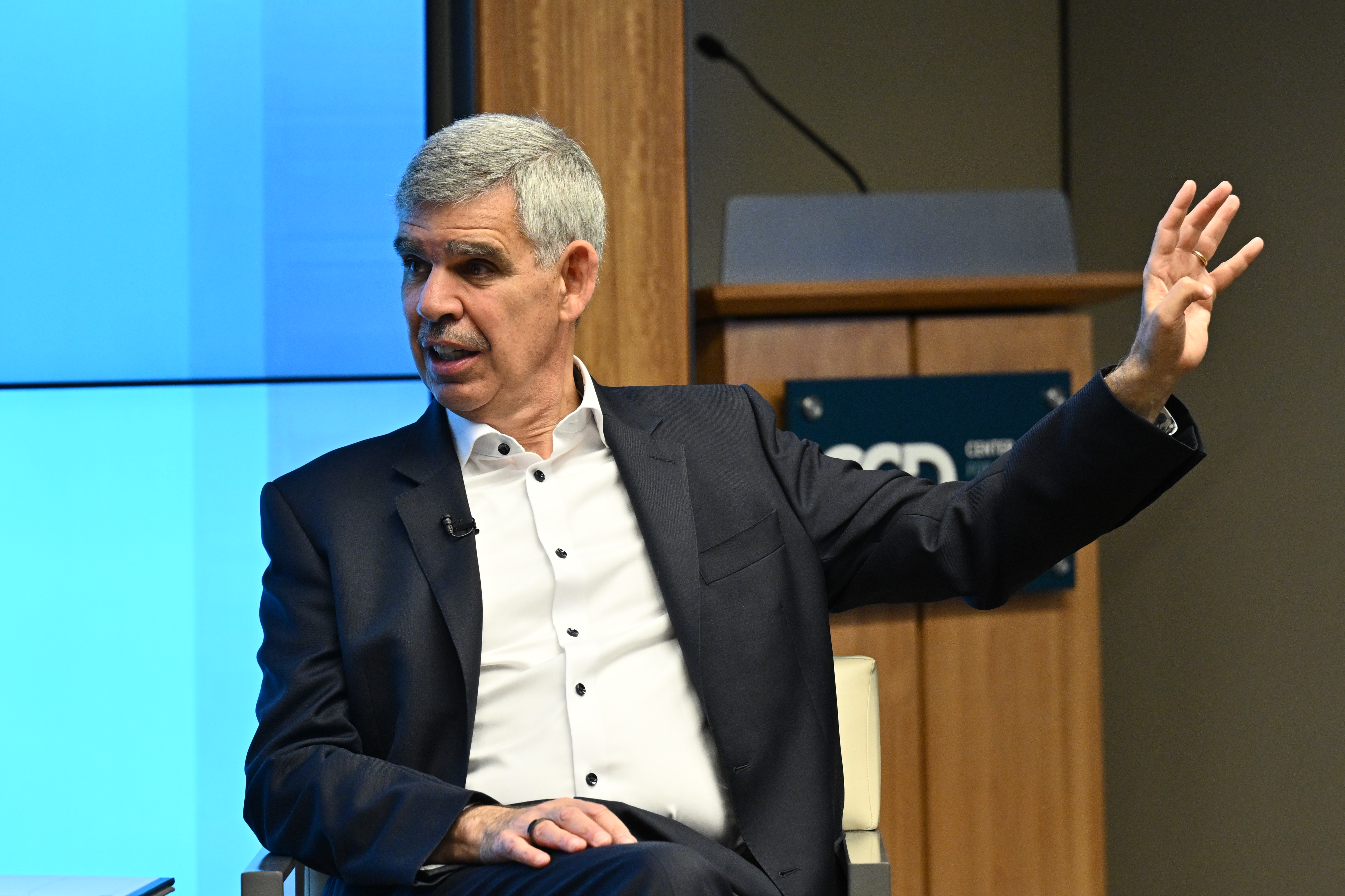
A Fireside Chat with Mohamed A. El-Erian
HYBRID
June 18, 2026 9:30—10:30 AM ET | 2:30—3:30 PM BSTClemence Landers: Welcome to the CGD podcast. I'm Clemence Landers, vice president and senior fellow at the Center for Global Development. Today, we are talking about the economic ramifications of the war in Iran on emerging markets and low-income countries. The Strait of Hormuz, one of the most consequential waterways in the world, through which roughly a quarter of the world's oil and 30% of internationally traded fertilizers normally transit, has been effectively shut for over a month. As a result, Brent crude has surged past $110 a barrel, and global fertilizer supply chains are fracturing.
Many governments throughout the world are facing a delicate balancing act between insulating their populations from major price shocks and protecting their balance sheets. Their ability to do both successfully will largely hinge on the duration of the crisis, but it's more likely than not that some dams could break. In Southeast Asia, where many nations are heavily reliant on oil imports from the Gulf, governments are deploying a litany of policy measures, fuel subsidies, fuel rationing, in some cases, currency intervention to cushion populations from the shock.
In Sub-Saharan Africa, many nations are staring down a trifecta of soaring import costs, tightening external financing conditions, and falling currencies. What I want to do today with our two guests is to dig into some of the big economic and development questions created by this war. Over the past six years, developing countries have been battered by a series of once-in-a-lifetime exogenous shocks, but how is this economic moment fundamentally different from COVID and the Ukraine war?
Do governments have the tools to respond? What are the early warning signs we should be watching for to assess whether stress is tipping into outright crisis? This week, with the IMF and World Bank spring meetings, where finance ministers throughout the world will gather, what should we expect from the international community? To help see our way clearly through this, I'm joined today by Liliana Rojas-Suarez, director of CGD's Latin America Program and a senior fellow here at the Center, and Cathy Pattillo.
Cathy recently joined CGD as a senior fellow, coming from the International Monetary Fund, where she held many important positions, including most recently serving as the deputy director for the African Department. Thank you both for being here. Liliana, how dangerous a moment is this for emerging markets? How does this compare to recent crises like COVID and Ukraine?
Liliana Rojas-Suarez: Thank you for having me, Clem. It seems that emerging markets and low-income countries cannot fully recover from an external shock before being hit by another. Think of the sequence over the last six years. COVID in 2020, the Russian invasion of Ukraine in 2022, even the tariff shock in 2025, and now the war in Iran. These are all destabilizing shocks, of course, of different magnitude and duration, but all sharing the commonality of diverting policy and financial resources away from their development priorities towards mitigating the impact of the shock on their economies and financial system.
As a shock, the war in Iran is not like the COVID shock, at least not yet. Beside the horrible human toll, the defining economic characteristic of the COVID shock was a dry-up of global liquidity. Uncertainty in global financial markets escalated very quickly, and that led to a huge flight to quality, which basically meant a widespread decrease in capital flows towards assets considered riskier, such as those issues by emerging markets and low-income countries. This makes the shock financially systemic and led to severe financial crises in many countries. The initial shock from the Iran war has more similarities with the Ukraine war, but with important differences.
Both wars began as terms of trade shocks for emerging markets and low-income countries, but the Ukraine war initially hit through grain and gas scarcity, and these effects diffused over weeks and months, whereas the Iran war hits more abruptly through oil, LNG, and fertilizer choke points. This means, and this is key, that the Iran war's first round effect is faster and more inflationary than the Ukraine war was. Now, the Iran war shock is not just systemic and is affecting some countries more than others, with the largest impact on those oil and fertilizer-importing countries with limited buffers.
Interestingly, whether it becomes a truly systemic problem is going to depend a lot on what happens next with the monetary policy of advanced economies, especially the US Fed, and on global risk appetite. One needs to remember that central banks react to expectations of increased inflation. If the working event persists for long periods of time and oil prices continue to rise, central banks from advanced economies might keep interest rates high for long, as the Fed has signaled, or may even renew tightening, a possibility that the European Central Bank has also raised.
This would increase funding costs and decrease the ability to roll over capacity of external debt, and this will be an effect impacting on all emerging markets, not just those directly exposed to higher commodity prices. Yes, emerging markets and low-income countries have plenty of reasons to be concerned with the war in Iran and the uncertain path that is following. The previous shocks have led a legacy of weaker buffers, more expensive food and fuel, and less room to respond to subsequent shocks. The Iran war meets a number of emerging markets and low-income countries that were already weakened by the pandemic and the Ukraine war.
Clemence: Cathy, maybe talk a little bit about some of the various fates of different countries in Sub-Saharan Africa. Do countries have the fiscal space to mount a policy response that's commensurate with the severity of the crisis that they face? What are you watching for most closely right now?
Catherine Pattillo: Thanks so much, Clem. For Sub-Saharan Africa. This is not just an oil shock. It's a stacked shock across energy, food systems, and potentially external financing, and it's the interaction of those channels that's really going to create a lot of risk for Sub-Saharan Africa. First on energy, most countries in Sub-Saharan Africa are net importers of fuel, so these higher oil prices immediately are going to be widening trade deficits, pushing up inflation fast, as Liliana mentioned, and potentially creating fiscal pressures.
There are several oil exporters, but they might not be clear winners here. Some are going to benefit from these higher prices, but many still import refined fuel, and in practice, production has often not responded strongly to past price spikes. The gains for the oil exporters are going to be uneven and often can be smaller than expected. Second, the food and fertilizer channel. The risk is more of a two-stage shock, immediate food inflation, and then weaker planning, lower yields, tighter food supply next year because of these disruptions to gas supply, pushing up fertilizer costs and fertilizer availability, and that fertilizer channel did turn out to be more persistent than expected after the Ukraine shock.
This is hitting right now during the start of the planting season, especially in East and Southern Africa. Then, there's external financing. Many countries are entering this shock with weaker buffers, lower reserves, limited market access, and already high debt service. These higher import bills, together with the external financing environment, are weakening currencies, and this is raising the local currency cost of servicing external debt. Do countries have the space to mount an adequate response?
The short answer is, now for Sub-Saharan Africa, no. Countries do not have the space, not at the scale that what it looks like the shock might warrant. During COVID, even though the response in LICs was much smaller than emerging or advanced economies, it was still significant relative to their capacity and left behind this higher debt and wider deficits. Then, from Ukraine, again, fuel subsidies, tax reductions, food support were costly.
Now, when you think of the balance that countries are looking at, how much of the initial oil price shock to pass through versus try to shield the population with various combinations of subsidies or price controls or reducing taxes and import levies, that's just not affordable for most countries in the current conditions. A recent CGD blog by Ben Clements and Sanjeev Gupta estimated that fully shielding households from these higher fuel prices today would be very, very costly. In sub-Saharan Africa, they estimated 0.8% of GDP on average and over 2% in some countries.
It doesn't mean they're powerless, but they don't have the space for this kind of broad, across-the-board fiscal response. How do they continue to demonstrate the kind of resilience that actually we have seen in the face of these previous shocks? How do you design second-best emergency responses in less damaging way? They're going to need to prioritize and reallocate. Even with tight budgets, they can shift more spending toward targeted social protection and critical imports, food, and fertilizer. Second, move away from broad subsidies toward the more targeted and time-bound measures.
Ideally, the first best is cash transfers, of course, but many countries in sub-Saharan Africa don't have the systems for that. You're going to have this in-practice response, including various second-best things, temporary tax reductions, targeted subsidies, partial price smoothing. The key is going to be targeting better where possible, limiting duration, avoiding open-ended commitments. That's where I'm sure we're going to see the IMF and the World Bank, policy advice, technical assistance to help countries design these in ways that they're less costly, less distortionary. Third, protect production. That was something we learned also from the Ukraine.
Countries and the World Bank are helping governments protect consumption, but protecting production is critical in a shock, ensuring fertilizer access and supporting farmers, and avoiding a collapse in next season's output. Of course, we need to build forward, especially on this cash transfer issue. Even if systems are weak today, countries can use innovative digital IDs, mobile money, existing registries to help build better shock-responsive cash transfer systems for the future. Yes, fiscal space is very limited, but resilience has been there. Overall macro and also for populations and smarter targeting, temporary measures, protecting production can still make a meaningful difference, especially with external support.
Clemence: Liliana, what do you think this means more broadly for growth prospects in emerging markets? Are economists across the world revising their growth prospects downward? Then more precisely, I know you've developed a very interesting indicator that's meant to assess whether a country is at risk of a full-blown balance payments crisis. What indicator are you right now watching most closely to tell us whether key vulnerable countries are moving from stress into an outright crisis situation?
Liliana: External shocks, as we all know, don't really bode well for growth in emerging markets. We are now observing the direct negative effect on growth from the higher price of oil and fertilizer, but also one of the worst things for investment is uncertainty, and we have plenty of it. Uncertainty paralyzes investments and, therefore, growth. Now, if uncertainty and risk keeps mounting and inflationary expectations keep deteriorating, market interest rates will rise, especially long-term rates.
You can already see this happening in the yield curve of the US Treasury bonds, where the 10-year yield has been rising, reflecting an increase in inflation risk premium. This increases external borrowing costs for emerging markets and low-income countries and becomes a major threat to growth, in my view. You can also see the current reaction of central banks in emerging markets. Many of them were on a trajectory of easing monetary conditions by cutting interest rates, but now uncertainty calls for caution, and there are no other institutions more cautious than the central banks.
They are keeping interest rates on hold as they fear that the shock may prove larger and that there could be a larger pass-through from oil and fertilizer prices to the overall price level, which is a good policy response. By doing that, they are also putting pressure on the cost of credit, which discourages investment and consumption, and therefore growth.
You can already see the forecast for growth decline, especially in South Asian countries such as Bangladesh, Pakistan, and Sri Lanka, but also Egypt, Jordan, Tunisia, Kenya, and East African fertilizer importers, as Cathy was mentioning.
Even Central American countries are experiencing growth downgrades for their high dependence on imported oil and weaker buffers. Now, there are two types of indicators. First, how the country is standing, meaning how strong it is at the time of the shock, and then whether it has the policies, the capacity to undertake counter-cyclical fiscal and monetary policies.
Indicators that tell you how strong a country is are indicators that measure their financing needs, like the current accounts, short-term debt relative to international reserves, or the overall total debt of the public sector, but then you also need to look at the capacity to react.
The indicators that tell you how strong those countries are to react are more flow indicators. Indicators such as the current fiscal deficit, if it's too high, they will not be able to increase the fiscal deficit even more, as may be needed after a shock. Or a high inflation stance, because in that position, raising interest rates to control inflation because of the shock is going to be more difficult.
The other set of shocks are market-based indicators that give rapid information, because the question is not simply whether countries are vulnerable, but whether the shock is turning from a relative price shock into a broader funding shock. That requires monitoring a short set of high-frequency indicators, of course, that includes the prices of commodities such as [unintelligible 00:16:29], diesel, LNG, and freight conditions around the cold, but also macrofinancial indications in the US, such as gasoline price, inflation expectation, treasury yields, and change in expected Fed monetary easing.
Very important indicators are those that show emerging market stress, such that the emerging market bonds express, local currency depreciation, emerging market bond flow changes, and sobering CDS. CDS meaning the credit default spreads. They are annual insurance premium investors pay to protect against the default of the borrower. There's a large number of indicators, but there are two kinds. One is market indicators give you up-to-date indications of what is happening in the global economy, and the second ones are what are the capacities of countries to deal with those shocks.
Clemence: This week are the spring meetings. Finance ministers throughout the world are coming to Washington, DC, to meet with the IMF and the World Bank. Cathy, what should finance ministers in low-income countries be asking of the World Bank and the IMF right now, and what do you think the IMF and the World Bank should be putting on offer?
Catherine: At every crisis, we talk about two things. We talk about emergency response, and we talk about the need to use crises for building resilience. We're usually okay at the first, but the challenge is really delivering on the second. For the immediate response and what I'd be looking for from the fund and the bank in the next weeks, first, there'll be analysis in the World Economic Outlook and the Regional Economic Outlooks, and the other flagships.
I'm sure very high-quality analysis, subject to the challenges of where we are and not knowing how long this conflict will last, but analysis of those impacts and the heterogeneity of channels and what we're initially seeing from countries and markets, and what is recommended, given the context in various countries, ways of thinking about policy responses are going to be. I'm going to be looking carefully at that.
Then I'm sure the IMF will be thinking about the need for financing to countries that are asking for additional financing. For sub-Saharan Africa, you have many countries with existing IMF programs, medium-term programs, that if there are additional balance of payments impacts from this shock, might be requesting augmentation and recalibration of the programs to ensure a good mix between financing and the potential adjustment that's needed in a way that's going to help continue resilience and be able to have the foundation for recovery and growth. Financing through existing programs and rapid financing through the emergency facilities.
I would be looking also for focus on countries that are facing external liquidity stress, how this is impacting them, and what could be policy responses? From the World Bank, focusing on crisis response, also, fertilizer access, food security, social protection, potential trade finance. Again, given that lesson of the need to support production so you don't amplify the next round of the crisis. Then I think coordination is going to be super important.
There's already a new IMF, IEA, World Bank Coordination Group, and that's a very positive step. I'd suggest going further and broadening it to include the FAO for food systems, WTO for trade, because this is not an energy shock, it's this food fertilizer trade shock. At the time of the Ukraine, the joint statements of these larger coordination bodies showed the value of that, particularly in discouraging export restrictions, keeping trade flowing, supporting vulnerable countries.
The G20, I think, will also be important on energy coordination, supporting what we're seeing as the IEA-led market stabilization, avoiding fragmentation, complementing supply measures with demand side actions, and helping avoid policy mistakes. Again, export bans or hoarding in various markets. Also, from the G20 side, on debt and liquidity, keeping debt issues high on the agenda. They were high under South Africa's presidency, and given the risks, vulnerabilities underlying, and the impact of this shock, I would want to see these debt and liquidity issues remaining high on the agenda.
Then, finally, on resilience, where I started again, we always hear the call for the more medium-term resilience, building energy security, food sovereignty, and more financial resilience. How do we actually build more structured follow-through to deliver that in Sub-Saharan Africa, thinking about stronger regional food trade, emergency food corridors, the ability to have transport and storage, allow more regional food, better social protection systems, stronger financial buffers, investment in fertilizer systems, and local production?
On the macro side, the ability through macro fiscal policy formulation strengthening to have the capacity then to analyze and quickly react to shocks, building on the credibility of monetary and fiscal institutions and better macro fiscal formulation to have more joined up decision making so that you can have markets and populations understand that the policymakers are really working in a difficult environment and balancing as you started, the need to protect populations and keep their balance sheets strong.
Clemence: I want to focus a little bit on this point around coordination because we've been talking about how many crises have surged in the past half a decade, really, once-in-a-generation crises. It does feel like coordination. Frankly, global cooperation amongst governments has become harder and more elusive from crisis to crisis. Are we taking away the right lessons? What do you think is the economic policy lessons that countries today should be taking away from the effects of the war and the economic crisis, today? Liliana, I can start with you.
Liliana: Yes. It really seems to be that less reliance on the global financial system is the way to go. Especially given the recent increased frequency of external shocks. There are incentives for countries to start weighing the benefits and costs from relying on the global economy for growth and development. The long-term benefits are clear on paper, but the truth is that the big adverse shock short-term effect can wipe out past and prospects gains. In my view, they're lesser for country-specific action, but also for the multilateral institutions, especially the IMF. For countries, there are two lessons. The first is very well known.
Countries need to build monetary and reserve buffers that could allow the implementation of countercyclical policies. Cathy has talked about that, especially on the fiscal side. They need to do it as fast as possible because adverse external shocks can happen anytime, and it seems, with increased frequency. The second lesson for emerging market economies from this crisis is that countries need to engage in large diversification of products and partners. In a way, this is not a new recommendation. For long, economists have recommended emerging markets to diversify their exports to avoid concentration in commodity products. Export concentration is like a roulette wheel for growth.
If the price of the commodity exports increases, then you do great. If it declines, you are doomed. You have no control over the international prices of commodity. This again creates uncertainty, which is not good for growth. Also, more than ever, there are clear signals that we live in a world where partners' diversification works advantageously. What we have seen over the recent crisis is that countries with pre-existing policy credibility and diversified import routes suffer far less persistent damage.
I also see renewed call for multilateral organizations. Multilaterals celebrate when countries get access to international capital markets, but they do not provide sufficient protection against the volatility of these markets. It's like building a highway, but not putting aside sufficient funds for maintenance. Similarly, multilateral help countries to get market access, but fall short in ensuring the continuation of access when a shock hits. To me, a major lesson is that the IMF needs to be a credible provider of liquidity on a timely basis when external shocks hit countries that otherwise would be in good standing and could be solvent. It's not that this is new. It's not that it has not been said before.
It's not that there are not proposals on the table. There are. Including of our own work at CGD. One proposal, for example, called for an emerging market fund at the IMF that would intervene to stabilize the prices of a basket of emerging market bonds when an external shock leads to a sharp reduction in prices that is not justified by economic fundamentals. Is this crazy?
Not at all, because this is exactly what central banks from advanced economies do and what they did during the COVID and global financial crisis. Emerging markets don't issue hard currency like the US dollar, and most of the international capital market works on hard currencies. Emerging markets do not have the capacity to intervene in the international bond market for their own issues. What we are really asking is for the IMF to mimic the role of a lender of last resort in hard currency for emerging markets, a role that advanced economies do have. It's really nothing new.
Another proposal is the incorporation of clauses in debt contracts that allow for pauses in debt payments in the face of large external shocks. Let me briefly use this opportunity to advertise one of our forthcoming events during the spring meetings, where Nancy Lee and I will present the features of a debt post-clauses that can work for both creditors and debtors. There's lot of proposals on the table. Hopefully, this time around, some of them would be given due consideration.
Clemence: Thanks, Liliana and Cathy. I don't know if you want to react to any of those comments and proposals that Liliana just tabled, or if you want to respond to the broader question of is the world learning the right lessons as we head from crisis to crisis.
Catherine: Yes, I agree with a lot of Liliana's points. I very much agree on the need for building buffers, obviously for countercyclicality and diversification. I would add on the buffers as much as the buffers themselves, it's the institutions and the credibility of central banks and of ministries of finance in their ability to give confidence of credible medium-term macro fiscal and macro financial frameworks that can both lower borrowing costs and give that confidence to markets.
On the diversification for Sub-Saharan Africa, an important ongoing development had been the importance of the Africa Continental Free Trade Arrangement and the need for greater regional trade integration, as well as the associated regional financial and investment regulation integration to facilitate cross-border payments and greater regional investment and infrastructure markets. I think the lessons from these crises have then pushed rightly the need to really redouble those efforts and actually make concrete implementation progress on commitments that have been agreed to, to facilitate more regional integration, and helping that kind of relying on themselves.
The other part of the agenda that's really important is the need in this environment to ensure you're relying on own resources, domestic revenue mobilization, domestic financial systems, domestic capital markets, in a time where obviously donor aid budgets are drastically down and external financing is much more difficult and volatile. Building own resources, stable, sustainable, understandable, and building that social contract for the development of those resources is an important priority.
Clemence: I'm going to close with a question we ask all of our guests. If you had a magic wand and you could make one policy change in the world, what would it be? Liliana, you gave us a whole litany of things from an IMF liquidity facility to debt suspension clauses and debt, but I'm going to ask you to be selective and tell me what your magic wand would point at.
Liliana: My magic wand, first of all, would stop this war. This is a major shock that didn't have to be. If the world was going to stand, I would definitely go for the IMF to ramp up its facilities for liquidity provision. That's what emerging markets needs, not only now, but for any other future crisis.
Clemence: Cathy?
Catherine: I would think about wiping out low-income country debt now, learning from past debt relief, and seeing how in this current world we could start anew.
Clemence: Now I wish I had 3 magic wands, one to stop a war, one to wipe out low-income country debt, and one to set up an emergency liquidity fund at the IMF. I'd like to thank you both for this very rich, dense, and useful clarifying podcast. I hope to have you back on soon. All of this talk of debt makes me think that we should have one on debt next time. Stay tuned for the panoply of events that CGD will be hosting at the Spring Meetings this week.
Topics
DISCLAIMER & PERMISSIONS
CGD's publications reflect the views of the authors, drawing on prior research and experience in their areas of expertise. CGD is a nonpartisan, independent organization and does not take institutional positions. You may use and disseminate CGD's publications under these conditions.