Recommended

More from the series
Event
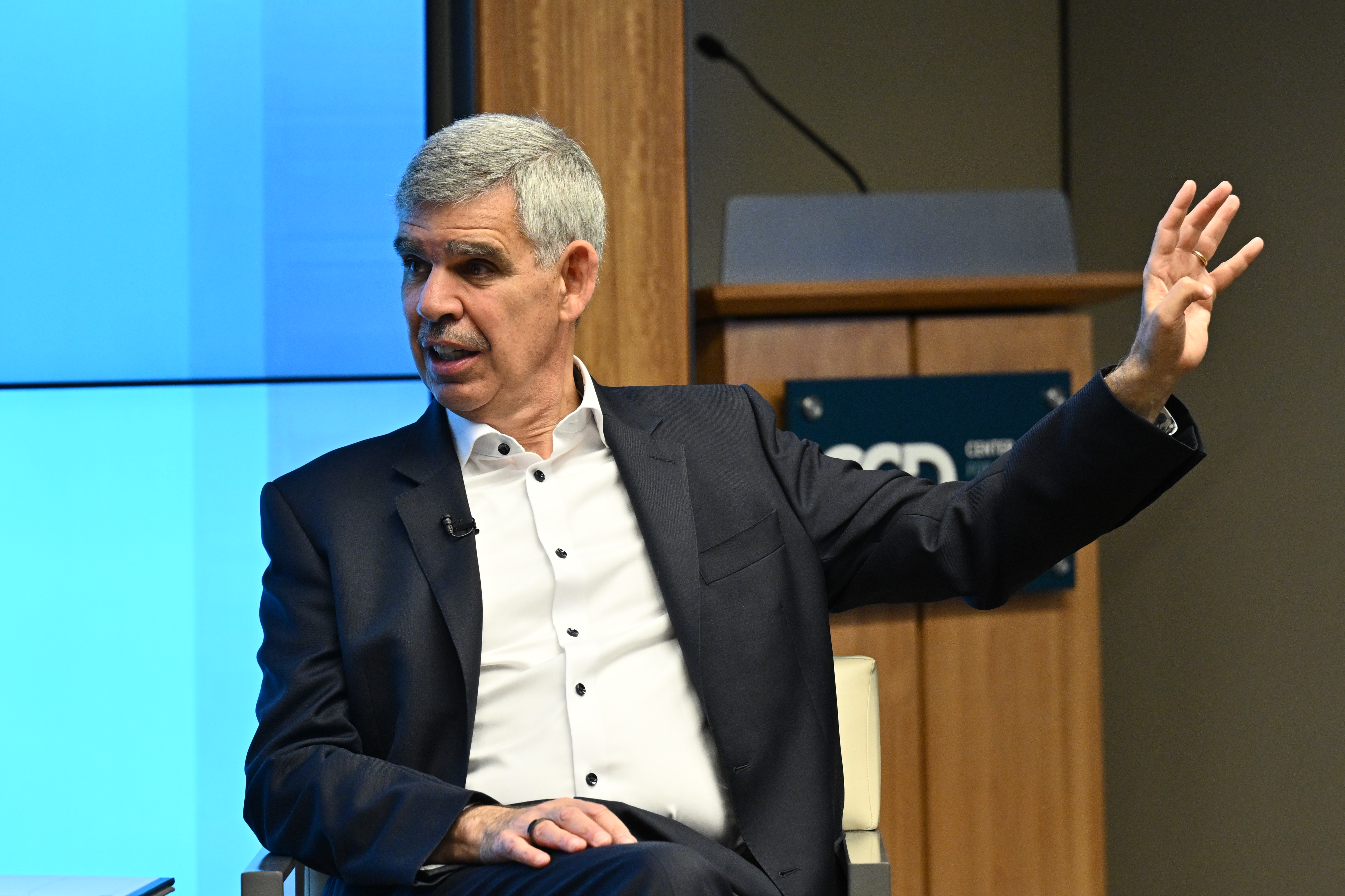
A Fireside Chat with Mohamed A. El-Erian
HYBRID
June 18, 2026 9:30—10:30 AM ET | 2:30—3:30 PM BSTStakeholders gathering for the upcoming Spring Meetings of the IMF and World Bank will be contending with yet another major crisis—war in the Middle East—with ramifications expected to include dampened growth, inflation, and tighter financial conditions that will reverberate far beyond the zone of conflict. Fertilizer shortages alone could precipitate a global humanitarian crisis because of the potential impact on food production and prices. (See Figures 1 and 2). The Gulf is a major hub for fertilizer production, and nearly a third of the world’s fertilizer is shipped through the Strait of Hormuz. Sudan imports more than half of its fertilizer from the Gulf, while Kenya sources 40 percent and serves as a re-export hub for Ethiopia, South Sudan, and Uganda. David Miliband, head of the International Rescue Committee, called the blockade a “food security timebomb,” and warned that its impact could be “exponentially greater” than the crisis in 2022 spurred by Russia’s invasion of Ukraine.
Ideally, a crisis of this severity would generate a strong, multinational response, but in today’s highly polarized world, chances of collective, meaningful action are depressingly low. Although international financial institutions (IFIs) have become nimbler and more effective at responding to economic shocks, a key question is whether they can still deliver when the largest shareholder has gone rogue.
Once again, the countries least able to withstand the shocks will be among the hardest hit. The IMF has cautioned that people in low‑income countries (LICs) are most at risk because food accounts for about 36 percent of consumption on average, compared with 20 percent in emerging market economies and 9 percent in advanced economies. The World Bank estimated that food insecurity nearly doubled between 2019 and 2023 in IDA countries, accounting for 92 percent of the global total. After peaking in 2022, global agriculture prices eased, helping to reduce levels of food insecurity, although famine threats loomed large in Gaza and Sudan. Last fall, the World Food Programme (WFP) warned that 316 million people would go hungry in 2026, double the number in 2019. WFP is now predicting that an additional 45 million people could be pushed into acute hunger as a result of the war. My CGD colleagues have estimated that South Sudan, Haiti, Yemen, Afghanistan, the Central African Republic, and Somalia are especially vulnerable, with a third to half of their populations already facing acute food insecurity.
At the same time, LICs have limited options for managing additional fiscal pressures. Most remain at high risk of debt distress and will need grants or highly concessional loans to help manage the crisis. Unfortunately, appeals for more support—no matter how merit-worthy—are unlikely to yield a robust response. Donor countries that were already pulling back also face war-related economic strains.
An especially bitter irony is that the US, whose actions have catalyzed this latest crisis, is also undercutting an effective multilateral response. In 2025, the US slashed funding for WFP and gutted research programs under the Feed the Future initiative, which invests in food-related technology to support climate-smart agriculture, soil health, and fertilizer efficiency. Moreover, the administration’s just-released budget submission for FY27 proposes an additional cut to IDA 21 from $1.067 billion per year for three years to $866.7 million. This compares to the original pledge under the Biden administration of $1.3 billion per year. The budget also includes a rescission request of $187 million for the African Development Fund.
In late March, the World Bank issued a public statement on the crisis affirming that it is “ready to respond at scale” using available instruments, including fast-disbursing loans and crisis response toolkit. The World Bank is also joining forces with the IMF and the International Energy Agency to assess the impacts of the crisis and coordinate responses, including policy advice, potential financing needs, provision of financial support, and use of risk mitigation tools as appropriate. But details so far remain scarce.
A path forward
The test for the World Bank is whether it can rise to the challenges of this latest crisis in the context of parsimony and division. With a bit more risk appetite and strong leadership, the answer should be yes. The Bank needs to offer shareholders an ambitious, multifaceted, rapid-response package that focuses on mobilization of its own resources to support the poorest. This could include:
- Front-loading of IDA’s Crisis Response Window, which set aside $3.7 billion for the current IDA replenishment, which launched in July 2025.
- Rapid approval to re-program a portion of IDA allocations for fast-disbursing loans, as the ADB has done.
- An exceptional, mid-replenishment allocation of IBRD net income to IDA. As my colleague details here, IBRD transfers to IDA have decreased since IDA 18, despite record profits. The IBRD can afford to be more generous.
- Increased access to IBRD lending for IDA blend countries (which access both IDA and IBRD), especially those relying heavily on energy imports, like Pakistan and Kenya. Their IDA allocations are fixed, but the IBRD has more discretion. Kenya received no IBRD funding in FY 2025, and Pakistan received only $240 million in IBRD funding out of the $1.73 billion it received from the World Bank.
- A renewed and updated Action Plan to Address Food Security from the IMF and major MDBs. The group, originally consisting of the World Bank, the European Bank for Reconstruction and Development, the Asian Development Bank, the African Development Bank, and the Inter-American Development Bank, should be expanded to include the Islamic Development Bank as well.
- Support for a new, broader temporary debt service suspension mechanism for LICs facing large external shocks, crowding in both public and private creditors, as proposed by our colleagues here. Their analysis suggests that shocks driving large adverse effects on terms of trade (including sharp increases in food import prices) are nearly twice as frequent as climate-related shocks, which have received much more attention.
This crisis represents yet another test for multilateralism, but the reactions from the major IFIs so far have fallen short. Our colleagues assessed the IMF’s initial response to be uninspiring; unfortunately, the same can be said of the World Bank. No doubt, people are working industriously behind the scenes to craft a set of measures to address the crisis at hand. But management needs to go beyond business as usual to show that a whole-of-World Bank effort is indeed greater than the sum of its parts.
Topics
DISCLAIMER & PERMISSIONS
CGD's publications reflect the views of the authors, drawing on prior research and experience in their areas of expertise. CGD is a nonpartisan, independent organization and does not take institutional positions. You may use and disseminate CGD's publications under these conditions.
Thumbnail image by: TaufikJahan/ Adobe Stock