Executive summary
Article 6 of the Paris Climate Agreement—which enables countries to trade credits for emissions and is an important part of an efficient transition—also holds the potential to deliver significant financial flows to the Global South. Mindful of the many, essential, efforts underway to ensure environmental integrity of Article 6, this paper provides an overview and synthesis of carbon markets under Article 6, and specifically explores a broader question: To what extent could Article 6 contribute to sustainable development in developing countries, specifically for improved energy access and energy transition? The paper also addresses policy issues and options faced by host and buyer countries to make the most of this potential.
We show that up to the mid-2030s, demand for Article 6 credits, known as Internationally Transfered Mitigation Outcomes (ITMOs) remains relatively modest and fragmented, driven by pioneer buyer countries and the aviation sector, with attendant uncertainties. From that point, there is potential for an inflection, with possible increased demand—driven principally by the EU proposing to allow some of their 2040 target to be met with ITMOs; this is potentially worth tens of billions of dollars per year from the mid-2030s. Modelling estimates of the theoretical value of Article 6 show that optimally, in terms of tackling climate change efficiently, demand should exceed $300 billion per year in the 2030s, indicating room for expansion of ambition.
The EU’s approach to Article 6—aiming to offset a portion of its emissions to 2040 through exchange with other countries—if finalised, marks a significant step toward legitimising and expanding use of this element of the Paris Agreement. There are also intriguing discussions underway within the EU about allowing limited use of ITMOs by importers to meet EU Carbon Border Adjustment Mechanism obligations, which would further add to structured demand. It will be interesting to observe whether other countries/regions follow the EU’s lead.
The projected scale of revenue generated from ITMOs in the 2030s—at tens of billions of dollars, much of which should flow to the Global South—is comparable in relation to cost estimates of meeting energy access Sustainable Development Goals (SDGs; modern cooking—around $8 billion per year; access to electricity—around $15 billion per year). Wider energy transition requirements are orders of magnitude larger, but Article 6 could play an important catalytic role if used to complement and leverage other investments. Even so, benefits of this trade might mainly accrue to middle-income rather than low-income developing countries. Similarly, these amounts are not the same as aid, because they relate to provision of an activity (they are more similar to exports). Article 6 presents a significant opportunity for developing countries but also reinforces the case for aid resources to be focused on the poorest.
However, this potential also presents a set of policy choices; realising potential development benefits will therefore depend on how both host countries and buyer countries shape their approaches in the coming years.
For host countries, carbon represents a sovereign asset, and host governments now have the ability—and responsibility—to provide strategic direction over carbon credit supply: determining how carbon market participation aligns with broader national development priorities, which sectors are eligible under Article 6, under what conditions ITMOs are authorised, and how environmental integrity is safeguarded. A number of technical, strategic, and commercial considerations therefore need to be assessed, alongside ensuring an appropriate balance between revenue generation and investor attractiveness, ensuring appropriate benefit sharing, and developing effective institutional and governance structures.
How buyer governments choose to operationalise this growing demand for ITMOs will also have important implications not only for the efficiency of climate mitigation, but also for sustainable development, international climate politics, and the overall legitimacy of Article 6 cooperation. A small number of pioneer buyer countries are forging a path forward, with 104 (of 108 total) of the current Article 6.2 bilateral agreements involving just six buyer countries (Japan, Singapore, Switzerland, Republic of Korea, Norway, and Sweden). Situating Article 6 purchases within long-term climate strategies, providing clearer market signals, and supporting carbon markets in ways that optimise sustainable development in the Global South all need to be reflected in future approaches.
1. Introduction
Multiple carbon market commentaries focus on core questions of integrity, market size, institutional infrastructure, and rules governing the sector. While it is important to address these issues, less attention has been paid to the potential sustainable development benefits that might be achieved through targeted and effective use of carbon markets, assuming the core questions can be adequately tackled. Energy transition and improving access to sustainable and affordable energy services are essential for meeting social and economic development goals. At the same time, most major donors are decreasing public climate financing, which has been supporting energy development efforts; this reduction is accompanying the general squeeze on official development assistance (ODA) budgets. This paper provides a general synthesis of Article 6, analyses the potential market, and compares this with energy investment needs, thus addressing the extent to which Article 6 could advance efforts toward energy transition and universal energy access. Further, the paper highlights potential future demand for Article 6 credits (Internationally Transfered Mitigation Outcomes, or ITMOs), and finds that—quantitatively—much of the remaining gap for supporting energy access resulting from shrinking public climate finance could be met by Article 6. Finally, the paper assesses policy issues relating to host countries and discusses possible pathways for those countries wishing to optimise use of Article 6 to advance energy access in their countries.
2. Scene-setting: Article 6, energy, and development, and the evolving financing landscape
2.1 A shifting financing context for energy transition and access
The global financing landscape for energy access and low-carbon transition in developing countries is under strain. ODA, which can play an essential catalytic role, is under sustained pressure, reflecting broader fiscal constraints across donor countries and competing geopolitical priorities. Climate finance commitments continue to fall short of estimated needs, and recent negotiations on the New Collective Quantified Goal have underscored both the scale of the gap and the political difficulty of closing it.
At the same time, the investment requirements remain substantial for achieving universal energy access and supporting energy transition in developing countries. These needs span multiple domains: grid expansion and reinforcement, distributed renewable energy systems, clean cooking solutions, and the decarbonisation of existing energy systems. The order of investment required is illustrated in Box 1. In many low-income and lower-middle-income countries, these investments must be mobilised in contexts characterised by constrained public finances, limited access to affordable capital, and elevated risk perceptions.
Against this backdrop, it is timely to analyse complementary financing channels that can operate alongside public climate finance, multilateral development bank lending, and private investment. Carbon markets under Article 6 of the Paris Agreement represent one such channel. While still nascent, they have the potential to mobilise additional resources at scale, provided that appropriate policy frameworks, market signals, and integrity safeguards are in place.
Box 1. Investment requirements for energy
Energy access
The SDG framework provides two core goals for energy access under SDG 7.1 (universal access to affordable, reliable, and modern energy services). While the goal was to be achieved by 2030, it is widely acknowledged that universal access will not be achieved by this date.
SDG 7.1.1 – Universal access to electricity
Universal access in Africa by 2035 requires ~US$15 billion/year, around 40 percent of which (US$6 billion/year) needs to be concessional. This is significantly more than current investment levels (e.g., $2.5 billion committed to electricity access in Africa in 2023).[1]
SDG7.1.2 – Universal primary reliance on clean fuels and technology (cooking)
In 2023, the IEA estimated US$8 billion/year needed to achieve universal access to clean cooking by 2030, significantly more that annual investment in reality in the years since 2023.[2] A further analysis in 2025, focusing on Africa, acknowledged that the 2030 target would be missed and assumed a trajectory toward African universal clean cooking access at some point in the 2030s, which would require ~US$4 billion/year (to 2030) and US$2-plus billion/year over a longer horizon (to 2040).[3]
Energy transition
Energy transition financing requirements encompass a far wider array of activities in electricity systems and other parts of the sector, while including elements of the energy access financing outlined above. A 2024 report by the Independent High-Level Expert Group[4] found that to meet the goals of the Paris Agreement, an estimated US$1.6 trillion/year is required to achieve clean energy in emerging markets and developing economies (excluding China) and least developed countries, including to support a just transition. After accounting for countries’ own resources, the report finds that around 40 percent of financing (for all climate investment needs) will need to come from external climate finance, representing a fifteenfold increase in private finance, a fivefold increase in concessional finance, and a tripling in multilateral development finance.
2.2 Article 6: A brief overview
Article 6 of the Paris Agreement establishes a framework for international cooperation in achieving climate mitigation outcomes. It enables countries to transfer mitigation outcomes internationally and use them toward their Nationally Determined Contributions (NDCs), thereby improving the overall efficiency of global mitigation efforts. The two main components are
- Article 6.2, which provides for bilateral or plurilateral cooperation through the transfer of ITMOs between countries; and
- Article 6.4 (the Paris Agreement Crediting Mechanism), which establishes a UN-supervised mechanism to generate tradable emission reduction units from approved activities.
A central feature of Article 6 is the requirement for corresponding adjustments, which ensure that emission reductions are not double counted. While significant technical progress has been made in recent years—such as agreeing on key accounting rules and establishing supervisory bodies—Article 6 remains at an early stage of implementation. A number of Article 6.2 bilateral agreements have been signed, and early transactions are emerging, but market infrastructure, institutional capacity, and regulatory clarity are still developing in many jurisdictions.
Integrity is a foundational requirement for the success of Article 6. Issues such as additionality, credible baseline setting, robust monitoring, reporting, and verification (MRV), permanence, leakage, and avoiding negative social and environmental impacts are critical to market credibility. These issues are being actively addressed in multiple international and national forums and are not the focus of this paper. Rather, this paper assumes that high-integrity frameworks can be established and asks: What role could Article 6 play in supporting energy transition and energy access in developing countries? And What critical policy issues must be addressed to maximise benefits to developing countries?
2.3 The development opportunity: Linking Article 6 carbon finance and energy transition/access
At its core, Article 6 offers a mechanism for transferring financial resources from countries with higher marginal abatement costs to those with lower-cost mitigation opportunities, and reducing overall mitigation costs, while increasing global ambition and advancing sustainable development. Given the requirement for host governments to authorise the transfer of ITMOs from their jurisdictions, host countries have the agency to shape how mitigation activities contribute to their broader development objectives.
If appropriately designed and governed, Article 6 transactions have the potential to
- generate results-based finance linked to genuine emission reductions;
- catalyse investment in underfunded sectors, including those critical to energy access (e.g., clean cooking, distributed renewables, etc.);
- complement other financing instruments, including grants, concessional finance and guarantees; and
- enable host countries to align mitigation activities with national priorities through strategic planning and policy frameworks.
In principle, this could help address part of the financing gap left by constrained public climate finance. However, the extent to which this potential is realised will depend critically on both demand for ITMOs and the readiness of host countries to supply them in ways that align with national development strategies.
3. The market for ITMOs
3.1 Demand for ITMOs: From nascent beginnings to potential scale
Assessing future demand for ITMOs is necessarily speculative, driven largely by the pace of policy development and—importantly—its implementation. “Bottom up” estimates suggest that current demand for ITMOs remains limited and fragmented. A small number of countries—most notably Switzerland, Japan, Norway, Singapore, South Korea, and Sweden—have established bilateral cooperation agreements under Article 6.2 and are engaging in early transactions. These are projected to amount to about 220 MtCO₂e of demand cumulatively by 2030, or about 30 MtCO2e per year on average (though rising over time).[5]
More broadly, recent NDC submissions (NDC 3.0) have not yet signalled an explicit increase in demand for international credits, with few countries implementing plans to buy ITMOs (e.g., Switzerland) and others signalling demand in looser terms as part of possible future plans.[6] For example, the EU’s NDC, submitted ahead of COP30, notes that the agreed 2040 climate target includes “an adequate contribution of high-quality international credits in a manner that is both ambitious and cost efficient,”[7] providing a future use signal.
At the same time, other sources of demand—such as the Carbon Offsetting and Reduction Scheme for International Aviation (CORSIA)—are expected to generate significant demand for Article 6-aligned credits in the near term, potentially 500 MtCO2e through to 2030, although the scale and composition of this demand remain uncertain.
Taken together, pioneer buyer countries and CORSIA represent around 700 MtCO2e of potential demand cumulatively by 2030, or around 140 MtCO2e/year on average (Figure 1). However, it remains uncertain whether all this demand will materialise into activities on-the-ground.
Figure 1. Cumulative demand for ITMOs until 2030 from airlines and buyer countries
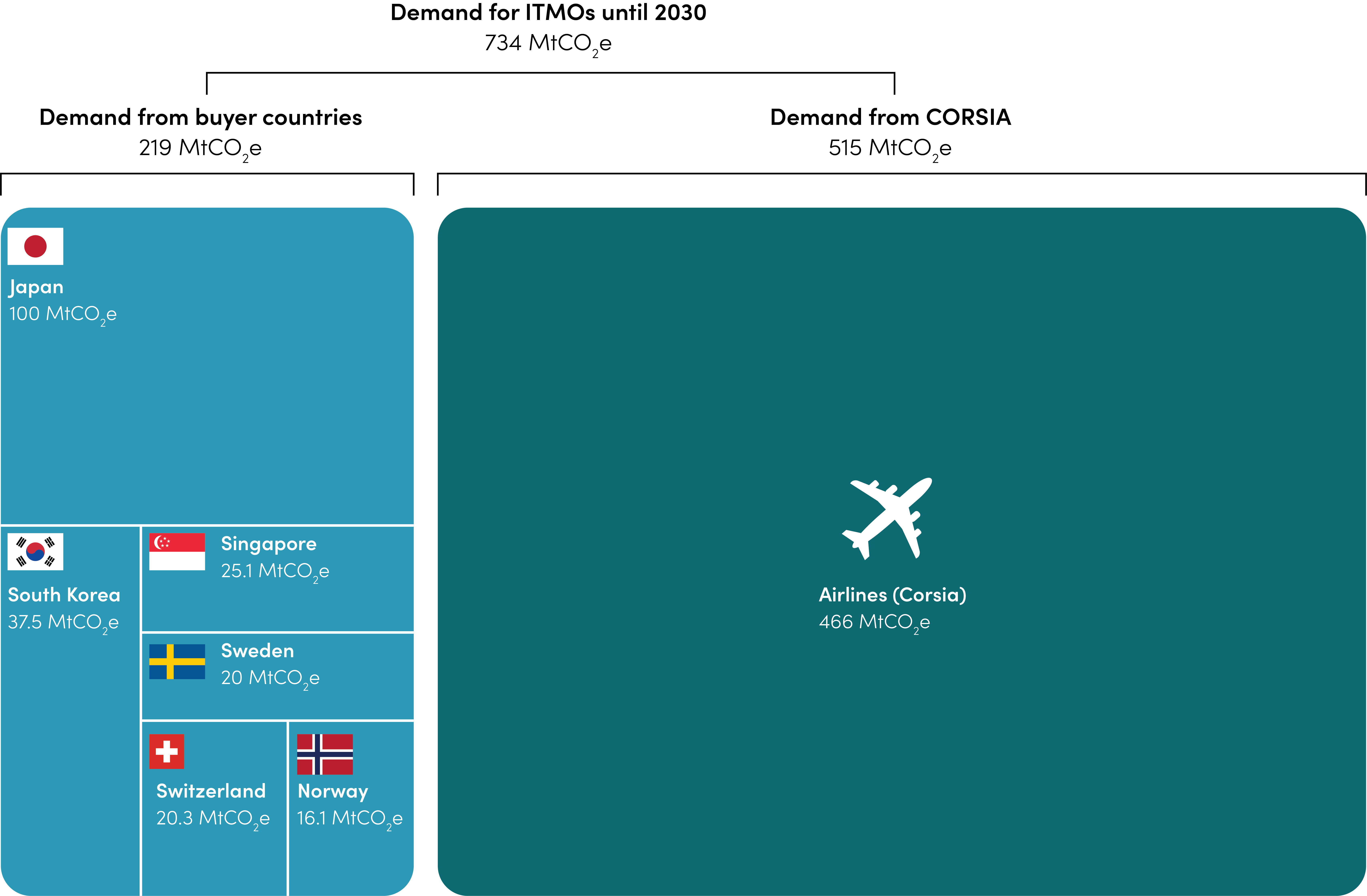
Source: “Article 6 Explainer,” The Nature Conservancy (2025), drawing on data from South Pole AG, CM-TNC-Article-6-Explainer-Update-COP30_EN.pdf.
Despite the limited current demand, emerging policy signals point toward a possible inflection point in the medium term. Most notably, the EU has indicated, in the context of its proposed 2040 climate target, that it will allow the use of “high-quality” international carbon credits for up to 5 percent of 1990 emissions reductions, with a pilot phase envisaged for 2031 to 2035 and full implementation from 2036 onward. The EU has flagged its intention to set ambitious standards: Credits are to be for transformative activities, with integrity to the fore, human rights safeguards, and a focus on co-benefits. This is a significant development. Based on EU 1990 emissions levels, this could translate into demand of around 230 MtCO₂e per year by 2040.[8] Given the EU requirement for high-quality, compliance grade credits—based on prices in existing markets—it is considered conservative to assume a value of $25 to $40/ITMO; this implies total value per year of around $6 to $9 billion by 2040, still modest in global terms but representing potential for significant financial flows. Recent analysis[9] has assumed higher values of between €50 and €100 ($58 and $116) for ITMOs purchased by the EU between 2036 and 2040, allowing for quality criteria, inflation, and appropriate benefit-sharing arrangements. At these prices, EU purchases would have a value of $13.5 to $27 billion per year on average.
Additionally, as of mid-March 2026, EU member states were reported[10] to support recognising Article 6 credits as an effective carbon price paid abroad for Carbon Border Adjustment Mechanism (CBAM) purposes, and in May 2026 the European Commission published draft implementing rules[11] allowing limited recognition of Article 6 credits within CBAM accounting. If adopted by the EU, this could represent significant structural demand for ITMOs, potentially worth billions of dollars, particularly in those exporting carbon-intensive goods to the EU but lacking strong domestic carbon pricing (e.g., India, Brazil, Indonesia, and South Africa).[12]
It remains to be seen whether this policy signal will be followed by other major countries and regions in the 2030s, although if increasingly ambitious NDC targets are taken seriously, there will likely be an incentive to do so.
Other “top down” analysis indicates hypothetical scope for significantly larger volumes and values. Modelling commissioned by IETA for example,[13] using an integrated assessment model approach (global climate assessment model), suggests (for one specific scenario)[14] theoretical potential for around $300 billion and $1 trillion ITMO trades per year by 2030 and 2050, respectively. While the scenario on which these projections were made is stylised and does not represent real-world conditions, comparison of the modelled 2030 number with the “bottom up” estimate above implies that Article 6, in practice, is being operationalised currently at a level substantially below what is economically and environmentally optimal. Taken together, these developments suggest a possible trajectory:
- Short term (to 2030): limited, fragmented demand, driven by early movers and CORSIA, with attendant uncertainties
- Medium term (early 2030s): gradual scaling, potentially supported by expanded participation, with the EU playing an important role
- Longer term (mid-2030s onward): the possibility of large-scale, compliance-driven demand, particularly if major economies integrate Article 6 into their climate strategies
Figures presented here are illustrative, subject to considerable uncertainty, and should be viewed as such. However, it is reasonable to project that current policies, driven largely by the EU, other pioneer countries, and sectors such as aviation, will result in a substantial increase in ITMO demand in the 2030s, on the order of hundreds of millions of tonnes of CO₂e/year, potentially worth a few tens of billions of dollars per year. This includes only use of ITMOs toward NDC achievement and for aviation and does not account for possible use of ITMOs for other purposes—for example, ITMOs for voluntary claims by corporations, the extent of which is not possible to gauge at this point.
Crucially, future ITMO demand depends on policy decisions made by other countries and regions, as well as sectors. While highly speculative, if others follow the EU’s lead, it is possible to imagine ITMO trades of many tens of billions of dollars per year, perhaps even over a hundred billion dollars per year. If, say, half of this were to be engaged with the energy sector, it would go some way towards meeting energy finance needs in developing countries.
3.2 Supply: strong interest, uneven readiness
On the supply side, interest is strong among developing countries to host Article 6 activities. More than 120 countries have expressed interest in participating in Article 6 to generate ITMOs (i.e., they either intend to use or are considering it). However, readiness is uneven. Key challenges include
- establishing national institutional frameworks for authorisation, accounting, and tracking;
- developing policy frameworks that align carbon market participation with NDCs and broader development strategies;
- building technical capacity for MRV and project development; and
- managing political economy considerations, including benefit sharing and the treatment of carbon as a sovereign asset.
A growing number of bilateral agreements between host and buyer countries (highlighted in Figure 2) are beginning to address these issues, but many countries remain at an early stage of preparation. It is notable that of 108 current Article 6.2 bilateral agreements, 104 involve just six buyer countries (Japan, Singapore, Switzerland, Republic of Korea, Norway, and Sweden). These countries may be looking to take advantage of their pioneer roles as Article 6 expands.
Box 2. Example – Article 6 to accelerate electric cooking (energy access)
Issue: 2.1 billion people lack access to clean cooking, causing 3.5 million premature deaths per year (especially among women and children) and forest degradation. Current levels of investment are far below those needed to achieve universal access (SDG7).
Credit generation – switching from biomass to clean fuel for cooking (e.g., electricity produced on a low carbon grid) can yield on the order of 1 to 3 (or more) tonnes of CO2e reduction per household per year, depending on local conditions. This would be increasingly supported by digital MRV to support integrity. (Note that the degree of non-renewability of baseline biomass is complex and contentious.)
Credits uses – in combination with—and complementary to—public and private investment, credit revenue can be used
- as an end-user subsidy—project based to reduce equipment and/or electricity costs for households;
- to support enterprise level investment (equipment manufacturing, retail etc.); and
- to accelerate national (programme level) clean cooking policy.
Activities currently in the pipeline for both Articles 6.2 and 6.4[15] span a wide array of types (such as energy efficiency, renewables, fuel switch, greenhouse gas management [e.g., landfill gas], and sinks), which include Reducing Emissions from Deforestation and Forest Degradation, afforestation, and so forth. In principle, Article 6 activities in the energy domain can range from those supporting domestic clean, modern cooking (energy access), to early retirement of coal-fired power plants (energy transition), and everything in between. Boxes 2 and 3 illustrate two examples, while future work could valuably provide a representative set of examples of the means by which Article 6 can accelerate progress to universal energy access and drive forward the energy transition.
Box 3. Example – Article 6 to support early retirement of coal-fired power plants (just energy transition)
Issue: More than 6,500 coal-fired power plants (CFPP) exist worldwide, with a generating capacity of around 2,245 GW. Coal is responsible for ~ 41% of greenhouse gas emissions from fossil fuels. CFPPs are still being built. A large fleet of new(ish) CFPPs exist globally, especially in Asia. CFPPs are a significant employer (e.g., in South Africa and Indonesia: ~5% of employment). Investors have an incentive to run CFPPs for full economic life.
Credit generation – so-called transition credits are produced by retiring a CFPP earlier than planned. Early transactions (for example in the Philippines), anticipate investing in equivalent renewable generation, while also supporting the livelihoods of those impacted by early CFPP closure. This requires careful assessment of baseline conditions/policies and close cooperation of host government.
Credit uses – by themselves, transition credits are unlikely to provide sufficient revenue to encourage early CFPP retirement, although they could be used to leverage other investment sources. The yield from these credits helps pay to decommission the old CFPP, to build replacement renewable energy sources, and to support jobs, training, and so forth (the just element).
Figure 2. Article 6.2 Agreements between countries
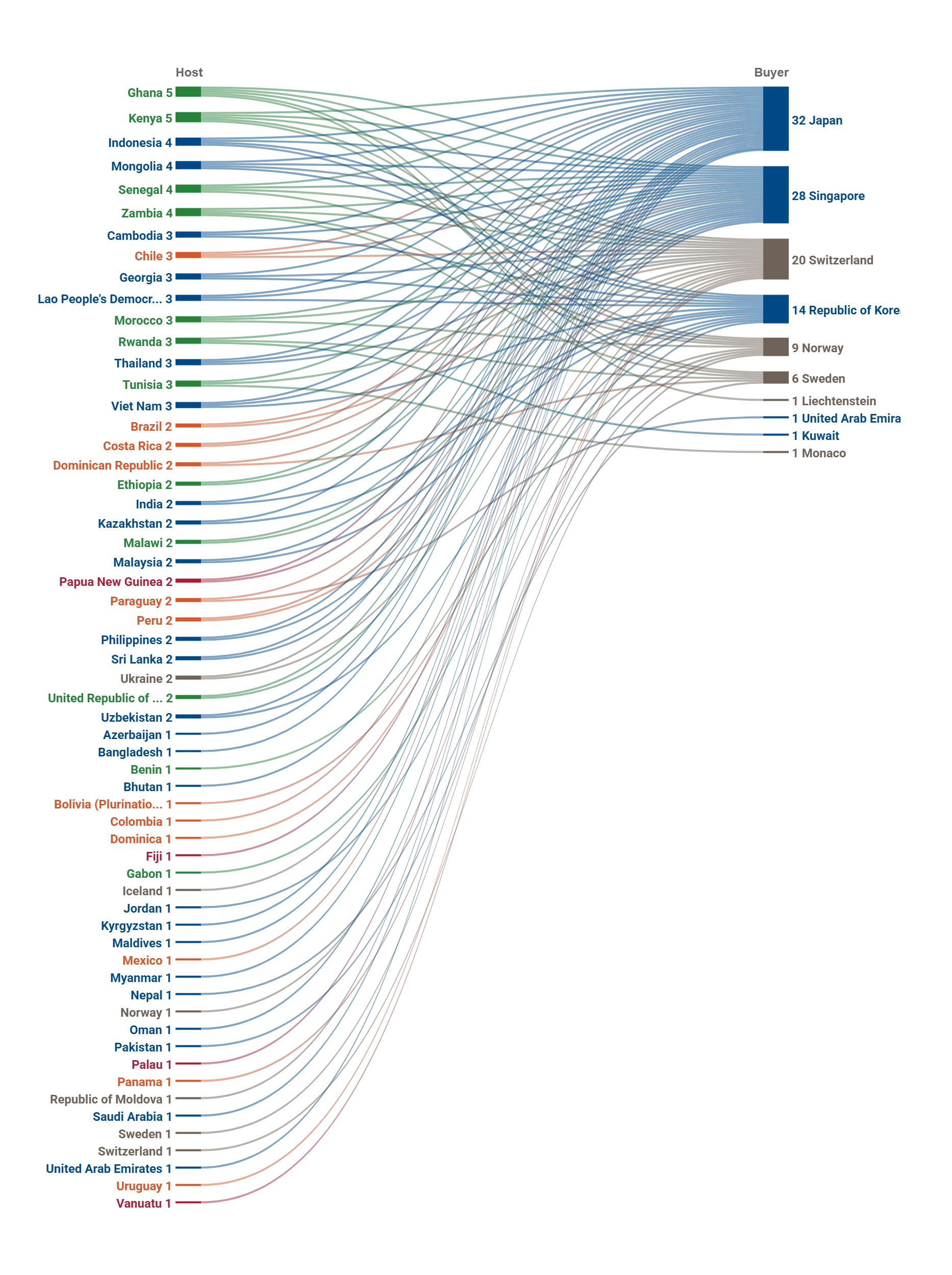
Source: UN Environmental Programmes, “Article 6 Pipeline,” (accessed May 2026), https://article6pipeline.unepccc.org/global-data.
3.3 Linking Article 6 to energy financing needs
Article 6 has the potential to provide incremental, performance-based revenue streams that could complement existing public financing (grants, concessional loans, guarantees) and catalyse private investment by improving the viability of investments in sectors that are otherwise underfunded, such as clean cooking programmes, and off-grid and mini-grid electricity systems.
The analysis above demonstrates that ITMO finance flows are material/comparable when considered against the needs related to specific energy objectives, specifically universal access to clean, modern cooking—for example electric cooking—(around $8 billion per year), or access to electricity (around $15 billion per year), although wider energy transition requirements are orders of magnitude larger.
However, it is important to recognise the limitations
- Article 6 finance is inherently results-based and therefore not generally well suited to funding upstream policy reforms or capacity building (albeit policy crediting is being explored);
- revenues are subject to market volatility and demand uncertainty; and
- not all sectors or activities will be able to generate high-integrity, tradable mitigation outcomes.
These considerations highlight the need for strategically using Article 6, rather than viewing it as a substitute for other forms of finance.
This potential for significantly increased demand for ITMOs presents a set of policy choices. The extent to which Article 6 contributes meaningfully to energy access and sustainable development will depend on how both host countries and buyer countries shape their approaches in the coming years.
4. Policy considerations
4.1 Policy considerations for developing (host) countries
Strategic governance of carbon as a sovereign asset
A fundamental shift under Article 6 of the Paris Agreement is that ITMOs are being recognised as intrinsically linked to national climate commitments and sovereign decision-making. Mitigation outcomes generated within a country’s jurisdiction directly affect that country’s ability to achieve its Nationally Determined Contribution (NDC); exporting ITMOs has an opportunity cost. As such, governments now view carbon as a sovereign asset over which they retain strategic authority.
This has important implications for host countries. Governments now have the ability—and responsibility—to provide strategic direction over carbon credit supply, determining
- how carbon market participation aligns with broader national development priorities;
- which sectors are eligible under Article 6;
- under what conditions ITMOs are authorised; and
- how environmental integrity is safeguarded.
This marks a departure from voluntary carbon market models where project developers often operated with limited alignment to national climate strategies. Under Article 6.2, governments have agency to actively shape carbon market participation to support national priorities, which might include: energy access, industrial policy, energy transition, adaptation financing, rural development, and long-term decarbonisation objectives.
This strategic governance role includes avoiding situations where low-cost mitigation opportunities are exported, potentially increasing future domestic NDC compliance costs or constraining development pathways.
At the same time, governments must strike a careful balance: Overly restrictive or opaque frameworks can deter investment, while overly permissive approaches risk undermining national climate ambition and public trust.
Sector prioritisation—strategic use of ITMOs
One of the most important policy decisions for host countries is determining which sectors and activities are eligible to participate in Article 6 markets. A growing number of countries are developing formal sectoral prioritisation frameworks or “whitelists” that identify mitigation activities eligible for automatic or streamlined authorisation. For example, Ghana’s Article 6 framework, including its whitelist,[16] is currently one of the most operationalised examples; it includes conditions that eligible activities, which must sit within the conditional NDC, align with national sustainable development priorities, satisfy environmental integrity requirements, and support priorities established under bilateral cooperation agreements. Such prioritisation mechanisms can help governments channel scarce administrative capacity toward sectors with the greatest strategic value while reducing transaction costs for developers. However, selecting sectors for Article 6 participation requires careful technical, strategic, and commercial analysis.
Technical considerations—avoiding overselling to protect the NDC
Perhaps the most critical technical issue for host countries is managing the risk of over-exporting mitigation outcomes. Under Article 6.2, host countries must apply corresponding adjustments when ITMOs are transferred internationally. This means exported mitigation outcomes can no longer be counted toward the host country’s own NDC achievement. Excessive transfers therefore risk leaving countries unable to meet future climate targets or forcing them to rely on much more expensive mitigation options.
Governments therefore need a sound understanding of national emissions trajectories, future NDC ambition, sectoral mitigation potential, and marginal abatement costs across the economy.
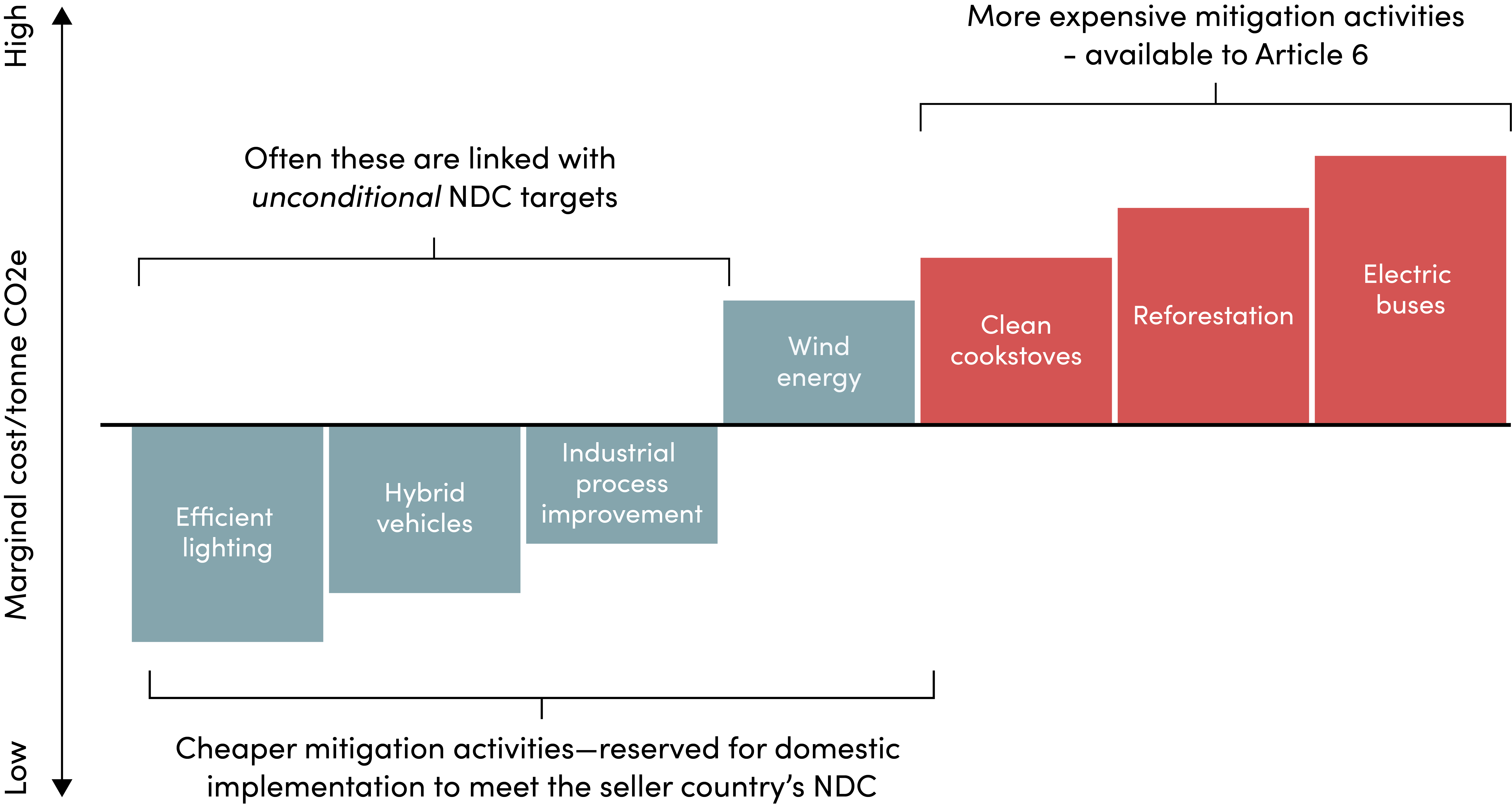
Marginal abatement cost curves (see Figure 3) can be particularly valuable tools for policymakers. These help identify which mitigation opportunities are relatively low cost and which represent higher-cost “hard-to-abate” opportunities.
Figure 3. Example of marginal abatement cost curve to illustrate how countries can reduce the risk of overselling
Source: “Article 6 Explainer,” The Nature Conservancy (2025), CM-TNC-Article-6-Explainer-Update-COP30_EN.pdf.
In many cases, countries may choose to retain lower-cost mitigation opportunities for domestic achievement using national finance, while directing Article 6 investment toward higher-cost abatement areas that would otherwise struggle to attract funding. This approach can reduce the risk of overselling while maximising the additional climate finance mobilised through Article 6 cooperation.
For example, a country may decide that utility-scale renewables are likely to attract commercial investment and should therefore remain outside Article 6 transfers (in which case they would anyway be non-additional), while—for example—cleaner cooking transitions (e.g., electric cooking), methane reduction, industrial decarbonisation, or transport electrification may benefit more from carbon finance support.
At the same time, governments should remain strategic and avoid exporting mitigation potential too early. Global climate ambition is expected to increase over time, implying that mitigation outcomes that appear surplus today may become strategically important later.
Strategic analysis: aligning Article 6 with national development objectives
Article 6 participation should not be viewed solely as a mechanism for generating carbon revenues. Rather, it should form part of a broader national development and investment strategy. Strong host country frameworks therefore seek to align Article 6 activities with their priorities, including combinations of the following: national development plans, industrial strategy, energy transition pathways, adaptation priorities, and Sustainable Development Goals.
In practice, the objective is to direct carbon finance toward areas where it can play one or more of the following roles
- fill financing gaps, for example those left by ODA reductions;
- complement existing bilateral and multilateral support programmes;
- leverage private investment;
- support infrastructure deployment; or
- accelerate strategic economic transformation.
Governments also need to be realistic about the limitations of Article 6 finance. Carbon markets are generally better suited to results-based, revenue-generating mitigation activities than to public-good investments such as policy reform (albeit efforts are underway for policy-related Article 6 activities[17]), institutional strengthening and capacity building, or social protection measures. Moreover, ITMO demand and pricing remain uncertain and potentially volatile. Host countries should therefore avoid over-reliance on carbon revenues as a primary development financing mechanism.
Countries must also decide what forms of mitigation activity are best suited to their national circumstances. Options include individual project-based activities or programmatic sector-wide crediting approaches. Sectoral approaches may offer advantages in terms of scale, transaction efficiency, and alignment with national planning, although they typically require stronger institutional capacity and more sophisticated MRV systems. Emerging examples include programmatic clean cooking approaches under Article 6.4 in Uganda, as well as growing interest in jurisdictional forestry and potential transport programmes.
Commercial and fiscal considerations
Host countries must also determine how to capture fair economic value from Article 6 cooperation while maintaining an attractive investment environment. A range of approaches is emerging internationally.
- Administrative and transaction fees: Many countries apply modest fees to cover the operational costs of national carbon market infrastructure, including authorisation processes, registry systems, MRV oversight, and managing national carbon offices. These fees are generally not intended as major revenue sources but rather to ensure cost covering, and thus administrative sustainability. Common examples include authorisation fees, issuance fees, registry fees, and MRV-related charges.
- Share of proceeds and climate levies: Some countries apply a “share of proceeds” or climate levy on ITMO transfers. These operate like a tax, typically involving a percentage of transactions by value or volume of transferred credits. Revenues can be earmarked for adaptation funds, national climate funds, or broader sustainable development priorities. Ghana, for example, applies a share of proceeds mechanism (5 percent of authorised carbon credits) to support adaptation financing, as well as climate action and green industrial development.
- Withholding and buffer mechanisms: An emerging approach is to withhold a percentage of generated mitigation outcomes before transfer authorisation. These withheld credits can serve several purposes, such as protecting against NDC underachievement, managing uncertainty including covering reversal risks, or—more broadly—strengthening environmental integrity. Countries including Ghana, Indonesia, Thailand, Zimbabwe, and Paraguay have implemented withholding approaches, with Thailand reportedly applying a buffer of approximately 10 percent.[18] Economically, withholding functions much like a non-cash levy, reducing transferable volumes while preserving strategic mitigation reserves.
Balancing revenue generation with investment attractiveness
No single dominant fiscal model exists across host countries. Combined charges—including fees, levies, and withholding requirements—often amount to roughly 5 to 20 percent of transaction value, although some outlier cases significantly exceed this.
High fee burdens, opaque negotiations, or unpredictable approval processes can discourage investment and reduce competitiveness relative to other host countries. Governments therefore face a delicate balancing act in maximising national benefit and environmental integrity, while ensuring frameworks remain commercially viable and attractive to buyers and developers. Transparency is particularly important. Investors generally favour clear approval criteria and authorisation processes, predictable timelines, clear, published fee structures, and stable governance arrangements.
At the same time, host countries need to retain sufficient flexibility to adapt to evolving international rules and buyer preferences. Major demand-side actors—including the EU (reference the current debate about ITMOs and EU CBAM), Japan, Singapore, Switzerland, and corporate buyers—are still evolving their approaches to Article 6 participation and acceptable ITMO use cases. Overly rigid host country frameworks may therefore become outdated quickly in a rapidly evolving market environment.
Institutional capacity and governance
Ultimately, successful Article 6 participation depends heavily on strong national institutions and governance systems. Key requirements include
- transparent authorisation procedures;
- robust monitoring, reporting, and verification systems;
- appropriate carbon registries;
- interministerial coordination;
- legal clarity over carbon rights; and
- mechanisms for stakeholder participation and benefit sharing.
Political legitimacy is equally important. Article 6 activities are more likely to attract sustained support where local benefits are visible and equitable. This may include benefit-sharing arrangements with communities, adaptation funding, local employment creation, and rural energy access improvements.
Developing countries also face significant asymmetries in technical and negotiating capacity relative to sophisticated buyers and intermediaries. Regional cooperation, standardised contracts, technical assistance, and South-South learning can play an important role in strengthening host country negotiating positions.
As Article 6 markets continue to evolve, countries that combine strategic clarity, environmental integrity, institutional credibility, and commercial pragmatism are likely to be best positioned to attract high-quality investment while safeguarding long-term national interests.
4.2 Policy considerations—buyer countries
The future scale and developmental value of Article 6 markets will depend heavily on policy choices made by buyer countries in the coming period. Current demand for ITMOs remains modest and fragmented, driven primarily by a small number of pioneer countries and sectors such as aviation under CORSIA. However, in addition to pioneer countries, emerging policy signals—notably from the EU—suggest the possibility of significantly larger demand during the 2030s.
How buyer governments choose to operationalise this demand will have important implications not only for the efficiency of climate mitigation, but also for sustainable development, international climate politics, and the overall legitimacy of Article 6 cooperation.
Article 6 as part of long-term climate strategy
As countries move toward increasingly ambitious NDCs and net-zero targets, the marginal cost of domestic abatement is likely to rise substantially. The final increments of emission reduction—particularly in hard-to-abate sectors—may become economically and politically challenging. In this context, limited use of high-integrity ITMOs could help contain overall transition costs and support the political durability of ambitious climate targets.
This logic is reflected in recent policy discussions within the EU. The proposed EU approach illustrates how Article 6 may be viewed not as a substitute for domestic decarbonisation, but as a complementary mechanism supporting higher ambition overall and reducing compliance costs associated with very high levels of domestic mitigation ambition, providing integrity standards remain robust. [19]
For buyer governments, an important strategic consideration in subsequent NDC cycles is therefore whether a carefully constrained role for Article 6 can achieve a combination of several policy objectives: reducing the economic costs of achieving increasingly ambitious targets, supporting industrial competitiveness during transition, smoothing costs of abatement in hard-to-abate sectors, and helping to maintain public and political support for climate policy both domestically and internationally.
At the same time, maintaining credibility will require clear limits and transparency. Given the challenging history, international credits are likely to remain politically acceptable only where high integrity is maintained, and domestic emissions reductions clearly remain the primary driver of decarbonisation.[20]
Providing clearer market signals
One of the main constraints currently limiting Article 6 market development is uncertainty regarding future buyer demand and preferences. Host countries and investors are being asked to establish institutional systems, develop pipelines, and mobilise investment despite having limited clarity regarding the kinds of activities buyer governments will ultimately support. Buyer countries can play an important role in accelerating market development by providing clearer and more consistent demand signals. This includes signalling likely future demand volumes, integrity expectations, preferred sectors, and activity types.
Clear signalling is particularly important for activities with potentially high social and developmental value but more complex implementation requirements, including modern, clean cooking programmes (e.g., electric cooking), distributed renewable energy systems and mini-grids, industrial decarbonisation, and transition credits linked to accelerated coal-plant retirement.[21]
The financing needs associated with clean cooking and electricity access are substantial but, relative to broader energy transition requirements, potentially within a scale where Article 6 finance could make a material contribution. The Nature Conservancy and Environmental Defense Fund argue that buyer countries should therefore move beyond purely transactional procurement approaches and instead use Article 6 strategically to support transformative mitigation activities with strong sustainable development benefits.[22] This argument runs alongside—and counter to—voices stressing the importance of focusing on durable carbon dioxide removal technologies, principally driven by integrity concerns.[23]
Equally, greater clarity regarding acceptable use cases and quality criteria may help reduce investment risk and support earlier engagement by project developers, particularly for activities requiring long lead times and substantial up-front coordination.
In parallel to acquisition of ITMOs for NDC achievement, developed countries have an important role in establishing the legal and regulatory frameworks to enable functioning markets for CORSIA and potentially other sectors in the future. In the aviation sector, multiple countries have not transposed CORSIA into national law and do not have appropriate enforcement mechanisms in place;[24] absent positive developments in this area, CORSIA demand for ITMOs is likely to be significantly below projections.
Article 6 and international climate politics
Article 6 also has a broader geopolitical and diplomatic dimension. International climate negotiations are increasingly shaped by tensions around climate finance, industrial competitiveness, and trade-related climate measures. Discussions on the New Collective Quantified Goal, adaptation finance, and CBAMs have highlighted growing concerns among developing countries regarding equity, financing, and the distribution of transition costs.
In this context, scaling Article 6 cooperation could help provide additional channels for financial flows toward developing countries linked directly to mitigation and sustainable development outcomes. While Article 6 cannot substitute for public climate finance commitments, it can complement them by mobilising additional private capital and creating stronger incentives for investment in low-carbon development.
Buyer countries may therefore experience broader political and diplomatic advantages in supporting credible expansion of Article 6 markets, including strengthening trust within the United Nations Framework Convention on Climate Change (UNFCCC ) process, supporting more ambitious future NDCs globally, mobilising investment alongside constrained public finance including ODA, and partially addressing concerns around the unequal impacts of climate-related trade measures. These considerations may become increasingly important as climate policy, trade policy, and industrial policy become more closely intertwined during the 2030s.[25]
Avoiding inequitable concentration of investment flows
A significant risk for Article 6 markets is that investment flows become concentrated primarily in middle-income countries with stronger institutions, lower perceived risk, and more advanced project pipelines.
From a commercial perspective, this outcome would be unsurprising. However, it risks bypassing lower-income countries—particularly least developed countries and fragile states—where financing gaps for energy access and energy transition are greatest.
Buyer governments may therefore wish to consider approaches that support broader geographic participation in Article 6 markets. These could include continued support for targeted technical assistance, capacity development and readiness support, for example as provided by the UNFCCC and agencies such as the Global Green Growth Institute. Targeted procurement windows and partnerships focused specifically on lower-income host countries may also be explored, albeit while taking care to avoid overloading the—already complex—Article 6 architecture. A wider perspective would account for the likelihood that Article 6 benefits will mainly accrue to middle-income countries by shifting ODA resources to focus more on the poorest countries. Active efforts to include Article 6 within blended finance structures has the potential to leverage the impact of ITMO generation and specific arrangements, including guarantees or first-loss mechanisms, could add further value.
Such measures may help improve both developmental outcomes and the political legitimacy of Article 6 internationally. A market perceived as benefiting only relatively advanced emerging economies may struggle to maintain broad support within the UNFCCC process 22.
Ultimately, the long-term success of Article 6 will depend heavily on environmental integrity and political credibility. While achieving integrity and increasing global ambition are necessary, they are not sufficient; legitimacy will also depend on whether Article 6 is perceived as contributing meaningfully to sustainable development, while complementing rather than weakening domestic climate action. This suggests that buyer-country strategies focused on procuring the lowest-cost, high-integrity mitigation outcomes may prove politically fragile over time.
5. Conclusions
This paper has suggested that Article 6 has the potential to generate tens of billions of dollars and could therefore play a significant role in supporting energy transition and energy access in developing countries. But this potential also presents a set of policy choices and will therefore depend on how both host countries and buyer countries shape their approaches in the coming years.
Carbon represents a sovereign asset, and host governments now have the ability—and responsibility—to provide strategic direction over carbon credit supply, determining how carbon market participation aligns with broader national development priorities, which sectors are eligible under Article 6, under what conditions ITMOs are authorised, and how environmental integrity is safeguarded. A number of technical, strategic, and commercial considerations therefore need to be assessed, alongside ensuring an appropriate balance between revenue generation and investor attractiveness, and an effective institutional and governance structure.
How buyer governments choose to operationalise this growing demand for ITMOs will also have important implications not only for the efficiency of climate mitigation, but also for sustainable development, international climate politics, and the overall legitimacy of Article 6 cooperation. Situating Article 6 purchases within long-term climate strategies, providing clearer market signals, and supporting carbon markets in ways that address the needs of poorer developing countries all need to be reflected in future approaches.
[1] “Financing Electricity Access in Africa,” IEA (2025), https://www.iea.org/reports/financing-electricity-access-in-africa.
[2] “A Vision for Clean Cooking Access for All,” IEA (2023), https://www.iea.org/reports/a-vision-for-clean-cooking-access-for-all.
[3] “Universal Access to Clean Cooking in Africa – Progress Update and Roadmap for Implementation,” IEA (2025), https://www.iea.org/reports/universal-access-to-clean-cooking-in-africa.
[4] “Accelerating Sustainable Finance for Emerging Markets and Developing Economies. Independent High-Level Expert Group Review of the Vertical Climate and Environmental Funds,” Climate Policy Initiative (October 2024), https://www.climatepolicyinitiative.org/publication/accelerating-sustainable-finance-for-emerging-markets-and-developing-economies/.
[5] That represents less than 0.06 percent of annual global emissions of 54 GtCO2e in 2024, about 0.2 percent of the 12 GtCO2e currently covered by the 34 emissions trading schemes analysed by the OECD in 2025 from a sample of 79 countries, and about 17 percent of the roughly 180 MtCO2e carbon credits retired on voluntary carbon markets in 2025.
[6] “NDC 3.0 & Article 6 Tracker” IETA (2025), https://www.ieta.org/ndc-3-0-article-6-tracker.
[7] “Paris Agreement: The EU Submits Its Updated NDC with an Indicative Target for 2035 to the UN Ahead of COP30,” Council of the EU (2025), https://www.consilium.europa.eu/en/press/press-releases/2025/11/05/paris-agreement-the-eu-submits-its-updated-ndc-with-an-indicative-target-for-2035-to-the-un-ahead-of-cop30/.
[8] Based on https://www.eea.europa.eu/en/analysis/publications/annual-european-union-greenhouse-gas-inventory-2025, which highlights the EU 1990 baseline of 4,635 Mt CO₂e.
[9] Rebecca Humphries, Francois Perraudeau, Kelley Hamrick Malvar, and Kendall Damon (The Nature Conservancy), and István Bart and Pedro Martins Barata (Environmental Defense Fund), “International Credits in the EU: Credit Quality Criteria and Implications for the EU’s Purchasing Strategy,” (May 2026), https://www.nature.org/content/dam/tnc/nature/en/documents/i/n/International_Credits_in_the_EU_Paper.pdf.
[10] Veethika Jain, “EU Draft Lays Down Rules on How Prices Paid Abroad Affect CBAM Carbon Price, Cap Article 6 Credits at 10%,” Fastmarkets (2026), https://www.fastmarkets.com/insights/eu-draft-lays-down-rules-on-how-prices-paid-abroad-affect-cbam-carbon-price-cap-article-6-credits-at-10/.
[11] “Carbon Price Paid in Third Countries,” European Commission (2026), https://taxation-customs.ec.europa.eu/news/carbon-price-paid-third-countries-2026-05-13_en.
[12] “In EU CBAM Accounting Debate over Carbon Prices Paid Abroad, Taxes That Allow Offsets Pose a Special Problem,” Carbon Pulse (2026), https://carbon-pulse.com/500561/?site=cpp&utm_source=CP+Daily&utm_campaign=48328c0f57-EMAIL_CAMPAIGN_2026_03_31_COPY_01&utm_medium=email&utm_term=0_-f583895407-110464342.
[13] “Modelling the Economics of Article 6: Capstone Report,” IETA (2023), https://www.ieta.org/modelling-the-economics-of-article-6-capstone-report.
“The Potential Role of Article 6 Compatible Carbon Markets in Reaching Net-Zero,” IETA (2021), https://www.ieta.org/uploads/wp-content/Resources/Position-and-policy-papers/IETAA6_NetZeroWorkingPaper_2021.pdf.
Note that modelled prices are highly variable over time, with wide margins (negligible to $150 in 2030 and >$100 to nearly $500 in 2050).
[14] It is important to note that these figures were modelled for a specific scenario assuming (1) 1.5C achievement, (2) widespread cooperation, and (3) staggered net-zero scenario achievement (where net zero achievement is pushed back after 2050 in some developing regions, staggered according to their economic development). The assumptions made (cooperation and staggered net zero achievement) have a material impact on the model outputs. Also note that while volumes decrease to 2050, value increases as the price per tonne grows.
[15] “Article 6 Pipeline: Activities,” UN Environmental Programme, https://article6pipeline.unepccc.org/activities.
[16] Ghana’s whitelist of eligible activities currently includes: (1) energy and power sector activities (e.g., distributed solar PV under 1 MW, mini grids), (2) waste and methane reduction, (3) forestry and land use, (4) clean cooking and sustainable biomass, (5) transport, and (6) energy efficiency. https://gcr.epa.gov.gh/whitelist/
[17] Policy- or sector-based Article 6 activities are being explored by the Transformative Carbon Asset Facility (TCAF) at the World Bank, as well as by the Government of Norway https://www.regjeringen.no/en/topics/climate-and-environment/climate/norwegian-global-emission-reduction-initiative/id3074249/. These efforts are relatively early and are exploring how policies (e.g., carbon pricing, sectoral reforms/crediting, fossil-fuel subsidy reform, coal phase-out policies) can generate tradable mitigation outcomes. Some core complexities remain, centring on (1) measuring emission reductions (counterfactual uncertainty—what would have happened anyway?), multiple overlapping policies (e.g., subsidies, plus standards, plus carbon pricing), and economy-wide effects (rebound, leakage, behavioural change); (2) baseline determination; and (3) attribution (the extent to which ITMOs caused the change in emissions).
[18] “Thailand: Use of Article 6 under NDC,” A6 Implementation Partnership, https://a6partnership.org/partners/thailand.
[19] Juan Fernando López Hernández, “International Carbon Credits and EU Climate Targets,” European Parliament (2025), https://www.europarl.europa.eu/thinktank/en/document/EPRS_ATA(2025)772874.
[20] “International Credits in EU Climate Policy: Old Conflicts, New Challenges,” SWP Berlin (2025), https://www.swp-berlin.org/10.18449/2025C28/.
[21] “Transition Credits,” Monetary Authority of Singapore, https://www.mas.gov.sg/development/sustainable-finance/transition-credits.
[22] “Leveraging Carbon Markets to Meet Europe’s Climate Goals: Designing a Credible Framework for High-Quality Carbon Credits,” The Nature Conservancy and Environmental Defense Fund (2026), https://www.nature.org/en-us/what-we-do/our-insights/perspectives/carbon-credits-framework-europe/.
[23] Cyril Brunner, Zeke Hausfather, and Reto Knutti, “Durability of Carbon Dioxide Removal Is Critical for Paris Climate Goals,” Communications Earth & Environment 5 (2024), https://doi.org/10.1038/s43247-024-01808-7.
[24] Charlotte Streck, and Paulina Kühme, “Potential Implementation Deficit May Reduce CORSIA-Driven Offset Demand,” Climate Focus (2026), https://climatefocus.com/publications/potential-implementation-deficit-may-reduce-corsia-driven-offset-demand/.
[25] Christian Dietz, Luca Nipius, Deniz Tekin, and Chistian Egenhofer, “Leaving Coal Behind: International Carbon Credits under the EU’s 2040 Climate Target,” CEPS (2026), https://www.ceps.eu/ceps-publications/leaving-coal-behind-international-carbon-credits-under-the-eus-2040-climate-target/.
Topics
CITATION
Mann, Philip, and Jonathan Beynon. 2026. Will UN Carbon Credits Finance Energy for Development? Policy Considerations for Developing Countries and Buyer Countries . Center for Global Development.DISCLAIMER & PERMISSIONS
CGD's publications reflect the views of the authors, drawing on prior research and experience in their areas of expertise. CGD is a nonpartisan, independent organization and does not take institutional positions. You may use and disseminate CGD's publications under these conditions.