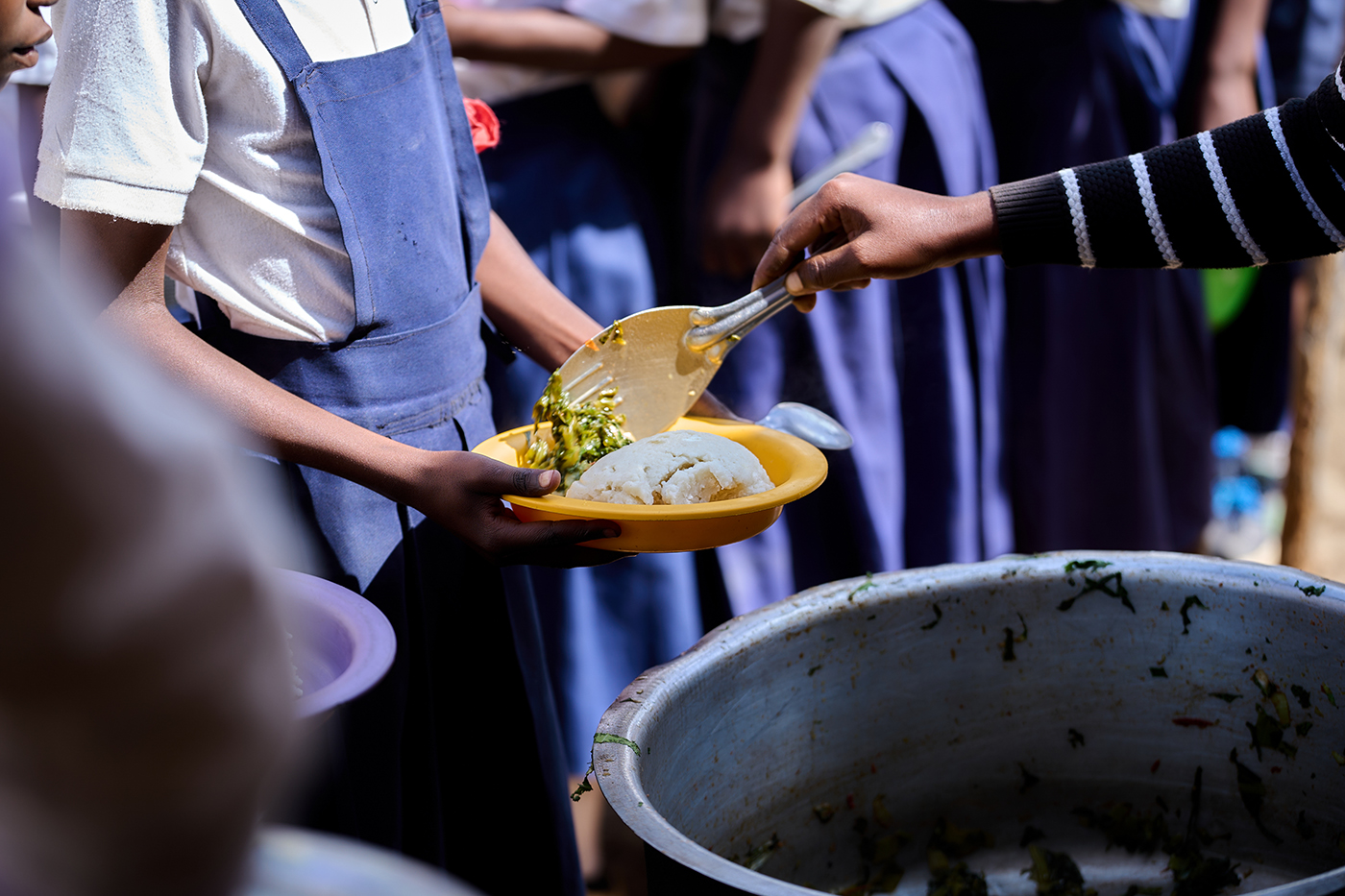
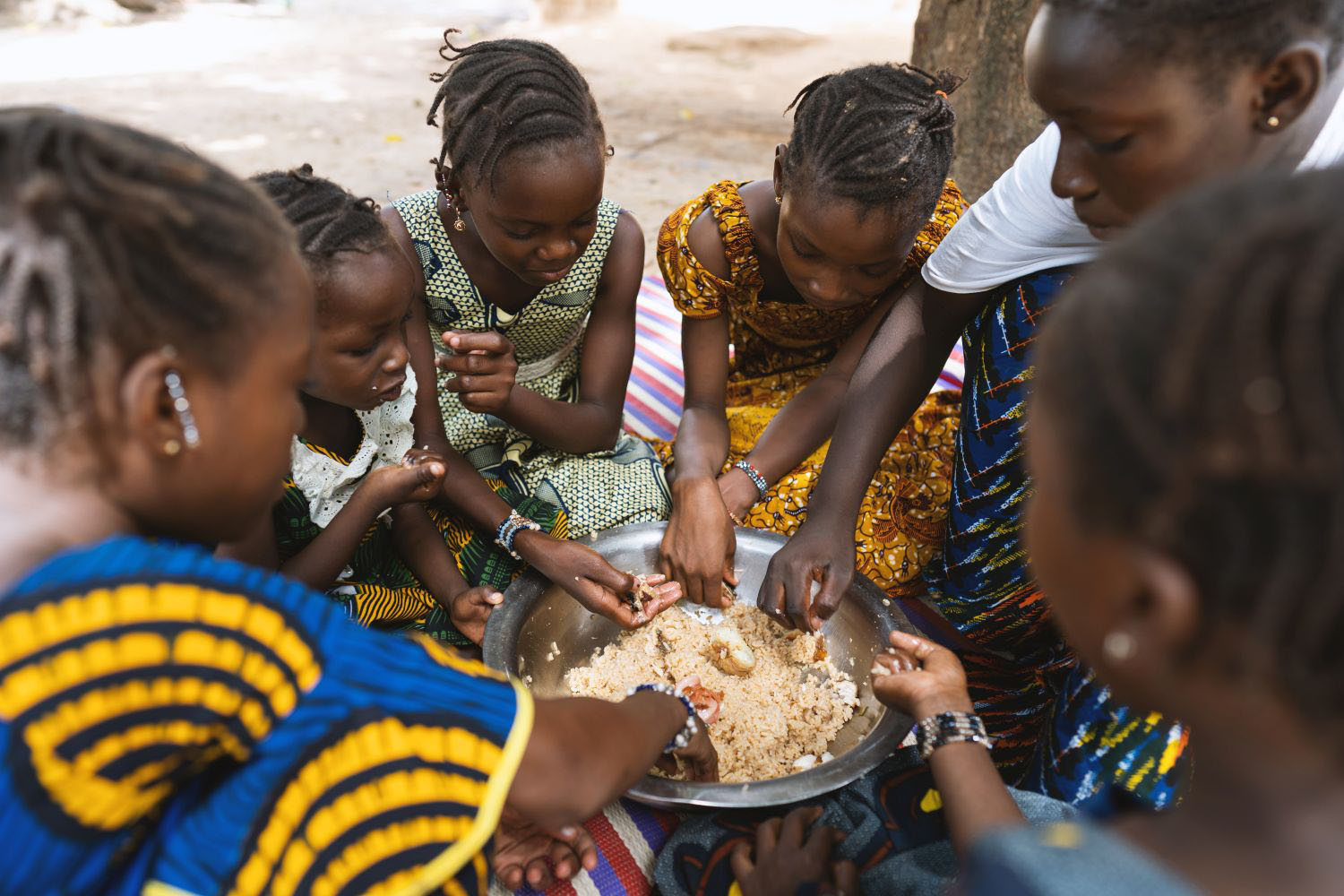
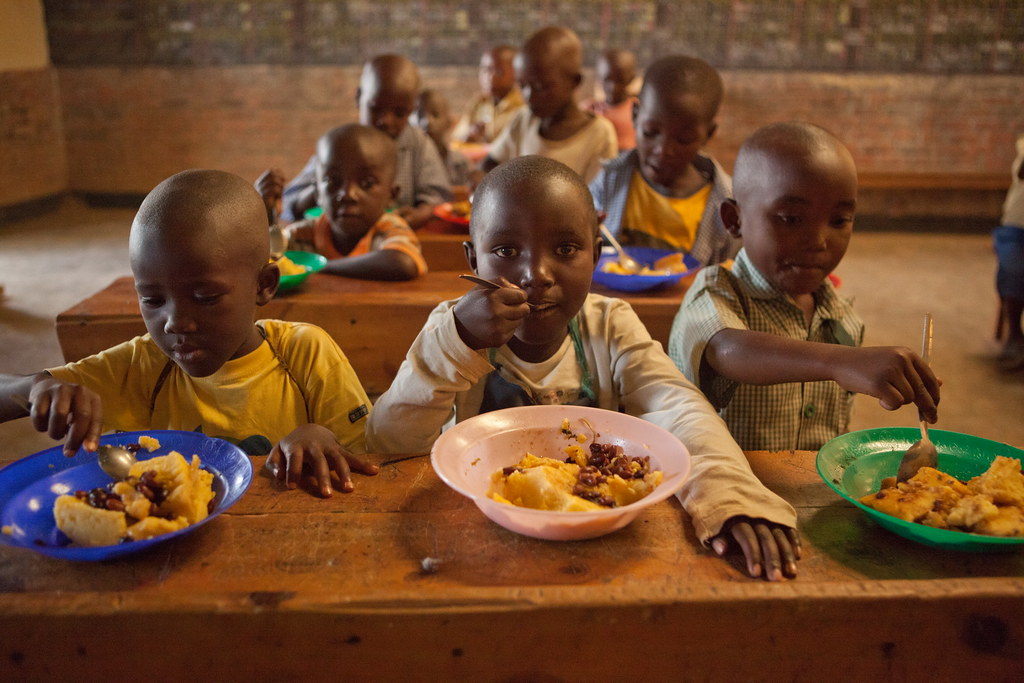
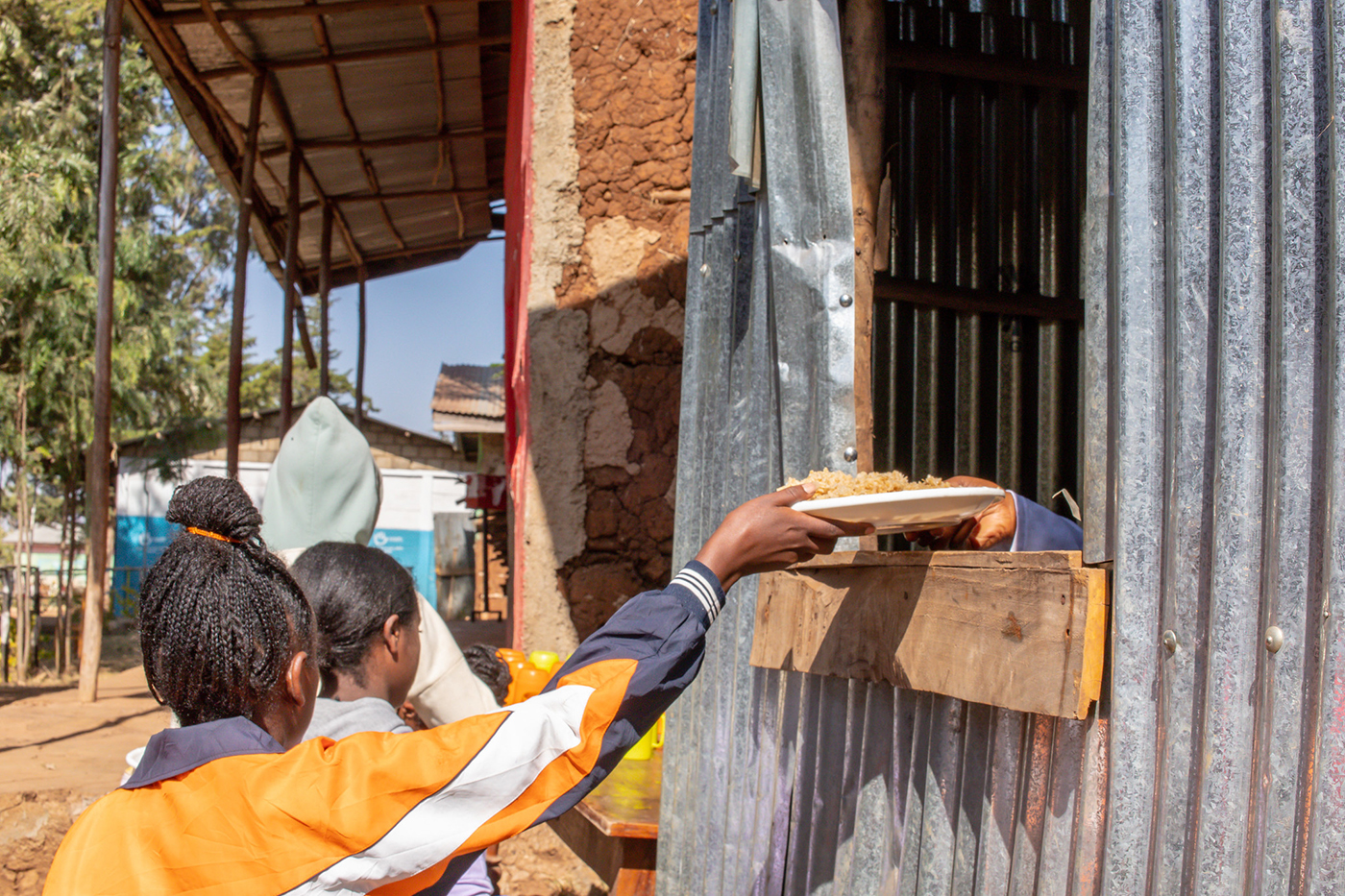
School feeding is increasingly incorporated into education-in-emergencies (EiE) responses, yet systematic evidence on its cost, scale, and delivery remains scarce. This evidence gap matters as humanitarian and development financing tightens and EiE requirements are cut. Using data from 65 emergency education programmes implemented in 31 countries between 2018 and 2024, this paper examines the budget trade-offs involved in including school meals in emergency education responses and the factors associated with more efficient delivery. We estimate planned annualised school-meal costs, standardised to a nine-month school year, for 33 grants, and assess budget–coverage trade-offs in the 19 grants for which complete budget and beneficiary data are available. In these grants, school feeding accounted for roughly 31 percent of aggregate budgets while serving roughly 7 percent of aggregate beneficiaries. Because the non-feeding remainder of each grant comprises a heterogeneous bundle of interventions, these figures describe budget composition rather than relative value for money. They are therefore a necessary, though not sufficient, input into a critical portfolio review. Annualised costs per targeted child ranged from USD 4 to over USD 201, with a median of USD 35. Costs were higher on average in drought and multidimensional crises than in disease-outbreak settings. Per-child costs were also lower in larger programmes, although this scale advantage was more limited in complex emergencies. On-site hot meals dominated delivery, but the sample includes too few alternative modalities to compare cost-efficiency robustly. We conclude with policy lessons on making budget trade-offs explicit, calibrating costs to context, testing alternative modalities, investing in delivery platforms, and improving coordination across EiE financing instruments.