Recommended
Event
1st Annual CGD Women in Leadership Conference
HYBRID
May 21, 2026 8:30—6:30 PM ET | 1:30—11:30 PM BSTThe title of CGD's first annual Women in Leadership Conference, “From Pipeline to Power,” points to a seemingly universal pattern. Across international financial institutions, economics departments, corporate boards, and ministerial cabinets, the pipeline of women exists. Women enter these institutions in roughly equal numbers, perform well, and advance through the early cadres. And then, as seniority increases, women's representation falls, and at the very top—among the people who actually set strategy, allocate resources, and shape decisions that matter—the numbers remain far from parity. Worse still, some institutions are moving in the wrong direction. The conference brought together researchers, practitioners, and institutional champions to take that puzzle seriously across all of these settings: not to ask whether the pipeline exists, but to ask why it stops and what it costs when it does.
The IFI picture is among the starkest. Not one of the seven major IFIs in CGD's sample has reached gender parity at the top. The World Bank and IMF, two institutions that still play the largest role in determining what is possible for women and girls in lower-income countries, are actively backsliding. Only three major IFIs have ever had a female head in their entire history. The data also show that many IFIs recruit at parity into their technical cadres but fail to promote women and men at comparable rates. That is not a pipeline problem; it is a power problem.
The barriers are structural
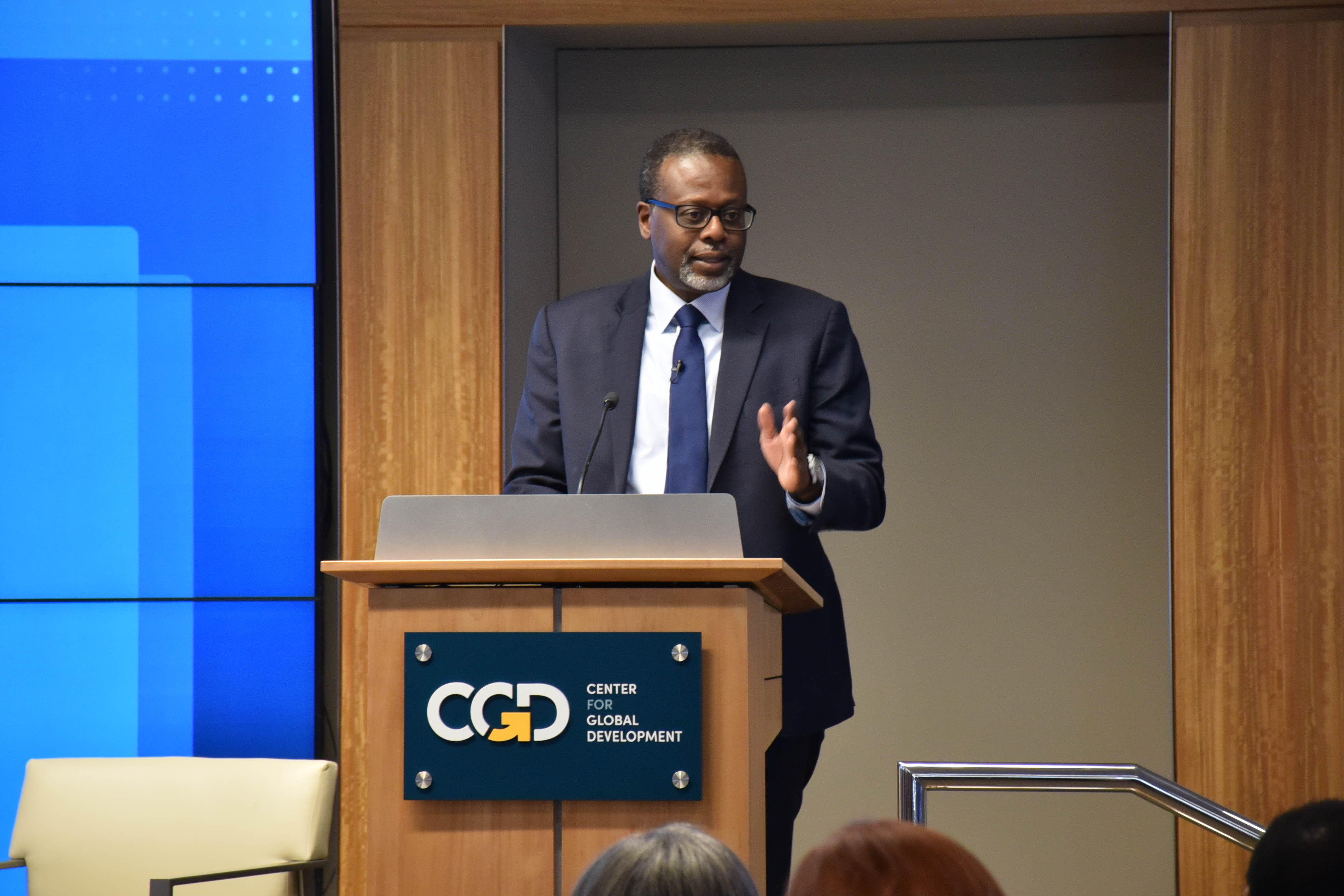
The day's most consistent finding across sessions—on seminar culture, performance reviews that lead to promotion gaps, and the career costs of menopause—is that women are not missing from the top because they lack capability or ambition. They are missing because the system is not designed for them. Eliana La Ferrara's keynote gave this the sharpest analytical framing: social norms shape who gets evaluated as leadership material, who sponsors whom, and who applies in the first place. Bias in evaluations often operates below the level of conscious intent, particularly in collaborative environments like IFIs, where individual attribution is difficult. Equally corrosive is behavioral adaptation: women who lack role models and see few peers in leadership internalize the norm that leadership is not for them, and they self-censor before the evaluation ever takes place. The system, in other words, reproduces itself.
CGD’s ongoing qualitative research, conducted by Monica Biradavolu and Catherine Weaver—preliminary findings from over 100 interviews with current and former IFI staff—fleshes out these mechanisms: women start behind, under-placed at entry and out-negotiated on salary; the path to management runs through visible and influential portfolios that are not assigned equitably; leadership tracks require rotations and field postings that conflict with caregiving; and performance review processes compound bias with scarcity, since the number of top scores each manager can award is capped. These findings are not surprises, but system failures require system fixes, and measuring them is a precondition for doing so.
Structural does not mean inevitable: HR actions can and must move the needle
The more hopeful finding from the day is that evidence on solutions also exists. Role model effects are real, and institutions can amplify them through deliberate design. Pay transparency narrows gender gaps in hiring outcomes. Disentangling internal from institutional barriers, as new work from British politics demonstrates, informs where to intervene. The evidence base for solutions is markedly thinner than the evidence base for problems, and that gap deserves investment—but what exists points toward concrete, implementable changes that institutions can make now.
The stakes extend to development effectiveness
Only three major IFIs have ever had a female head: the IMF, the EBRD, and the EIB. At the same time, new evidence of backsliding at some institutions gives reason for pause. These institutions channel hundreds of billions in development finance and shape economic policy across lower-income countries. Who leads them determines what governments hear in policy dialogue, what conditions attach to lending, and what girls in borrowing countries see as the ceiling for their own ambitions.
A message that came through in the final policy panel of the day is that urgency around women’s leadership remains lacking, and the agenda is disconnected from discussions around aid effectiveness in the way it should be. Talent decisions in global development organizations— from the top of the ladder to the entry rung—will shape aid allocation decisions with consequences for decades to come. Current overlapping global crises make prioritizing this agenda essential.
What comes next for us
CGD will update its data annually, tracking whether the 2025 backsliding continues or tapers off. Our qualitative research on the mechanisms driving the pipeline-to-power gap is ongoing, and we will have more to share on that soon; stay tuned.
On the policy side, we are partnering with the World Bank, the Gates Foundation, and the London School of Economics’ Hub for Equal Representation on the Economy on a conference, Women in Leadership: Accelerating Development Outcomes, in London in September 2026, and we will also continue our closed-door consultations on this topic with IFI leadership, stakeholders, and staff. The IDB's board-level declaration on gender equity, which our research informed and which provides some institutional safeguard against rollback, is a model we are working to replicate. Our ask to boards and shareholders is direct: embed gender criteria into presidential and VP selection, require data transparency, hold leadership accountable for the institutional measures that protect and invest in pipelines and middle management, and continue pushing for progress even when conditions are difficult.
The investments IFIs make shape the opportunities and aspirations of millions of women and girls. For their sake, we simply do not have the luxury of giving up, no matter how strong the headwinds are. And the conference showed us clearly that we are far from alone in that conviction—and we have the evidence to back it up.
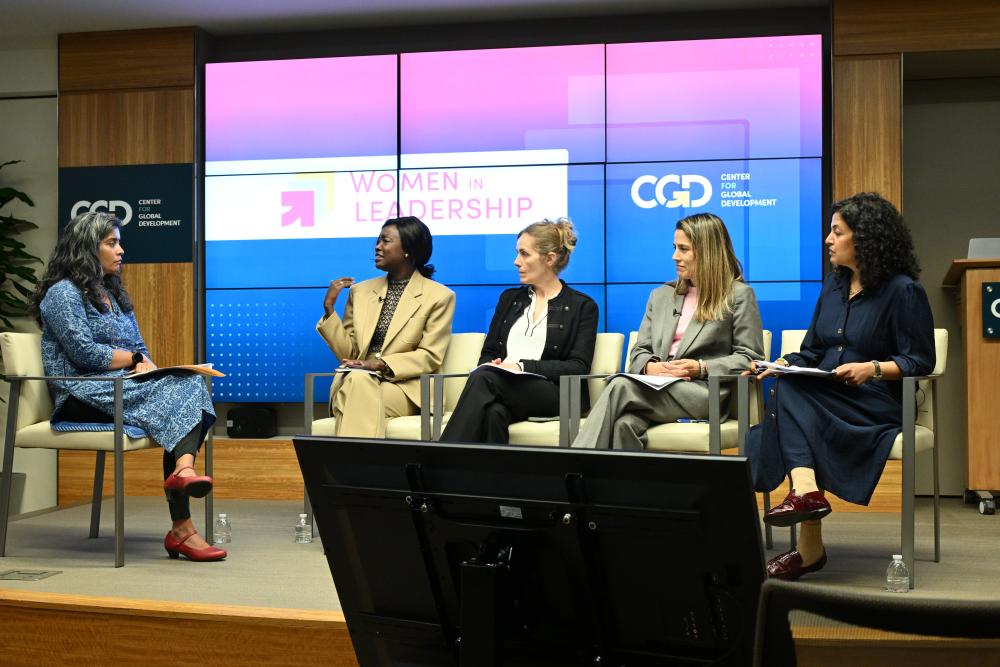
Video and presentations from the conference are available on the CGD website. Photos from the event are on CGD's Flickr.
Topics
DISCLAIMER & PERMISSIONS
CGD's publications reflect the views of the authors, drawing on prior research and experience in their areas of expertise. CGD is a nonpartisan, independent organization and does not take institutional positions. You may use and disseminate CGD's publications under these conditions.
Thumbnail image by: Kaveh Sardari