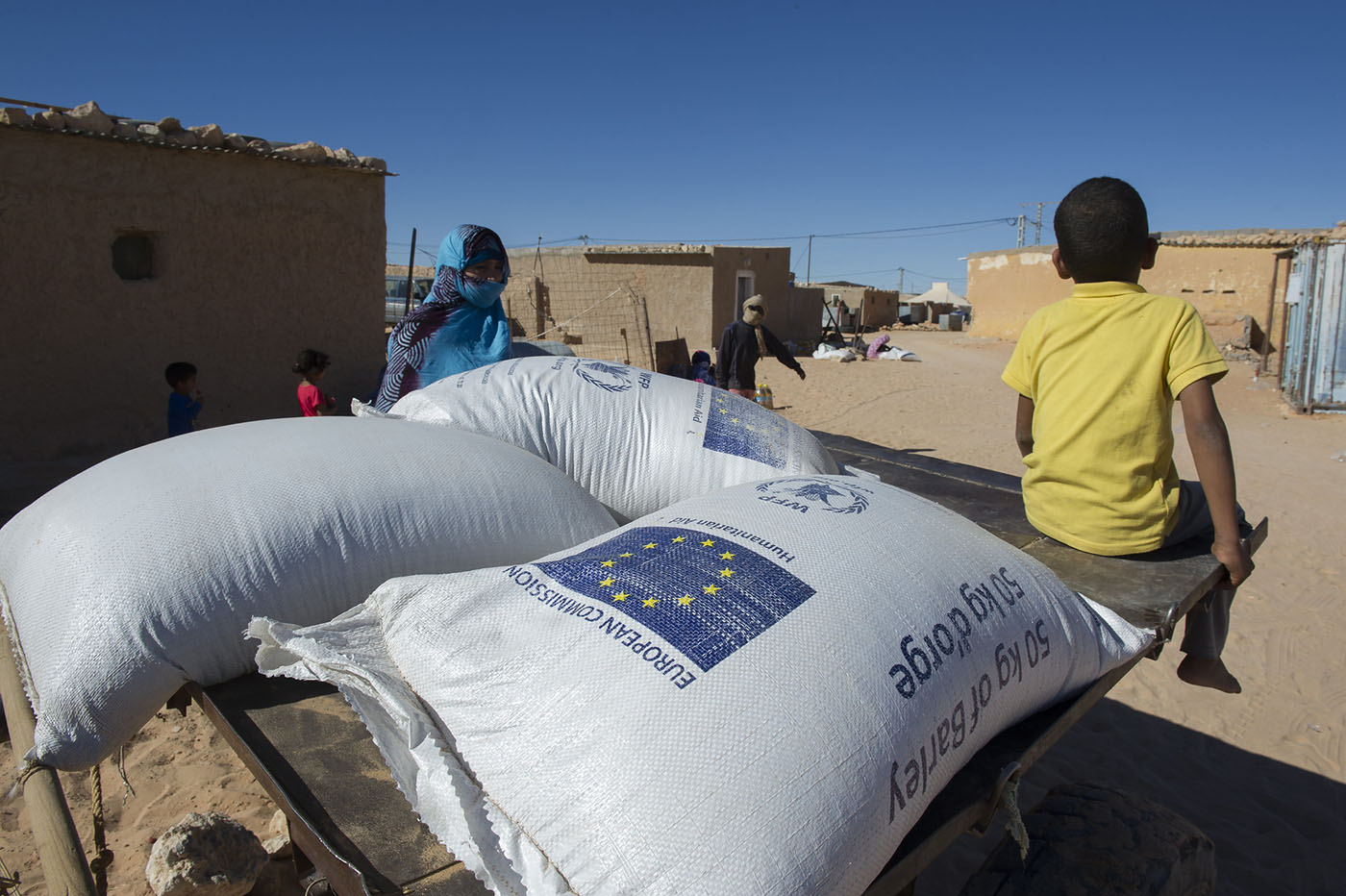
Cash transfers are the workhorse of social protection in low- and middle-income countries. More than 130 countries now run cash transfer programs for poor families, and the evidence on their benefits is extensive: they reduce poverty, improve school attendance, and, in many contexts, improve child health. A reasonable consensus has emerged that, on balance, cash transfers work.
But a question has also been building in the background: do cash transfers raise prices? And if so, for whom, and under what conditions?
The debate can look like straight-up disagreement: evidence from Kenya and Mexico finds little to no effect of cash transfers on local prices. But my co-authors and I have documented that the conditional cash transfer program in the Philippines significantly raised the prices of perishable foods in villages where a large share of households received the transfer. We also linked these price effects to large increases in stunting (too short for one’s age) among children under five who were born in households that were not poor enough to receive the program—although, with a poverty threshold of approximately USD 2.15 per person per day, even the households that are “non-poor” in terms of the program were, in fact, quite vulnerable in real terms.
Are these results at odds with each other? They are not. If anything, a closer look at the full body of evidence, including a recent IFPRI synthesis, makes clear that the studies are largely consistent with one another. In my view, the IFPRI synthesis leads with the wrong question: Do cash transfers have broad-based inflationary effects? Even in our work in the Philippines, we showed that this was not the case. The question is not whether cash transfers can affect local prices; rather, when do they affect prices and for which goods? In this blog post, I present a simple framework in which the answers to these questions come down to two conditions that must hold simultaneously for cash transfers to generate local market price effects.
Two key conditions can help predict the price effects of cash transfers
Think of it as a simple matrix. On one axis: how large is the demand shock that the program creates at the level of the local market? On the other: how elastic is local supply, or how well can the market absorb an increase in demand without raising prices?
Figure 1: Conditions that price effects of cash transfers
Elastic supply | Inelastic supply | |
|---|---|---|
| Small demand shock | Price effects unlikely or small | Modest price effects possible |
| Large demand shock | Modest price effects possible | Price effects likely |
When the shock in demand is large but supply is elastic, supply can respond adequately, markets absorb the shock, and everyone, including non-beneficiaries, may benefit from local economic multipliers. When supply is inelastic but the demand shock is small, price effects are too modest to matter. When both conditions are absent, cash transfers have essentially no effect on local prices. The potential for price effects only appears in one quadrant: when the demand shock is large and supply is inelastic.
What makes a demand shock large?
Two things determine the extent of market-level impacts of a cash transfer.
The first is program saturation, that is, the share of households in each village or market that receive the transfer. In the Philippines, median saturation was high: 65 percent of households—and up to 95 percent in some villages—were eligible for the transfer. At median saturation, that is equivalent to a 15 to 20 percent increase in total village income. The price effects in our data are evident in villages with median saturation or higher. In the Kenya GiveDirectly study, which is often cited as evidence against price effects, treatment intensity appears to have been substantially lower. The IFPRI synthesis also confirms that programs with lower treatment intensity consistently show smaller or no inflationary effects.
The second factor is permanence. A one-time cash transfer is a windfall. A recurring monthly transfer that runs for years is a permanent increase in income. In the Philippines, the program was advertised and implemented as a routine, monthly transfer program spanning multiple years. In Kenya, GiveDirectly made a large one-time transfer. Households responded very differently to the two. Evidence from the United States shows that permanent income shocks, like Social Security benefit increases, generate much larger local multiplier effects than temporary stimulus payments. Since permanent income shocks generate larger and more sustained increases in demand, they are more likely to push up prices for goods with inelastic supply.
What makes supply inelastic?
Two factors shape a market’s response to a demand shock.
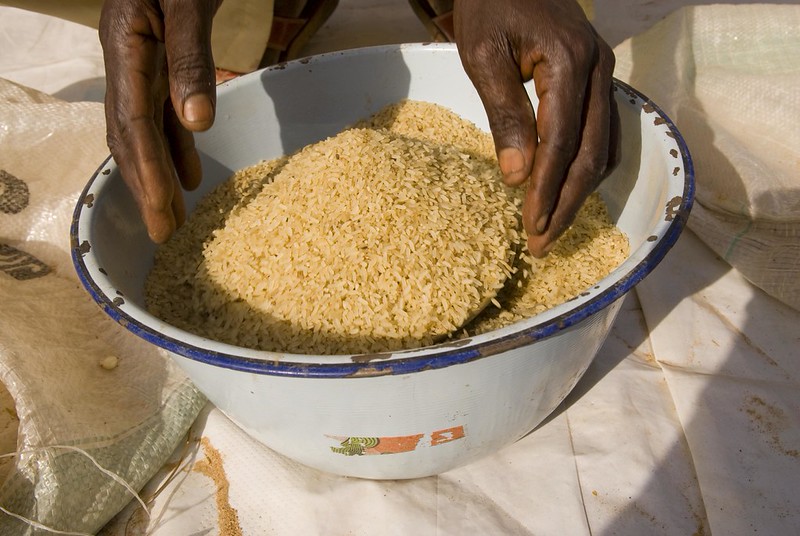
The first is product transportability, particularly perishability. Goods that can be stored, shipped long distances, or produced quickly have a relatively elastic supply—when demand rises, traders supply more quantities, and prices don’t change much. This is difficult to do for goods that spoil quickly or are difficult to transport. In the Philippines, rice and sugar prices were unaffected by the program even in the highest-saturation villages. Egg prices, in contrast, rose by up to 25 percent. Eggs are fragile, spoil quickly, and cannot be restocked on short notice from distant markets. The same pattern appeared across all 93 foods in the food basket used to calculate the national Consumer Price Index: perishable foods became more expensive as the cash transfer ramped up nationally, while non-perishable foods were not affected. I want to note here that I view with great skepticism any conclusions based on this that cash transfers can only affect the prices of perishables. In my view, the only misses the point, as perishable foods are often the most nutritionally important—precisely why we link the price increases in the Philippines to a 34 percent increase in stunting.
The second is market integration. A demand shock in a well-connected market dissipates quickly as traders arbitrage across geographic areas, prices equalize, and the effect on any one village is negligible. But in remote, poorly connected markets, the margin for adjustment is much narrower. Supply chains for perishable foods are already thin and infrequent; when demand increases, the supply response is constrained.
In the Philippines, both conditions were present: high and sustained saturation, remote villages with weak supply chains, and a fragile, perishable food—eggs. The result was a 34 percent increase in stunting among non-beneficiary children in the highest-saturation areas. The price increase that caused this was not catastrophic in absolute terms, but it was enough for non-beneficiary households that are not rich by any means to consume fewer of these foods.
In Kenya, significant price effects are observed for food items in the most remote markets; in Mexico, there is some evidence of price increases in remote communities. A new working paper introduces an interesting complication. Using the same Kenya data as the earlier study, they show that markets with less economic slack, which tend to be more active urban markets, may also be susceptible to inflationary pressure because they have less unused productive capacity to respond to demand increases. The precise role of remoteness versus market slack deserves more research. But the basic point here is that local market features determine the extent to which a demand shock becomes a price shock.
What this means for program design
On the demand side, considering program saturation alongside the capacity of local food supply chains is more important than it looks. A program that covers 90 percent of households in a remote village will generate market effects that a program covering 30 percent will not, even with identical per-household transfer amounts. Geographic targeting, not household targeting, makes most sense in these cases. If a large concentration of beneficiaries is unavoidable in some villages for poverty-targeting reasons, phased rollout may help markets adjust gradually. Finally, programs should consider whether sustained transfers require complementary planning for market effects.
On the supply side, investments in road connectivity, cold chains, and market infrastructure are not independent from investments in social protection. As supply chains are built, policymakers may consider in-kind supplements for specific nutritionally important foods alongside cash, particularly for remote communities at high program saturation. Price monitoring for perishable, protein-rich foods, like eggs, should be standard practice in any large cash transfer evaluation, not an afterthought.
Complementary investments in supply chains are not as straightforward as I make them sound. Many funders of cash transfers—GiveDirectly being a prominent example—are not set up to make infrastructure investments and cannot reasonably be expected to do so. To this end, I am encouraged by GiveWell's 2024 re-evaluation of GiveDirectly's flagship cash transfer program—in which I was one of several researchers they consulted. While substantially upgrading its estimate of positive spillovers to non-recipients, it explicitly flags that inflationary effects on food prices are more likely in remote and poorly integrated markets, citing evidence from the Philippines and Mexico as a reason not to assume that the Kenya findings can be generalized everywhere. That kind of context-sensitivity built into cost-effectiveness modeling is exactly what the field needs more of.
But the supply chain challenge runs deeper than organizational mandate. Cold chains and rural market infrastructure are expensive, slow to build, and require sustained maintenance that outlasts any single program cycle. And even among funders that can invest in supply chains—the multilateral development banks—their internal silos can get in the way: social protection here, infrastructure there, and agriculture in yet another corner. A social protection specialist and a transportation economist at the same institution may never sit in the same room. Of course, it simply should not be the case that a funding agency's organizational design prevents effective program design. The good news is that the barrier here is institutional, not technical: we know what needs to be done. The harder question is who takes responsibility for connecting the dots across what are, in most development organizations, entirely separate funding streams, teams, and results frameworks.
None of this should be read as an argument against cash transfers. The evidence on their benefits is overwhelming, and observed price effects are the exception rather than the rule. In most settings, one or both conditions are absent, and cash transfers generate positive spillovers even for non-beneficiary households through local multiplier effects. But the Philippines case also shows us that cash transfers can move local markets in ways that can harm the most vulnerable people in the most vulnerable places—if program design ignores the market context into which cash is being injected.
This blog builds on work and many conversations with Deon Filmer and Jed Friedman. It also benefited from various conversations with Francisco Ferreira, Owen Ozier, Steven Pennings, and Justin Sandefur.
DISCLAIMER & PERMISSIONS
CGD's publications reflect the views of the authors, drawing on prior research and experience in their areas of expertise. CGD is a nonpartisan, independent organization and does not take institutional positions. You may use and disseminate CGD's publications under these conditions.
Thumbnail image by: poco_bw / Adobe Stock