Recommended
As COP30 opens in Belém, attention is once again turning to the hard realities of financing the transition to a low-carbon, climate-resilient world. Few sectors are more central to that challenge than agriculture, the source of livelihoods for billions, a major driver of emissions, and the frontline of climate impacts. Yet it remains chronically underfinanced, especially in emerging and developing economies.
Against this backdrop, the World Bank Group’s (WBG) new AgriConnect initiative, one of the headline announcements at its recent annual meetings, could not be more timely. The initiative commits to doubling of agriculture and agribusiness investment to around $9 billion annually by 2030, underscoring a clear shift in priorities and a recognition of the sector’s central role in jobs, growth, and climate resilience.
Table 1. AgriConnect commitments by World Bank Group institution
Any increase in support for agriculture is welcome. After years of relative neglect, AgriConnect rightly puts the sector back at the centre of the development agenda. Agriculture remains the main source of livelihood for billions of people, supporting up to two-thirds of jobs in low-income countries and nearly half in sub-Saharan Africa, yet it continues to be chronically underfinanced.
As global food demand is set to rise by 60 percent by 2050, and with over 80 percent of the world’s poor still living in rural areas, the sector must do far more than feed a growing population. It must create decent jobs, strengthen climate resilience, and cut emissions, and that will require smarter finance, not just more of it.
Making AgriConnect work for smallholders
Recent CGD analysis finds that the World Bank’s investment in climate-resilient agriculture remains limited, even in countries most vulnerable to climate shocks and heavily dependent on farming. Scaling up productive investment, especially to help smallholders adopt new technologies and practices, would deliver strong economic, social, and security returns.
The Bank’s new “ecosystem approach,” linking policy reform and public investment through International Bank for Reconstruction and Development (IBRD) and International Development Association (IDA) with private-sector mobilisation through the International Finance Corporation (IFC) and Multilateral Investment Guarantee Agency (MIGA), could mark a real turning point, if executed well. Yet the AgriConnect announcement raises as many questions as it answers. While it sets an ambitious finance target, the big question is how the WBG, and especially IFC, will adapt its agribusiness strategy to put smallholder farmers and producers closer to the centre. Nor does it set clear output or outcome targets, making it difficult to gauge how success will be defined or measured.
Financing agriprocessing firms and other parts of the value chain will remain important, but the challenge is to strike the right balance and build an effective division of labour across institutions. The International Fund for Agriculture and Development (IFAD), with its deep experience working directly with smallholders and rural communities, and as a partner in AgriConnect, has a vital role to play. The priority now is ensuring that the WBG and its partners align their strengths, linking policy reform, public investment, and private capital to drive inclusive rural transformation.
Unlocking a double dividend: jobs for people, resilience for the planet
Agriculture offers a rare double dividend: it can generate millions of livelihoods while helping countries adapt to and mitigate climate change. From smallholder farms to processing and logistics, the sector underpins vast rural economies. Channelled strategically, investment can unlock employment all along these value chains while accelerating a shift to regenerative and low-carbon practices.
The opportunity, and the cost of inaction, are both enormous. The Grantham Institute at the London School of Economics estimates that a business-as-usual path could result in 120 million fewer jobs by 2030, while a “nature-positive” transition could create up to 395 million new ones. The direction of travel will depend on whether investment flows are redirected toward sustainable, smallholder-linked, and climate-smart agriculture.
A game plan for IFC: five ways to deliver the double dividend
To deliver, IFC must fine-tune its agribusiness strategy to place smallholder farmers and producers closer to the centre. A review of 91 IFC projects tagged as “agribusiness and forestry” between FY22 and FY25 shows that only a quarter referenced benefits for smallholder farmers in IFC’s impact assessments. The portfolio remains concentrated in large-ticket lending to large corporates, with an average deal size of $57.6 million and only 14 transactions deploying risk capital such as guarantees or patient capital such as equity. In short, IFC’s investments are heavily weighted toward large corporates, with limited use of guarantees, insurance, or equity-like instruments that could help de-risk and strengthen smaller actors further down the value chain.
To fine-tune, IFC must move beyond business as usual, not just lending more, but rebalancing its toolkit to reshape how capital flows into rural economies. Its comparative strengths lie not in reaching every smallholder directly, but in mobilising private investment and building markets that connect farmers, agri-small and medium enterprises (SMEs), and processors through more resilient value chains. This will require closer coordination with other multilateral development banks (MDBs) and international financial institutions, including IFAD, so each institution plays to its strengths within a coherent, system-wide approach.
At the same time, IFC must use its commercial and concessional resources more strategically to reach underserved actors and crowd in private investment. Drawing on the most promising blended-finance innovations, IFC can turn this ambition into impact through five practical moves:
1. Build integrated blended-finance platforms
Most agri-SMEs remain too small, too risky, or too informal for commercial lenders. Integrated blended-finance approaches can tackle these barriers by combining de-risking instruments, technical assistance, business-development support, and incentive payments within a single structure.
Models such as Aceli Africa show how this works: blending first-loss guarantees, origination incentives, and technical assistance, while linking subsidy levels to measurable impact. Similar initiatives, AGRI3, NIRSAL, and PROFIT, demonstrate how adaptive subsidy allocation can align commercial and developmental goals.
Scaling such models would allow IFC to move beyond one-off large corporate lending toward ecosystem-building, expanding finance to smaller agri-SMEs and local intermediaries while crowding in private capital.
2. Expand risk-mitigation and patient capital
IFC’s own data show limited use of guarantees, insurance, and equity, despite their potential to de-risk local lending and mobilise capital. Of the 91 transactions between FY22 and FY25, only 9 were guarantees, almost all short-term trade finance deals. To mobilise local capital at a greater scale for agri-SMEs, IFC should expand use of portfolio-level risk-sharing facilities with financial institutions, which can spread risk efficiently and lower transaction costs for local lenders. To maximise impact and minimise subsidy, IFC should use market-based allocation mechanisms for any agri-SME portfolio risk sharing and deploy them in coordination with other development finance institutions and national agrifinance strategies.
But traditional guarantees often fail to change lender behaviour sustainably once they expire. Combining risk-sharing with results-based incentives can reward financial institutions for expanding into underserved markets. Aceli Africa offers a strong model: its first-loss coverage increases as lenders grow portfolios for women, youth, or climate-smart enterprises. Similar programmes such as NIRSAL in Nigeria and PROFIT in Zambia show how modest, performance-based incentives can shift risk perceptions and expand lending without distorting markets.
Yet nudging banks is only part of the solution. To grow the next generation of agribusinesses, IFC should anchor and scale specialist intermediary funds and investment vehicles that target smaller ticket sizes and blend finance to deploy patient, risk-tolerant capital such as equity. This type of capital is essential for backing early-stage ventures and unproven business models in climate smart agriculture. AgDevCo, for example, provides $3–15 million in patient capital and technical support to agri-SMEs, while the Acumen Resilient Agriculture Fund invests in early-stage agribusinesses building resilience for smallholder farmers.
3. Scale digital and agtech innovation for job creation
IFC should harness the digital transformation reshaping agriculture. Digital and agtech solutions can turn data into investable opportunity by improving how information is sourced, shared, and verified, helping close the data gaps that constrain agricultural lending.
Yet IFC’s own data show little direct investment in this space. Despite its potential to build deal pipelines, connect farmers to markets, and improve financial intermediation, IFC’s agriculture portfolio remains dominated by traditional debt transactions with large agriprocessing or manufacturing companies, with minimal engagement in digital or technology-enabled models.
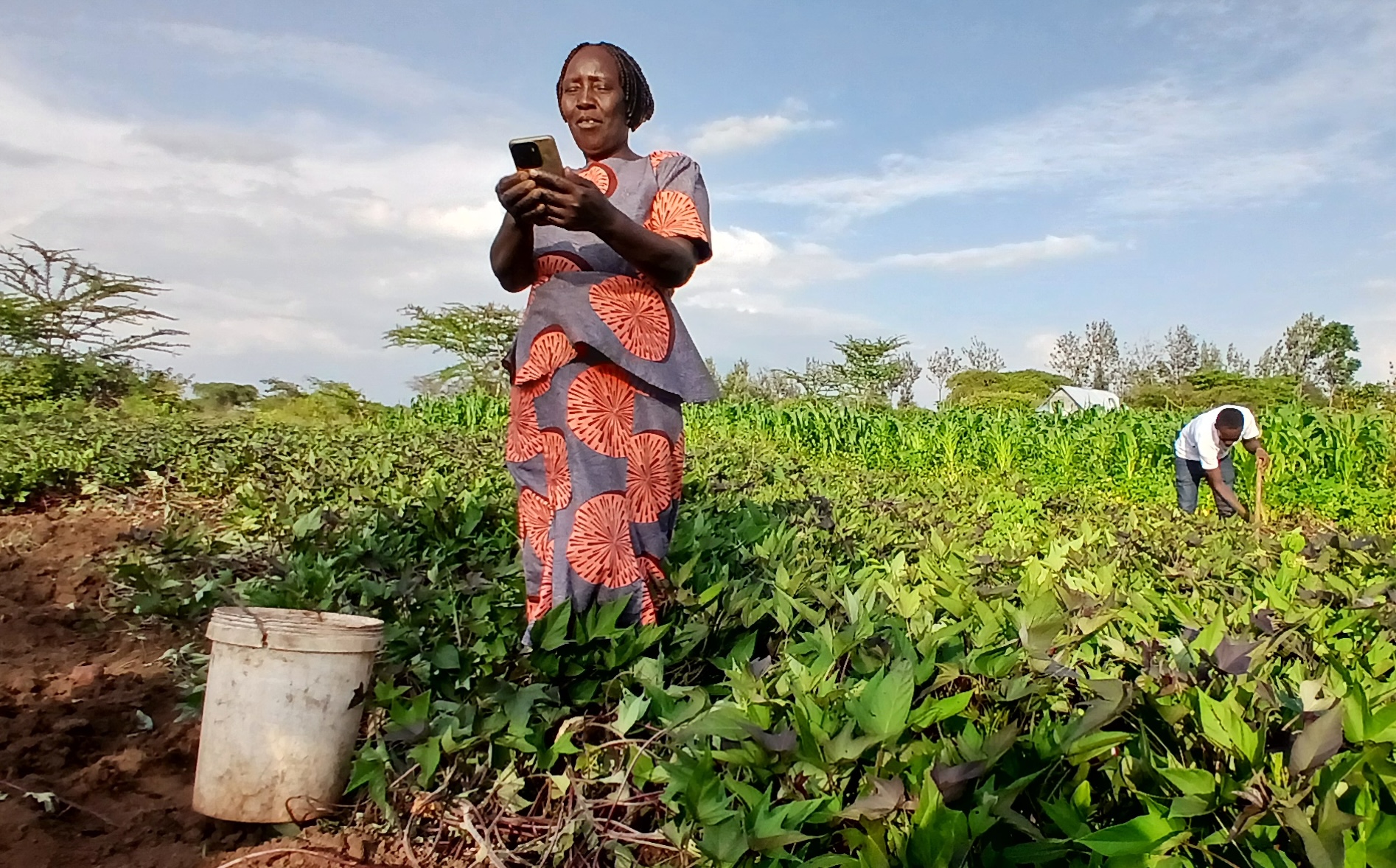
This is a missed opportunity. Platforms like DigiFarm and Hello Tractor already show how mobile and digital tools can link smallholders, markets, and finance. IFC could help move such innovations from isolated pilots to market-wide platforms, making digitalisation a cornerstone of rural investment and a driver of both jobs and resilience.
4. Standardise, aggregate, and securitise to unlock institutional capital
Mobilising investment at scale means creating products institutional investors want to buy. IFC’s own $510 million collateralised loan obligation demonstrates the potential of structured finance to crowd in long-term investors. Applying this to agriculture, using blended finance to support standardisation, aggregation, and securitisation, could turn fragmented agri-SME and agrivalue chain lending into investable products for pension funds and insurers.
This matters. There are still few agricultural investments above $200 million, leaving most too small to capture institutional interest. Aggregating portfolios can create critical mass, while separating investments into layers with different risk levels enables IFC and other MDBs to tailor returns to different investor appetites. Blended capital can absorb higher-risk tranches, attracting commercial investors to the safer layers. Examples such as the Tropical Landscapes Finance Facility (TLFF) and Clarmondial’s Food Securities Fund show what’s possible.
5. Launch climate-smart and nature-positive funds
Agriculture is both a driver of emissions and one of the sectors most exposed to climate impacts. IFC can play a pivotal role by mobilising long-term, patient, and risk-tolerant capital to help agribusinesses adopt regenerative practices, restore ecosystems, and build resilience.
To do so IFC could lead or anchor new global or regional blended funds focused on climate-smart and nature-positive investment. Funds like AGRI3 and TLFF already demonstrate how blended structures can channel patient and risk-capital into projects that deliver both carbon and employment dividends. With its convening power and market presence, IFC could scale these models, positioning agriculture as a cornerstone of the just nature transition.
Turning capital into change: The test for IFC
The World Bank’s renewed focus on agriculture is welcome, but its success will hinge in part on IFC’s ability to shift from large corporate lending to more catalytic, risk-tolerant investment that reaches smaller actors and strengthens local finance systems. IFC must move from counting dollars mobilised to measuring markets strengthened, working with governments, investors and other MDBs to align finance with reform. If it can blend capital with policy coherence and purpose, IFC can help turn AgriConnect from a funding pledge into real impact, mobilising capital, transforming markets, and building resilient rural economies.
Table 2. IFC agribusiness investments FY22–FY25
Topics
DISCLAIMER & PERMISSIONS
CGD's publications reflect the views of the authors, drawing on prior research and experience in their areas of expertise. CGD is a nonpartisan, independent organization and does not take institutional positions. You may use and disseminate CGD's publications under these conditions.
Thumbnail image by: artit/ Adobe Stock