Recommended

Event
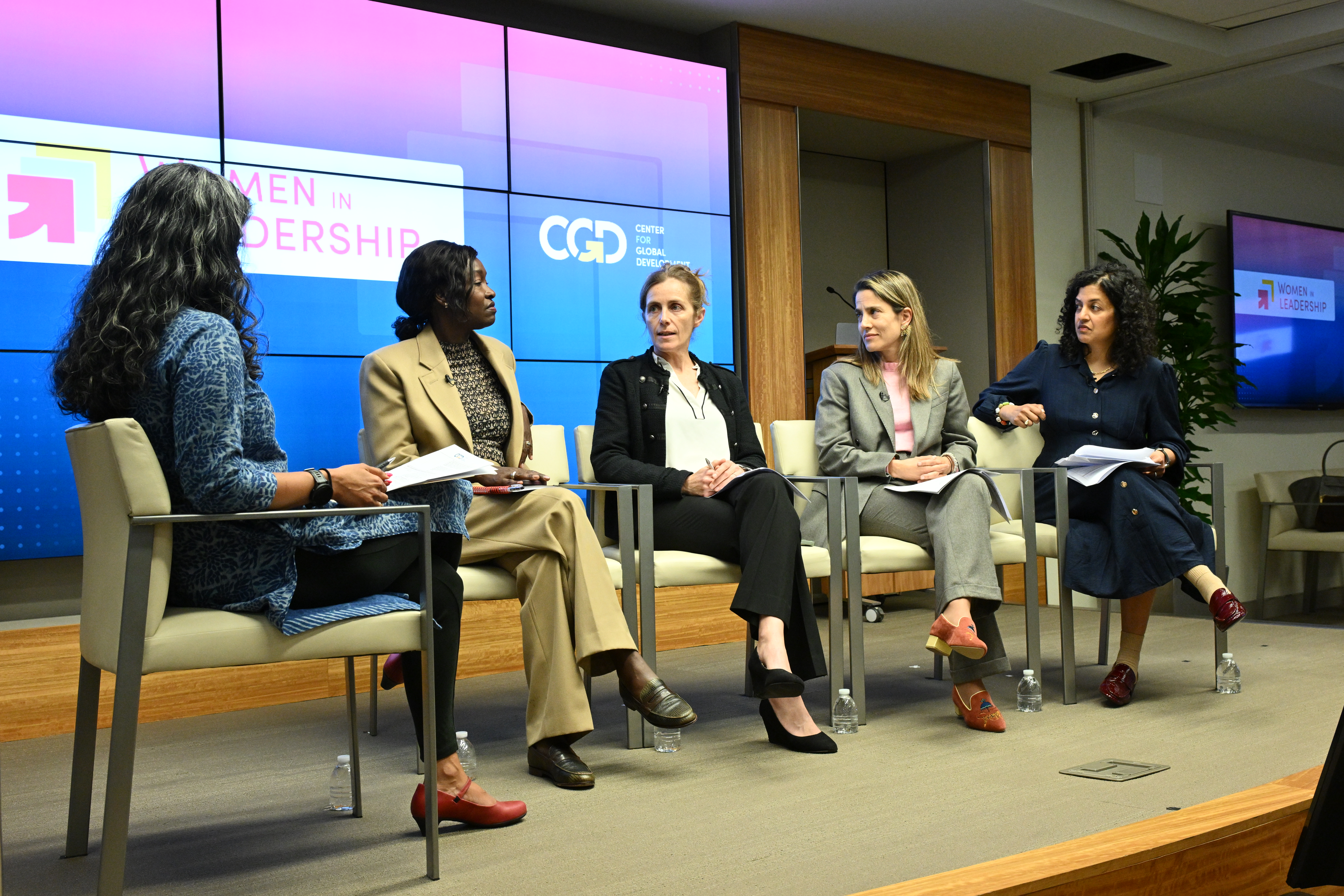
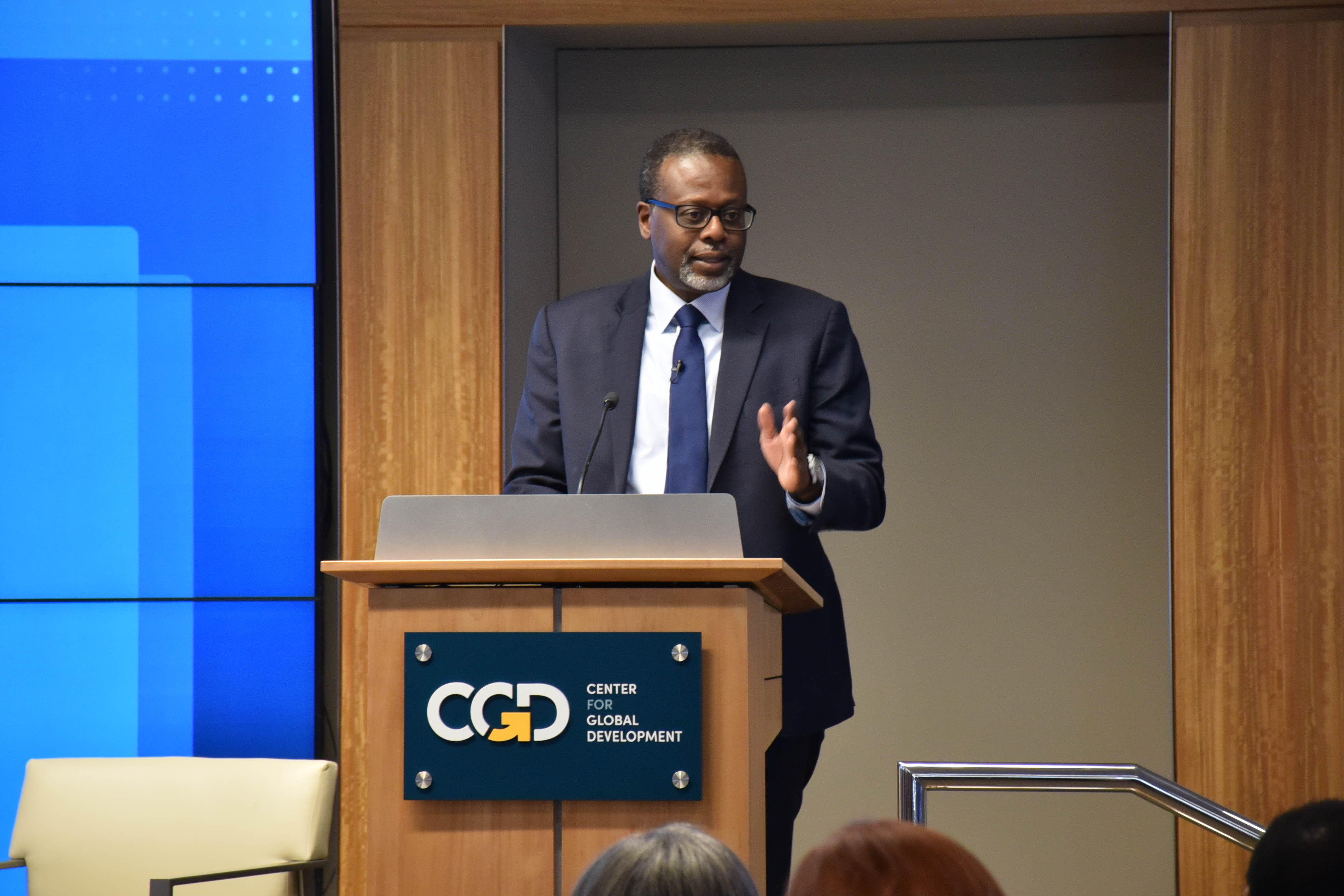
1st Annual CGD Women in Leadership Conference
HYBRID
May 21, 2026 8:30—6:30 PM ET | 1:30—11:30 PM BST

In 2023, we documented how women remained strikingly underrepresented in senior leadership across the international financial institutions (IFIs). Two years on, the picture has improved at some IFIs, but meaningfully worsened at others.
Our updated analysis through December 2025 finds three key patterns:
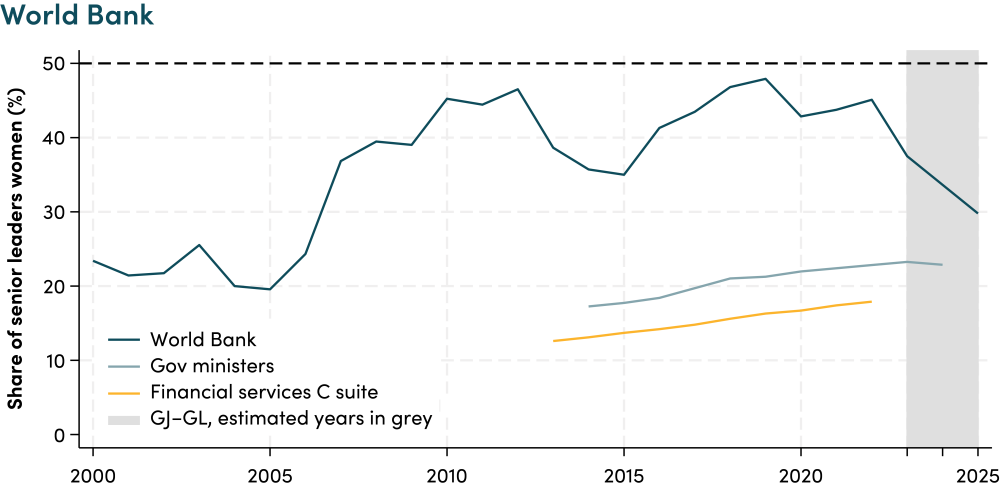
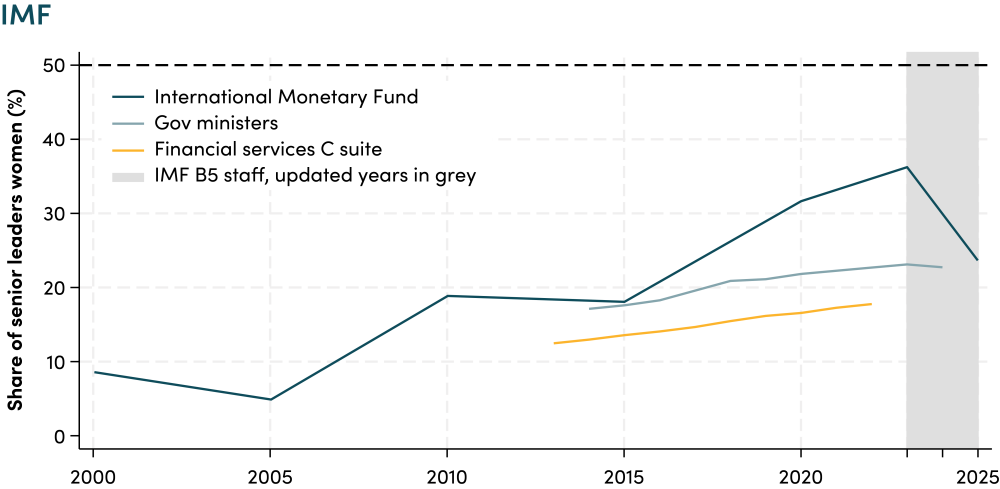
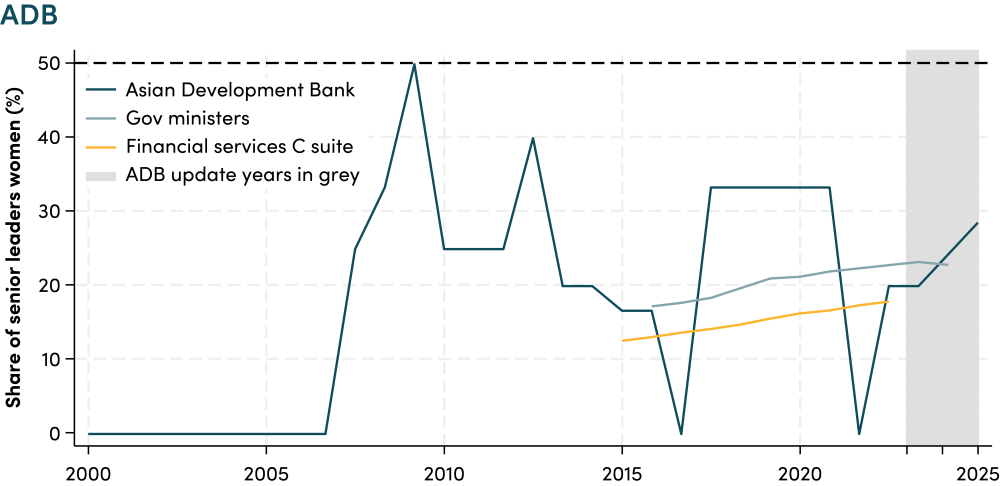
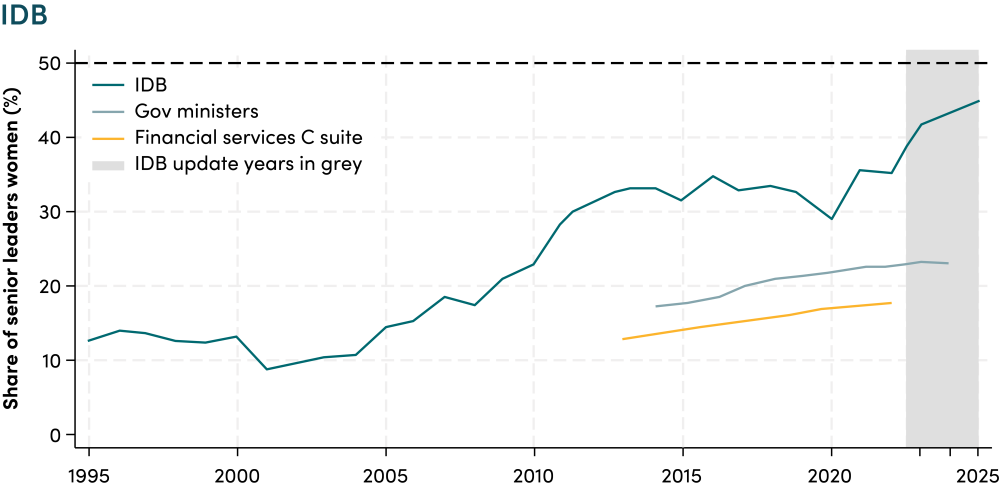
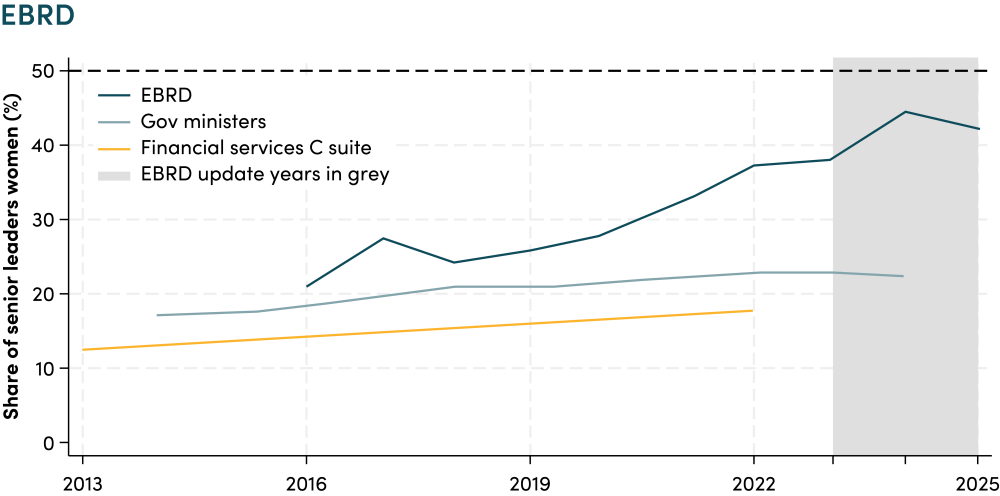
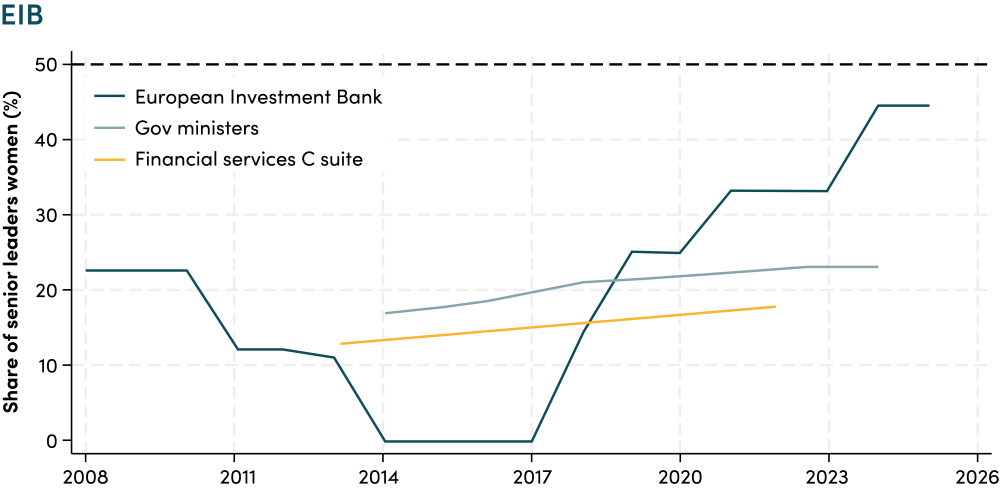
First, not one of the major IFIs we track—the World Bank, International Monetary Fund (IMF), Asian Development Bank (ADB), Inter-American Development Bank (IDB), European Investment Bank (EIB), and the European Bank for Reconstruction and Development (EBRD)—has reached gender parity at the top.
Figure 1. Share of IFI senior leadership positions held by women, updated estimates
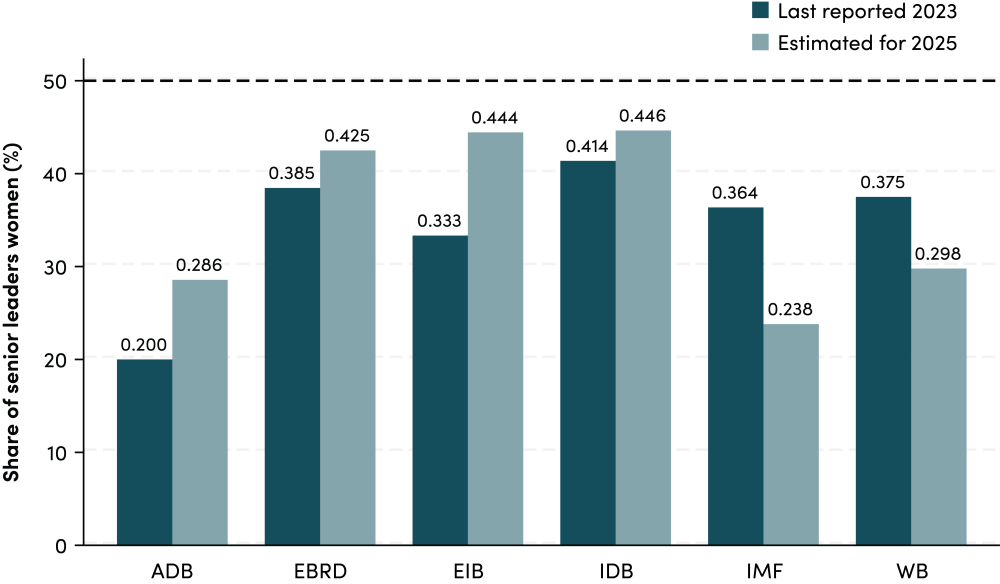
Second, a striking divergence has emerged between the Bretton Woods institutions and the regional banks: the EBRD, IDB, and EIB all sit above 40 percent, while the IMF (23.8 percent) and World Bank (29.8 percent) have fallen back meaningfully from gains made in earlier years.
Figure 2. Women in leadership at IFIs vs. global comparators
| 
|
| 
|
| 
|
Click the graph to view an enlarged version.
Third, it increasingly looks as though earlier gains were never locked in—that women's representation at the top is highly sensitive to individual leadership transitions and external pressures, rather than being embedded in durable norms or appointment practices.
Across institutions, a consistent "waterfall" pattern persists, with near parity in entry-level technical grades, declining representation at each successive tier, and the lowest levels of representation precisely where it matters most: among the managing directors and vice presidents who set institutional priorities, allocate budgets, and respond to crises.
This matters well beyond organizational fairness. For instance, a study using biographical data on thousands of World Bank task team leaders combined with the World Bank's project-level Gender Mainstreaming Index finds that deeper implementation of gender mainstreaming—integrating gender across project design, activities, and monitoring, rather than checking a box to clear the approval threshold—is significantly more likely when women staff supervise projects, hold positions of authority, and are more represented as coworkers. The mechanism is institutional: the World Bank's deeply embedded "approval culture" means that staff identities and values determine day-to-day implementation decisions, and more than 90 percent of staff see project approval as very or extremely important for their career success, making it decisive whether those in authority treat gender as a genuine priority or a compliance exercise.
The IFI-specific finding sits within a broader and well-established literature showing that the gender of decision-makers shapes resource allocation, that it can close the gender gap in career aspirations among children and their parents, improve children’s educational attainment gaps, and predict greater legal rights and protections.
So, when the World Bank's share of women in senior leadership roles falls from near parity to 30 percent, as it has in recent years, that is not an internal human resources problem. It is a disconcerting sign that the quality of gender integration in the World Bank’s portfolio is likely declining with it. And that there are ripples across a variety of domains in low- and middle-income countries.
There is also a credibility problem that the IFIs cannot ignore. Institutions that persistently fail to achieve the gender balance they advocate for borrowing countries are increasingly exposed to a charge of hypocrisy that erodes their authority on the very reforms they are asking others to make.
Three lessons follow for institutions serious about change:
- Pipelines are necessary but not sufficient: qualified women exist at every level, and the barrier is at the top.
- Appointments matter more than commitments—gender criteria must be embedded into selection processes, not left to the discretion of each incoming president.
- Transparency is not optional. Shareholders and governors of publicly financed institutions must demand accountability and refuse to allow stagnation to go unreported.
Topics
DISCLAIMER & PERMISSIONS
CGD's publications reflect the views of the authors, drawing on prior research and experience in their areas of expertise. CGD is a nonpartisan, independent organization and does not take institutional positions. You may use and disseminate CGD's publications under these conditions.
Thumbnail image by: BullRun/ Adobe Stock