Recommended
Mere weeks have passed since the White House sent its FY27 budget request to Capitol Hill, but House appropriators are advancing their own vision for development and diplomacy spending in the year ahead. The bill(s) passed by the committee this week (in a party-line vote) would reduce the overall international affairs budget, but by far less than the deep cut proposed by the president.
Here’s a quick look at how several key areas fared—with two vital caveats. First, it’s still early in the process. The Senate will have its chance to weigh in. Negotiations often result in final funding levels that fall somewhere between those proposed in each chamber, but achieving a timely final deal could be particularly challenging with midterm elections fast approaching. Second, there are many lingering questions about the degree to which the administration will adhere to the levels and guidance established by lawmakers after last year’s rounds of rescissions and a recent congressional notification outlining plans to set aside large sums for USAID closing costs. Even assuming political will, implementation could prove challenging, given limited staff and new policies that complicate procurement.
[For context, read the text of the National Security, Department of State, and Related Programs spending bill and the accompanying report. Select food aid programs are funded through the agriculture spending bill.]
Global health: Shifting responsibility, watching carefully
The administration continues to sign bilateral global health agreements at pace. To date, the State Department has announced 32 Memoranda of Understanding. House appropriators underscore their support for shifting global health programming to partner countries and for realizing a longstanding commitment to PEPFAR transition. But as global health officials work on implementation plans that would scale back US support and require partner co-financing, lawmakers are monitoring the situation, seeking to avoid “adverse programmatic impact.” House appropriators would provide funding well above the administration’s request but slightly below the FY26 enacted level, specifying allocations for maternal and child health, nutrition, neglected tropical diseases, and more. The bill includes $300 million for Gavi, the Vaccine Alliance. During the full committee markup, several members voiced their deep frustration that HHS Secretary Robert F. Kennedy Jr. is blocking prior-year funding from supporting the purchase and distribution of life-saving vaccinations by the public-private partnership, including new malaria vaccines, which have the potential to offer a huge boost in combating the disease that continues to have devastating consequences for young children in several African countries.
Humanitarian assistance: More than the White House wanted, less than the world needs
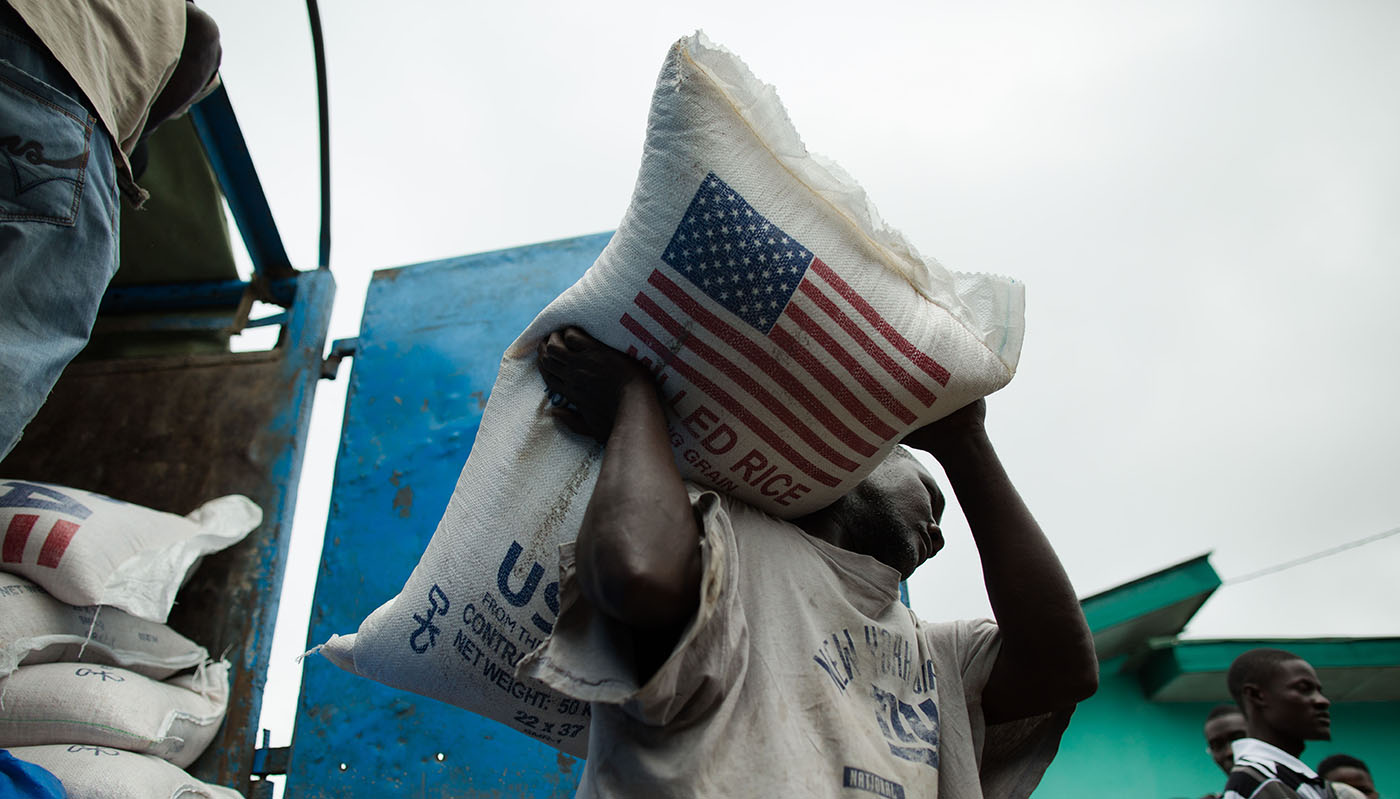
Even amid a host of changes to US foreign aid, the major reduction in humanitarian spending stands out. House appropriators would provide more than the administration requested for a new merged humanitarian account and appear poised to reject the administration’s proposal to zero out the largest US international food aid program, currently managed by the Department of Agriculture. But even with the administration’s rescissions last year, there is somehow still funding for humanitarian response that the White House would prefer not to spend. House appropriators appear willing to return another $1 billion in International Disaster Assistance. We hope to see humanitarian aid programs achieve real efficiency gains, but it’s hard to see such a large step back in response efforts, given the enormous need in many parts of the globe.
National Security Investment Programs: New account, old instincts?
In the wake of USAID closure, Congress merged two longstanding bilateral economic accounts into a new National Security Investment Programs (NSIP) account. Yet appropriators have been reluctant to loosen the reins. In fact, the measure includes a range of spending directives, many of which would preserve traditional areas of US development investment.
With the administration’s keen interest in a greater focus on the Western Hemisphere and strategic investments in the Indo-Pacific, appropriators re-upped their specification that at least 15 percent of NSIP funding be allocated to programs in Africa.
IFIs: Appropriators send a mixed message
The IFI topline belies larger differences between the White House and House appropriators. Even accounting for the administration’s recent downward revision to its pledge to the World Bank’s International Development Association (IDA), which supports the poorest countries, this measure would put the US behind in its payments to IDA. It would also complicate US efforts to subscribe to US shares at the EBRD and IDB Invest, consistent with recent capital increases agreed to by the US, and shortchange an installment related to a capital increase at the African Development Bank agreed to in the first Trump administration. A boost to the flexible Treasury International Assistance Programs account could help fill in, but it would only go so far. Appropriators also provide less than the requested sum for IFAD—which falls short of the most recent pledge—but suggest they aren’t ready to walk away from the Global Environment Facility, which the administration has labeled as unaligned, but which supports programming in popular areas such as conservation and resource management.
The bill text includes language directing the US to oppose any lending to China at these institutions. This has been US policy for several years; but it underscores a united position on the importance of formally graduating China from eligibility to borrow.
Appropriators also bucked the administration in not providing the requested language for quota reform at the IMF. IMF members reached an agreement to increase quotas in 2023, but the plan can’t move forward without the United States, including a green light from Congress.
MCC: Surviving the cycle
Things may be looking up for the Millennium Challenge Corporation (MCC). The small, growth-focused agency has been subject to repeated rescissions of unspent funding. House appropriators would claw back $385 million, consistent with the president’s request, but would provide a flat topline budget where the White House envisioned a 27 percent cut. With new country programs on the horizon, if MCC can weather this budget and appropriations cycle, it may yet have a chance to rebuild—while doing more to connect its investments to US interests and strategic priorities.
DFC: The fix that still needs funding
When Congress reauthorized DFC in December 2025, it provided a workaround to the budget scoring issue that has limited the agency’s ability to make direct equity investments—a key innovation of the BUILD Act. In the absence of a new scoring method that would enable a more logical treatment of equity, lawmakers authorized the establishment of a revolving fund to use proceeds from equity deals to fund future equity investments. But for the fix to work, that fund must be capitalized. The administration’s request for $3 billion in mandatory funding to do so remains a big lift; House appropriators would instead provide level funding for DFC’s corporate capital account.
While still a long way from the finish line, House Appropriators managed a civil debate amid plenty of disagreement and have outlined a distinct plan for US international assistance in the year to come—with commitments to evaluation and transparency to boot. We’ll be watching to see what comes next from Capitol Hill—and, of course, the extent to which the administration does (or doesn’t) carry out the provisions in the compromise spending package approved in January. Stay tuned.
Topics
DISCLAIMER & PERMISSIONS
CGD's publications reflect the views of the authors, drawing on prior research and experience in their areas of expertise. CGD is a nonpartisan, independent organization and does not take institutional positions. You may use and disseminate CGD's publications under these conditions.
Thumbnail image by: Logan Venture/ Adobe Stock