Recommended


Blog Post
IDA Prevails, Others Flail
The International Development Association (IDA), the World Bank’s concessional lending arm for the world’s poorest countries, is facing an uphill climb to maintain its $100 billion replenishment, finalized in December last year. The record replenishment, which combines ~$22.5 billion in donor pledges with transfers, reflows, and market borrowing, is the largest in IDA’s history, despite many donors cutting back. Instead, IDA aims to achieve its first 12-digit replenishment mainly through increases in market borrowing. But the tight global interest rate environment will make IDA’s $100 billion replenishment much costlier than when its market borrowing program began in 2018 amid historically low interest rates.
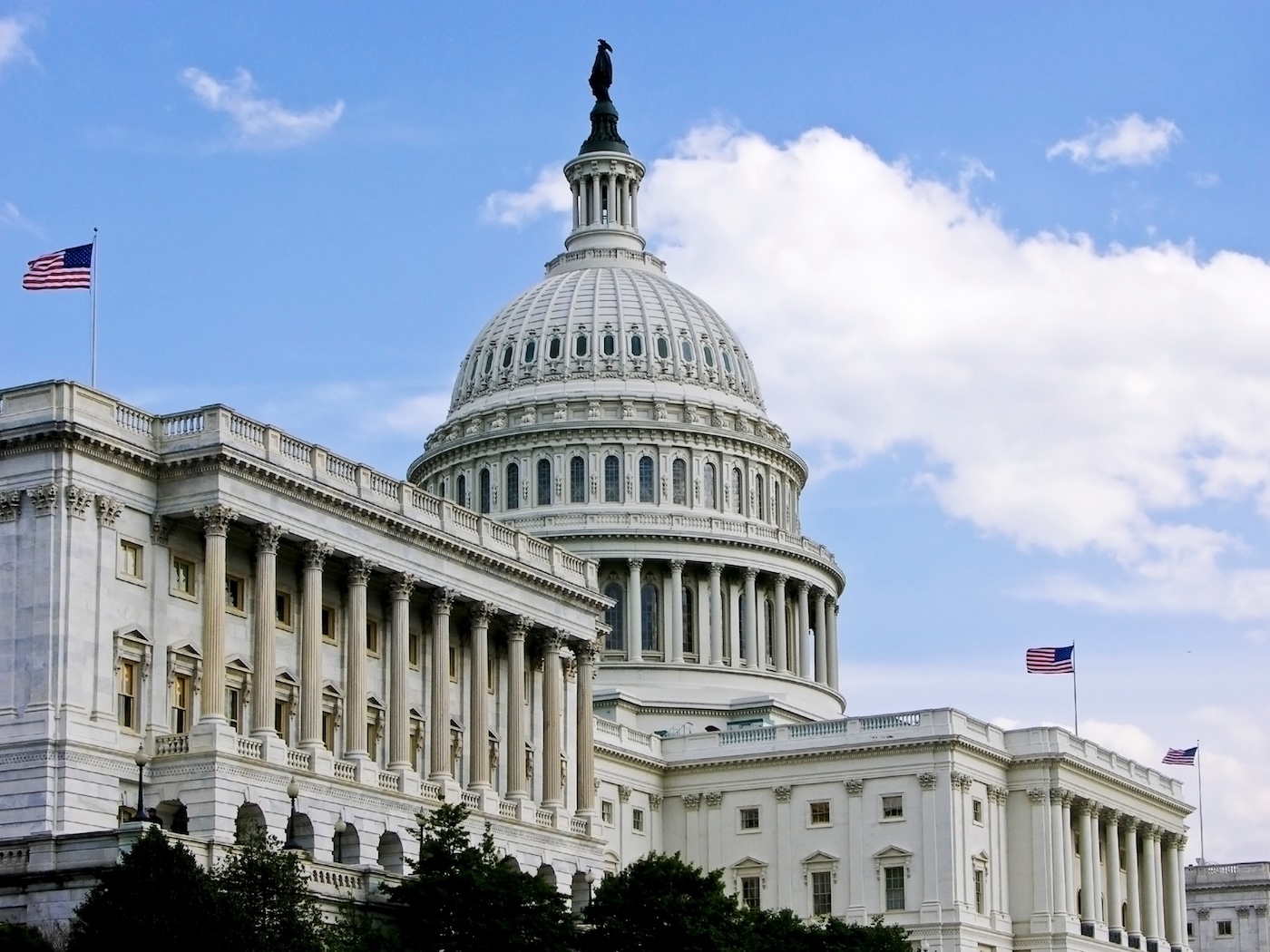
Against this backdrop, the US House of Representatives recently passed legislation that could offer timely relief. The bill (H.R. 1764) would exempt IDA from certain US Securities and Exchange Commission (SEC) registration requirements, giving it access to US capital markets on the same terms as other multilaterals, such as the World Bank’s International Bank for Reconstruction and Development (IBRD) and International Finance Corporation (IFC), the Asian Development Bank, the African Development Bank, and the Inter-American Development Bank. While the House passed a similar bill out of committee last year, the Senate did not advance the measure before the end of the 118th Congress.
Why is this necessary?
Since the creation of the IBRD and IFC (in 1944 and 1956, respectively), those institutions have been exempted from certain SEC registration requirements under the Securities Act of 1933 and Securities Exchange Act of 1934. Unlike its sister organizations, IDA wasn’t originally set up to borrow from international capital markets when it launched in 1960, so it did not require a similar SEC exemption. That all changed in 2018, when IDA was asked by its shareholders to alter its financing model and began issuing its first bonds. Since then, market borrowing has become an integral part of the IDA financing equation, totaling $63 billion, as of June 2025. But IDA remains constrained in its ability to issue bonds in American markets, as it is required to issue bonds under the restrictive 144A rule to qualified institutional buyers (QIBs), which means higher interest rates, administrative costs, and legal fees. As a result, most IDA bonds are sold outside the US, missing out on a huge pool of investors. Reducing the regulatory burden by exempting IDA from SEC registration requirements could allow them to issue more cheaply in US markets and give them access to a wider array of investors, particularly smaller investors, who are currently not permitted to purchase IDA bonds.
Why is this important?
IDA’s market borrowing program is facing difficult market conditions, with borrowing costs rising over the last few years with global interest rate hikes. The difference is stark. During 2019, 2020, and most of 2021, IDA was able to borrow from markets offering coupons between 0 and 1 percent. Meanwhile, since the start of 2025, IDA has borrowed at around 3.5 percent (IDA’s USD-denominated issuances this year had coupons of 4.5 percent and 4.0 percent). For a $1 billion bond with a 10-year maturity, the difference between paying 1 percent and 4 percent interest amounts to an additional $300 million in costs for IDA over the lifetime of the bond.
While implementing H.R. 1764 will not restore the financing conditions IDA enjoyed in a lower interest rate environment, it could reduce IDA’s borrowing costs by as much as 10 basis points (bps), bringing them on par with IBRD, which is not subject to SEC registration requirements. For a hypothetical $1 billion ten-year bond, a 10 bps rate cut would amount to $10 million; for $10 billion of borrowing, these savings would amount to the pledges of countries such as Finland or Brazil. For the over $40 billion IDA is expected to issue over the next five years, a 10 bps cut could produce an extra $400 million for the organization, similar to IDA’s FY24 allocation to countries like Ghana or Cameroon. In a funding-constrained environment, every dollar counts.
Besides lower rates, potentially equally impactful are the savings IDA could achieve through reduced legal and administrative requirements. Under the status quo, IDA’s rule 144A issuances require significant legal and administrative leg work. Putting IDA on the same footing as the other multilateral development banks (MDBs) would allow it to avoid these costs.
Between cutting the cost of borrowing and legal and administrative fees, the potential savings add up: IDA estimates that they would be able to save upwards of $700 million over five years if they were exempted from the SEC registration rules which currently burden their US issuances. These funds could be integral to IDA meeting the needs of its borrowers in a highly constrained donor landscape and would be a valuable American contribution to the world’s poorest, at no cost to US taxpayers.
Conclusion
The House-passed bill would finally put IDA on an equal footing with peer MDBs and eliminate an inefficiency that has burdened the organization for the last seven years, freeing up hundreds of millions for development. As IDA increasingly relies on market funding to deliver on its 21st replenishment goals, this relief would make a significant impact—enabling IDA to reach more of the poorest communities and drive progress where it is needed most. The measure now awaits Senate action.
Topics
DISCLAIMER & PERMISSIONS
CGD's publications reflect the views of the authors, drawing on prior research and experience in their areas of expertise. CGD is a nonpartisan, independent organization and does not take institutional positions. You may use and disseminate CGD's publications under these conditions.
Thumbnail image by: OlgaPS/ Adobe Stock