Recommended
POLICY PAPER
Climate Finance Fair Shares
POLICY PAPER
Principles on Enhanced Climate Finance Effectiveness
Next week, delegates will head to COP31 in Antalya off the back of the hottest year on record and against a backdrop of geopolitical turbulence and diminishing public budgets. The need for international cooperation on climate finance has never been greater, but the conditions for enhancing it are challenging. This COP will focus on “implementation.” Crucial to progress is converting finance goals—already agreed by the international community—into practical action.
This article provides a snapshot of the goals and barriers to progress, and how the UN climate change body (UNFCCC) can support progress by providing greater clarity on collective goals, strengthening accountability and supporting effectiveness.
Current goals under the UNFCCC
As always, finance will loom large on the COP agenda. Amidst dwindling aid budgets, governments are turning their attention to implementing the New Collective Quantified Goal (NCQG) on climate finance to developing countries, agreed at COP 29. This set a target of $300 billion public and mobilised climate finance by 2035, with a wider target to achieve $1.3 trillion in overall flows in the same timeframe. The goal has since been built on with a separate aspiration to triple adaptation finance between 2025 and 2035. Each of these goals, outlined in Table 1, faces ambiguity over scope; with no clear plan for implementation and little to incentivise effectiveness.
Figure 1: Current active finance goals in the UNFCCC Process
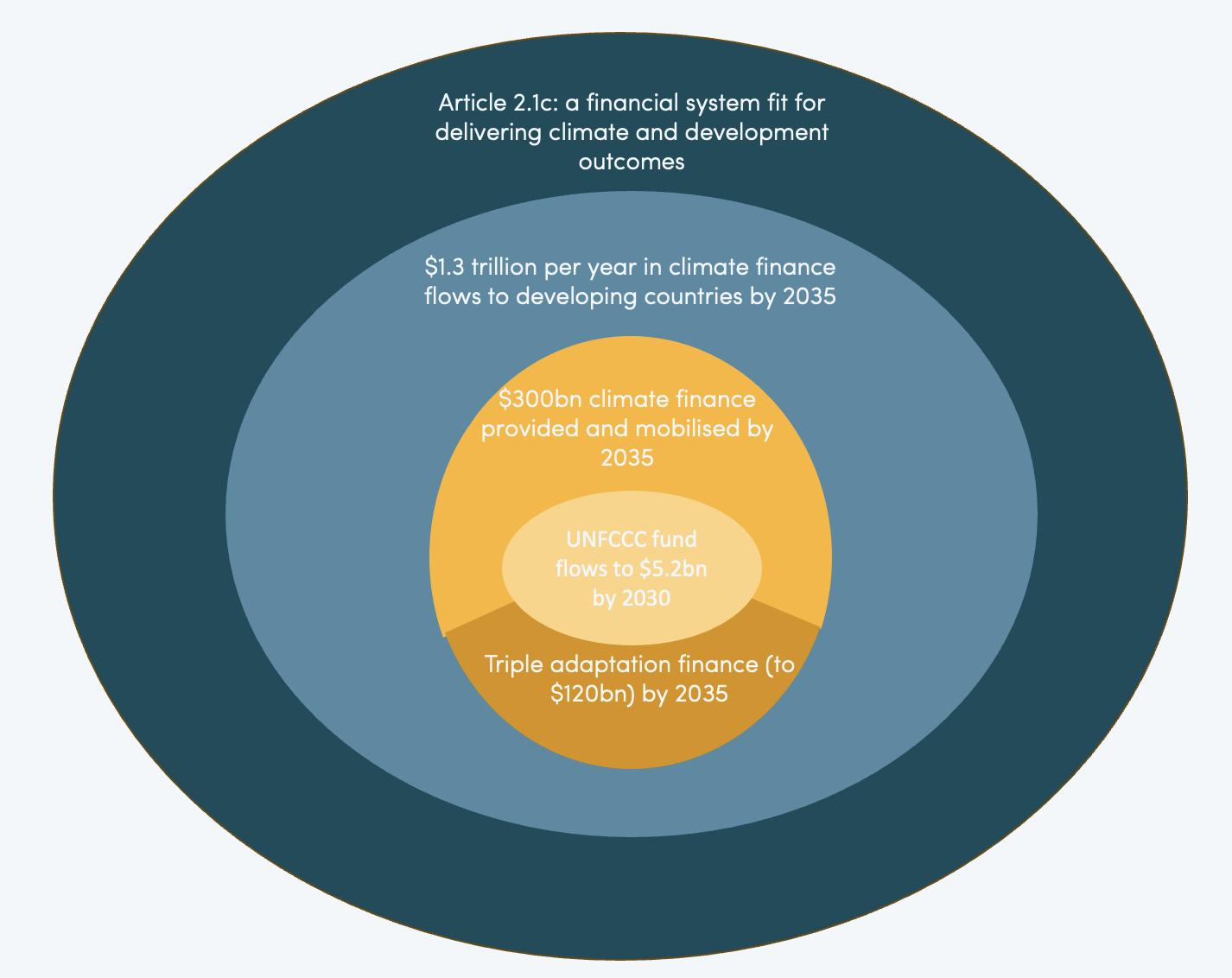
Table 1: Overview of agreed climate finance goals
| Goal | Scope and challenges |
|---|---|
| Alignment: making finance flows consistent with a pathway to low-emission, climate-resilient development | The Paris Agreement’s long-term finance goal, covering all finance flows in advanced and developing economies. Approaches to monitoring remain poorly defined in the UNFCCC, with fundamental disagreements on what is considered “consistency” given that the pace of alignment will differ between countries based on their divergent starting points. |
| Overall climate finance flows to developing countries: at least $1.3 trillion by 2035 | All flows to developing countries (excluding domestically mobilised finance), bringing in public and private investment, indirect mobilisation, levies/carbon market revenues and international investment arising from domestic policies and financial or macro-economic reform. Discussions in the UNFCCC are formative, with concerns raised by developing countries of a diminished focus on direct public support. |
| Provided and mobilised finance: at least $300bn per year by 2035 for developing countries | Public finance, and directly mobilised private finance. Analogous to the previous $100bn goal, adding a “voluntary” intention to include all climate related outflows from MDBs, including those attributable to developing country shareholders. Key challenges include concerns over diminishing concessional and grant-based finance and lack of clarity on future pledges. |
| Adaptation: aim to at least triple adaptation finance by 2035. | Ambiguous regarding both the baseline year and sources of finance. The most logical reading would be a tripling of the 2025 adaptation finance “doubling” target to $40bn from 2019 to 2025. But this is unlikely to be achieved, which means it would be significantly lower if interpreted based on actual finance in 2025. This would imply a goal of $120bn per year. The previous goal only applied to public finance, though this is not specified within the new target. No assurances around the proportion of this which reaches the most vulnerable countries. |
| Climate Funds: “Pursue efforts” to at least triple outflows through the UNFCCC funds by 2030 to $5.2bn | Covers the Green Climate Fund, Global Environment Facility, Fund for Responding to Loss & Damage, Adaptation Fund, Least Developed Countries Fund and Special Climate Change Fund. The GCF and FRLD both face multi-year replenishments in 2027 amidst widespread ODA cuts. The 2022 baseline ($1.74bn) reflects an abnormally low year for fund approvals. |
The nature of global financing needs
$1.3 trillion per year is broadly in line with many estimates of global needs, including those set out through the Independent High Level Expert Group (IHLEG) in their assessment of the level of external finance needed by developing countries excluding China (although the detailed assumptions informing this estimate have not been made public). But the headline figure masks the makeup of needs: the IHLEG suggest a need to at least double bilateral concessional finance, even with lofty expectations of a 15-fold increase in private finance and the unlocking of largely untapped “innovative” sources of finance (such as levies and carbon market revenues) over the same period. Adaptation finance needs are estimated at $305 billion by 2035, well in excess of the current goal and with limited success to date in mobilising private finance.
The agreed goals do not specify the amount of concessional and grant-based finance required. A benefit of an integrated approach to climate, development and financial system reform should be to reduce the need for it - especially in better off countries. But it is clear that much more is required, especially in the most vulnerable contexts, where little of it is flowing and where other financing sources are drying up.
Compound uncertainty: poor predictability of public finance, no pathway for mobilisation
Developed countries are required under the Paris Agreement to communicate their future finance plans by the end of the year. Most major donors (with the exceptions of Canada and the UK) have provided little clarity. MDBs have set a goal to get to $120 billion annually by 2030 although since then The World Bank - which accounted for around half of that figure - has retired its overall climate share target. The EU has also proposed removing its climate target under its new Global Instrument. This is a new low for the predictability of international support, which (whatever the many shortfalls of focussing on levels of finance rather than its impact) is difficult to reconcile with an agreed global target and will stoke tension at the COP.
Meeting the wider $1.3 trillion goal will also require a much broader shift in finance flows. The Baku to Belem Roadmap, developed ahead of COP30, provides the closest proxy to a plan for achieving it. The Roadmap’s reception at COP30 was lukewarm. It was “noted” by Parties, rather than endorsed or formally anchored in the future COP agenda. This illustrates the challenge of finding global consensus on the wide range of measures needed to meet the goal, many of which UNFCCC negotiators have little mandate to engage on - such as approaches to fiscal surveillance, debt relief, international financial institution reform and financial regulatory policy.
The UNFCCC in the context of wider climate and development multilateralism
The UNFCCC’s latest efforts are the Xingu Finance Talks, focussed on practical information sharing on solutions for the implementation of the Paris Agreement’s Article 2.1c, and engaging with central bankers, international financial institutions, regulators and the private sector. Like many such efforts, discussions under the talks are highly constructive compared with the negotiations. But their ability to influence concrete decision-making is limited.
Elsewhere, the Coalition of Finance Ministers for Climate Action represents a group of 104 countries focussed on exchanging lessons learned in the integration of climate change considerations into economic policy, public finance and fiscal planning. There is much to say for peer exchange, but the coalition is neither intended nor equipped to directly broker international reform.
Beyond international financial institutions themselves, the G20 Sustainable Finance Working Group has served as a primary channel for reaching decision makers more directly, revolving around implementation of its Sustainable Finance Roadmap. The US G20 Presidency has not convened the group, with its future beyond this year uncertain. The BRICS leaders statement this year helped fill this gap, highlighting the criticality of climate change as a global governance challenge and undertaking measures to strengthen South-South co-operation in climate resilience. But much of the finance needed in emerging markets and developing economies (EMDEs) will need to flow from financial centres in developed countries. A restored G20 agenda across climate and development, whether in name or (given the current politics of climate change) essence, remains a key missing ingredient.
The UK’s Foreign Secretaryhas noted these issues in relation to its forthcoming G20 Presidency. Translating this good intent into practical solutions will be the challenge. There has been ample technical work and taskforces on increasing mobilisation to EMDEs, through both bilateral initiatives (including in the UK) and through successive G20 Presidencies. Converting these into action has been more challenging. Finance mobilisation is past its diagnostic stage. The focus needs to shift to implementation. This can respond to the needs expressed by the UNFCCC, especially if the UK invites participation by excluded vulnerable countries.
There are achievable, practical steps on the table: furthering capital adequacy under the existing MDB Roadmap; increasing the proportion of humanitarian support delivered through pre-arranged finance; advancing legislative solutions holding up a more meaningful response to the provision of debt relief whilst taking interim measures to overcome acute liquidity challenges; reflecting evidence on returns in EMDEs and the features of MDBs and DFIs in prudential policy and credit risk assessments; and reformulating development co-operation to respond to and reward national ambition.
What can the COP do?
This leads us to the question of what role the UNFCCC can best play in reinforcing these efforts. This should build on what the COP does well. The Paris Agreement, at its heart, is a set of collective goals and a reporting framework. Its operational role in delivering climate finance is limited to the oversight of a small number of funds established under it; revenues generated from carbon credits under Article 6; and communications exercises between those providing support and those in receipt of it. It is also a critical voice for vulnerable countries not well-represented in other fora, including the G20.
The UNFCCC should build on these strengths by:
- Enhancing clarity around its finance goals and accountability in their implementation. Reducing ambiguity in the level and makeup of its goals (especially its adaptation goal) is a critical first step. It can allow the development of indicative pathways to the achievement of goals, highlighting emergent gaps in finance flows, and putting a spotlight on inconsistencies in how finance is reported (for instance, divergence in how providers account in the absence of a shared definition of finance). This can be followed by regular consideration of progress along pathways towards the goals. The greatest challenge will be tracking the scale-up of finance towards the $1.3 trillion goal, which requires translating the actions outlined in the Baku to Belém Roadmap into measurable pathways that can be monitored over time.
- Requiring individual contributors to set out how their actions reflect a fair contribution to collective goals. Even if formal burden-sharing arrangements (as previously proposed) are unlikely, providers should explicitly set out how they judge their aggregate efforts to provide and mobilise finance to be a reasonable contribution to agreed goals, including through their submissions on future support to the UNFCCC. Providers have historically been reluctant to do this, to avoid blurring the line with the bottom-up nature of the Paris Agreement, whereby no individual country is mandated to provide a particular level of finance whatever the collective target. The increasingly diverse ways in which countries can support finance mobilisation, whilst welcome, risks further obscuring an assessment of effort. This would allow providers to make the scale and quality of their support across a range of levers clear on their own terms, whilst seeding the ground for a collective Roadmap to the UNFCCC’s various finance goals (as has been done previously and called for by developing countries).
- Taking effectiveness in the provision of concessional finance through its own funds seriously, including by strengthening criteria for the allocation of adaptation finance to the most vulnerable countries and by showing progress in tackling longstanding challenges to evidence impact and accelerate disbursement rates. Doing so will be critical for these funds’ future viability as donors consider how to spend their diminished development budgets.
Rebuilding credibility in UNFCCC finance discussions also require them to better reflect economic reality. 60 percent of historical emissions are in countries not required to provide finance. Some of the richest and highest emitting countries in the world have no obligation to provide climate finance, even if in practice they are. China produces nearly 90 percent of the cheapest renewable technologies and has increased its contributions to multilaterals tenfold since 2010. Qatar has twice the GDP per capita of Japan; Singapore has three times that of Portugal.
It’s unlikely that the UNFCCC’s annexes will be formally revisited anytime soon. But its latest set of goals at least allow other countries to contribute, beyond the “developed countries” as defined in 1992. Sustaining the fiction that the world hasn’t changed only harms vulnerable countries. It fuels a cycle of inaction, with fiscally constrained developed countries pointing to their inability to shoulder the global cost of climate change when other wealthy countries are not; and other high-income and major economies emphasising that they shouldn’t be asked to contribute when even those with a legal duty to are remaining silent. This doesn’t mean reducing pressure on developed countries: no governments are providing enough finance, but more should.
Working across fora to enable delivery
Closing the gap between the UNFCCC’s collective goals and the finance reaching developing countries will require policymakers to act across complementary multilateral tracks including the G20, UNFCCC and MDB Boards. Delivery will depend on influencing the institutions which hold levers and national decision makers who are also able to contextualise climate needs alongside other development priorities. The UNFCCC’s role can be strengthened by doing what it does best – providing clarity on shared goals, ensuring accountability in pursuit of them, and ensuring that the most vulnerable are heard in how those goals are shaped and delivered.
Topics
DISCLAIMER & PERMISSIONS
CGD's publications reflect the views of the authors, drawing on prior research and experience in their areas of expertise. CGD is a nonpartisan, independent organization and does not take institutional positions. You may use and disseminate CGD's publications under these conditions.
Thumbnail image by: UNclimatechange, Flickr