Recommended
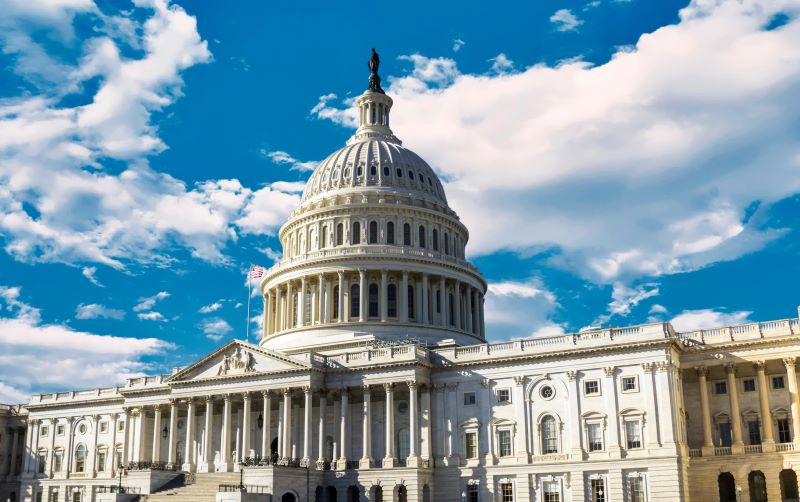
In his State of Union address, President Biden called on Congress to pass a competitiveness bill that he can sign into law. The House and Senate have each advanced a large legislative package to bolster US competitiveness—particularly with respect to China. At the core of these measures is an effort to boost US semiconductor manufacturing and research, but sections of both bills reflect lawmakers' growing concerns about China's overseas financing activities and global influence, with provisions that look to curb the country's access to multilateral development bank (MDB) financing and counter Chinese lending. At the same time, both measures indicate that lawmakers are grappling with the scale and approach of the United States' own global engagement. Amid negotiations to reconcile differences between the two bills, we dug into some provisions with potential implications for development. Here's a rundown on a few sections that caught our eye.
Contending with China's overseas lending and role in multilateral institutions
Both the Senate-passed US Innovation and Competition Act (USICA) and the House-passed America COMPETES Act aim to cut off World Bank and Asian Development Bank lending to China by instructing US representatives at the institutions to oppose future projects in the country. Over the past decade, China has been among the top borrowers at both banks. In 2016, China surpassed the World Bank's International Bank for Reconstruction and Development (IBRD) income threshold, which is intended to trigger discussions about curtailing lending over time. China remains a major borrower, though new loan commitments have fallen significantly since 2018. The House bill provides an exception to its policy of blanket opposition if (1) the US administration certifies China's credible commitment to participating in multilateral debt relief initiatives and the presumptive public disclosure of terms and conditions in its lending; and (2) the banks' financing to China will benefit the United States through contributions to a global public good, such as reducing the impact of climate change. Some Republican lawmakers were quick to criticize this opening, but interest in seeing China adopt more transparent practices and participate in debt relief is widely shared.
China has emerged as a major provider of development finance in recent years, with one consequence being that—moving forward—meaningful efforts to extend debt relief will require China's active participation. But the opacity of Chinese lending operations has made understanding the scope and scale of its reach difficult, forcing think tank researchers and academics to scour media articles and aggregate limited data before attempting to assess its implications, including its contribution to potential debt distress in select borrowing countries.
The Senate-passed bill would direct the administration to engage international financial institutions and bilateral creditors to advance debt restructuring or cancellation efforts in response to the pandemic for low-income countries eligible for assistance under the World Bank’s International Development Association (IDA) threshold. The House version calls for US representatives to the World Bank and IMF to advocate for effective implementation of the G20 Common Framework (and any similar or successor framework). The G20 launched a Common Debt Framework in November 2020 to address unsustainable debt levels amid the global pandemic—and notably brought China to the table. Unfortunately, implementation of the Common Framework has stalled. The international community will need to act fast to jumpstart the initiative. (CGD President Masood Ahmed outlined recommendations for doing so here.)
Both bills would also authorize a pilot program to establish "economic defense response teams" that would provide emergency technical assistance to a country "subjected to the threat or use of coercive economic measures." The terms of Chinese lending deals are rarely known. What researchers have gleaned suggests that China's official financing is less favorable to borrowers than options offered by other official lenders, such as the World Bank, in comparable settings. Still, our colleagues' analysis found almost all Chinese loans are somewhat concessional compared to market finance. Another project, which examined 100 debt contracts between Chinese lenders and developing country governments, identified practices such as enforced secrecy, extensive use of escrow accounts and other forms of non-asset collateral, as well as broadly written cancellation and default clauses.
In a unique move, the Senate bill would preemptively authorize US support for a tenth capital increase for the Inter-American Development Bank (IDB). The institution has yet to put forward a proposal for a new capital increase agreement—or make the case for why an injection of capital is needed—though the bank's president has signaled his interest in pursuing one. The measure would also require support for IDB efforts to restructure countries' sovereign debt held by the Chinese government.
Finally, the House bill would direct US representatives at the MDBs to oppose co-financing arrangements with the Asian Infrastructure Investment Bank (AIIB) until the administration certifies that AIIB has the resources to, and maintains a record of, supporting lower-income countries through concessional finance. In addressing concerns about China-fueled debt problems, the provision might better have been targeted at China Development Bank and China Exim Bank, which are direct financing arms of the Chinese government and are the leading creditors to many low-income country governments. The AIIB is a multilateral bank with over 100 member countries (including the UK, Germany, and France) and has not been a significant lender to low-income countries.
Strengthening US bilateral development finance
DFC has been in high demand of late—featuring prominently in administration initiatives and regularly invoked by lawmakers to respond to a range of financing needs around the globe, including as a counterweight to Chinese lending.
Both measures would raise DFC's portfolio cap from $60 billion to $100 billion. According to DFC's most recent annual management report, the agency's total exposure in FY21 was $32.8 billion, far from its current statutory threshold, but with so many investment priorities lining up this proactive approach could be a wise move. Still, in the near term, DFC's investments are far more likely to be constrained by limited staff time and resources. Here, the House bill would increase the leverage potential of DFC's program budget and enhance the agency's ability to use its equity authority through inclusion of a provision championed by Congressman Joaquin Castro (D-TX)—and supported by other DFC boosters—that would fix the illogical budget treatment of DFC's equity investments.
Recent CGD analysis indicates Chinese development bank funding for public-private infrastructure in sub-Saharan Africa dwarfed other sources of development finance—suggesting that the US will need to quickly scale up resources in the sector to serve as any kind of counterbalance to Chinese lending in the region.
Restoring trade preferences
Trade titles in both bills would restore and extend the Generalized System of Preferences (GSP)—a trade preference program for the world's lowest income countries that was allowed to expire at the end of 2020. One of the long-standing frustrations with the program has been its uncertainty given the tendency of Congress to allow the program to expire for brief, and occasionally prolonged, periods of time. The Senate bill would reauthorize the program through December 2026, while the House bill offers a more modest extension through 2024. Both measures require a closer look at beneficiaries' commitment to upholding internationally recognized workers' rights. The Senate measure would require an assessment of GSP's effectiveness in strengthening workers' rights as well as women's entrepreneurship and economic empowerment. The House version also directs studies on GSP utilization and a review of beneficiary country laws pertaining to an expanded definition of workers' rights and to equal treatment regardless of gender—across dimensions such as mobility, employment conditions, property and inheritance rights, and access to education. Trade preference programs don't currently take gender inequality into account, but CGD policy fellow Megan O'Donnell has made the case that they should.
Infrastructure
Despite the well-documented, urgent need to close infrastructure financing gaps in low-income countries, opacity in infrastructure project design and execution, specifically in terms of safeguards and procurement standards, remains a legitimate concern. To this end, both the House and Senate bills authorize initiatives and small pots of money to support partners managing the risks presented by financially unsustainable infrastructure transactions. Language in both measures invokes the Infrastructure Transaction and Assistance Network, a whole-of-government initiative launched by Secretary of State Mike Pompeo in 2018 to support the development of "sustainable, transparent, and high-quality" infrastructure projects in the Indo-Pacific region including through transaction advisory services and legal and technical assistance.
While some of these provisions enjoy strong bipartisan support, a number of climate and clean energy policies have generated controversy. The America COMPETES Act drew fire from some Republican lawmakers for authorizing US contributions to the Green Climate Fund (GCF) of $4 billion annually in FY2022 and FY2023. Delivering that funding would still require action from appropriators—draft FY22 spending bills in the House and Senate included $1.6 billion and $1.45 billion for the GCF, respectively. The House bill would also authorize a successor to President Obama's Global Climate Change Initiative and create climate change officer positions within the Foreign Service, and a coordinator of climate change resilience at the State Department. The Senate bill largely steered clear of climate issues altogether. But both bills would require a report from the administration identifying priority countries for deepening US energy engagement and detail Chinese energy development in those countries.
We‘ll be following along as negotiations continue. We hope to see a final agreement that envisions strong US global engagement, while recognizing the importance of collective action in addressing rising levels of sovereign debt, promoting economic recovery, encouraging sustainable investment in high-quality infrastructure in low and middle-incomes countries, and tackling the climate crisis.
Thanks to Scott Morris and Rowan Rockafellow for substantive comments and suggestions on an earlier draft of this blog.
DISCLAIMER & PERMISSIONS
CGD's publications reflect the views of the authors, drawing on prior research and experience in their areas of expertise. CGD is a nonpartisan, independent organization and does not take institutional positions. You may use and disseminate CGD's publications under these conditions.
Thumbnail image by: Adobe Stock