Recommended

The Trump administration unveiled an overview of its FY2026 budget request on Friday. While short on details, the document offers a grim forecast for US development and humanitarian spending. In seeking deep cuts across a host of program accounts and pledging to align with American interests, it is broadly consistent with the actions to radically reshape US foreign assistance taken by the administration during its first 100 days.
We still have plenty of questions, not the least of which is how this will land on Capitol Hill, but here’s a quick rundown on what stood out.
Global health spending on life support
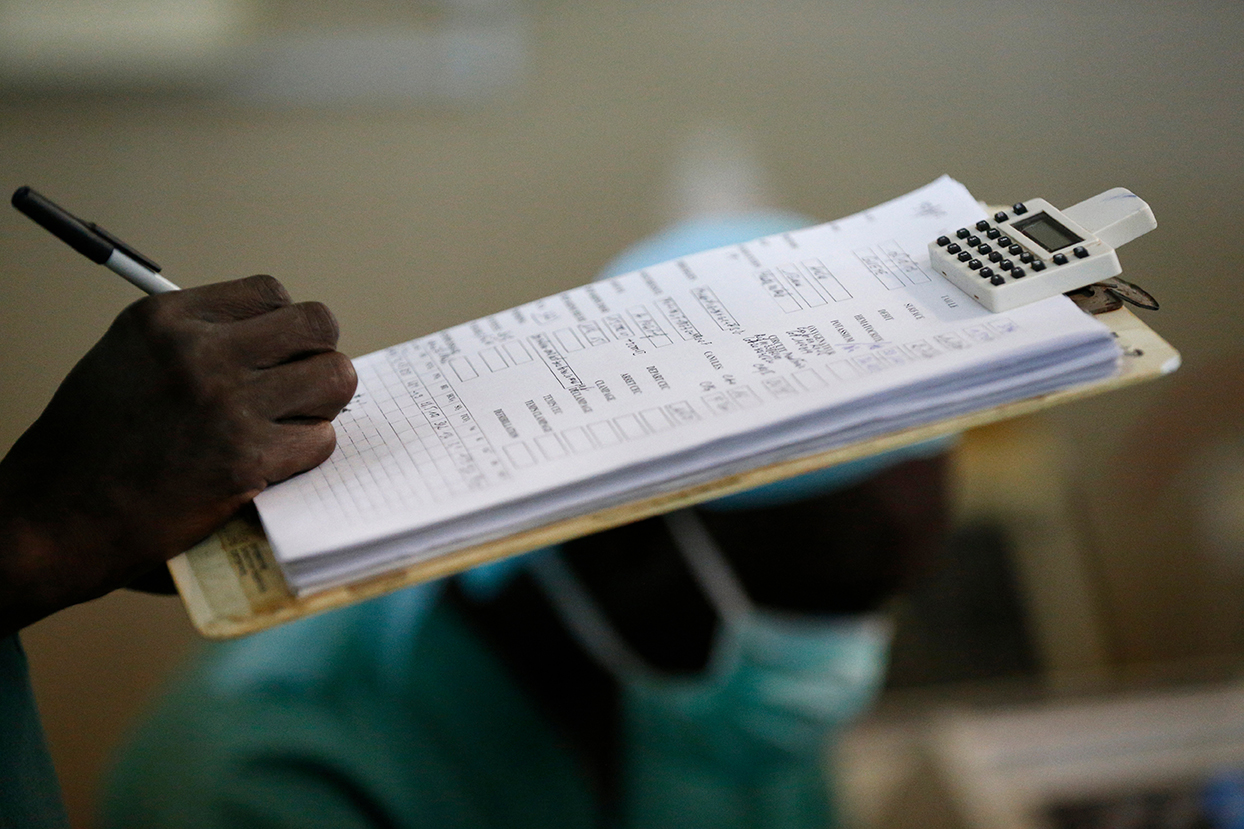
US global health spending long enjoyed strong support from both sides of the aisle, but the administration’s new budget request would deliver an enormous blow. While the document promises to sustain the President’s Emergency Plan for AIDS Relief (PEPFAR) funding “for any current beneficiaries,” it offers few other assurances even for HIV/AIDS programming. It’s not clear, for instance, the extent to which other PEPFAR activities beyond the provision of antiretroviral medicines might be sustained. The initiative has supported clinics and health workers who administer HIV tests and treat opportunistic infections. Other examples include PEPFAR’s work to prevent mother-to-child HIV transmission, which has a strong track record. It’s increasingly clear that even some PEPFAR advocates on Capitol Hill would like to hear more about how responsible, phased reductions in investments alongside corresponding dialogue and coordination with country partners might occur in the years ahead. The skinny budget does not explicitly acknowledge these fraught and real transition dynamics. It proposes broad cuts to current services now rather than contemplating an off-ramp.
The administration touts cuts to family planning, but the elimination of family planning services would only account for about $600 million (9.6 percent) of the proposed cut to global health—implying that spending reductions would go far deeper. Leveling a 62 percent cut would mean fewer resources to fight tuberculosis and malaria and deliver vaccines to guard against other life-threatening illnesses. Our colleagues Charles Kenny and Justin Sandefur estimate that US funding for tuberculosis, malaria, and vaccine delivery programs saves over a million lives annually.
Hamstringing humanitarian response
Overall, the President’s budget would provide just $4 billion for critical humanitarian aid programs. Humanitarian needs have skyrocketed in recent years, leaving donors scrambling. The United States can’t respond to every crisis, but the budget request portends retrenchment.
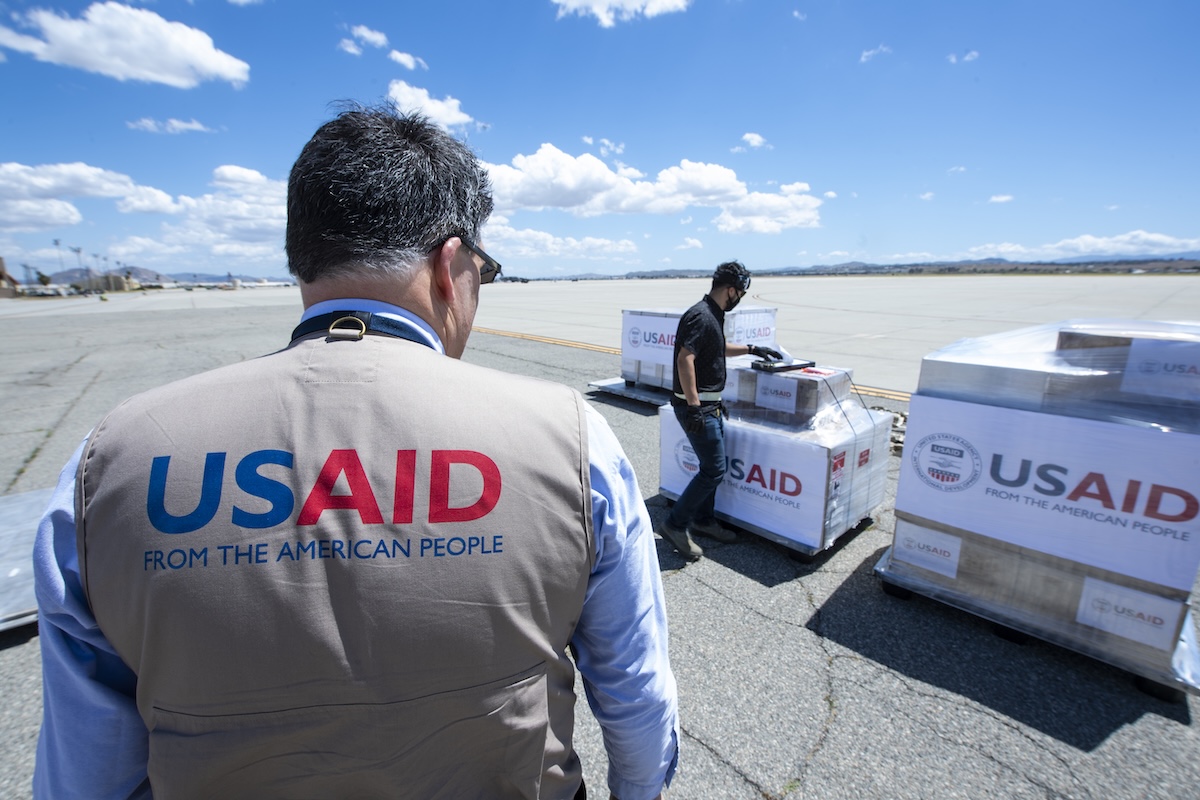
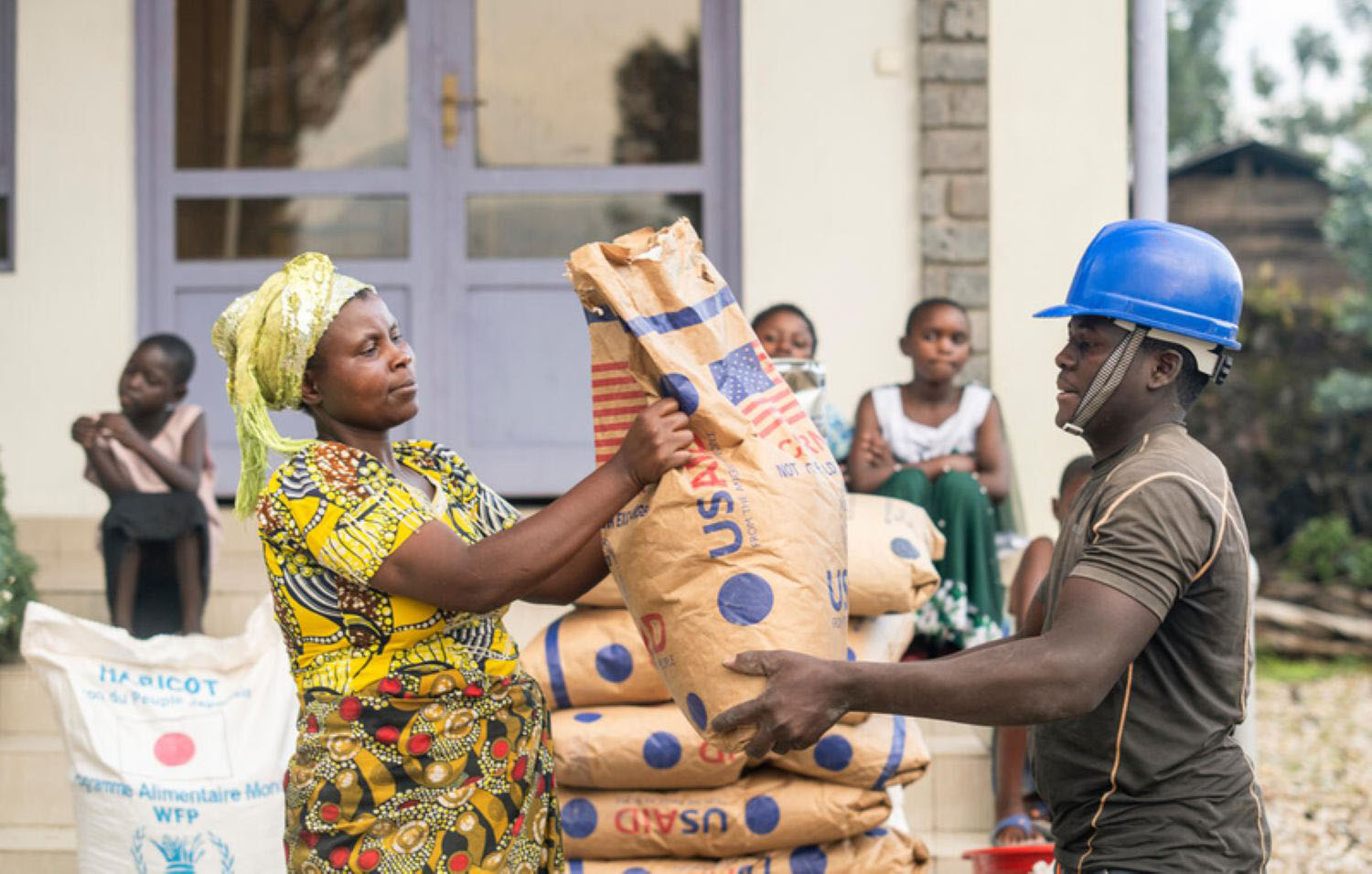
In the process of dismantling USAID, the administration has already dramatically curbed US capacity to respond to emergency humanitarian situations abroad, but the funding reductions are nevertheless stark. And, of the amount included, $1.5 billion is requested for the Emergency Refugee and Migration Assistance Fund, which gives the president the flexibility to draw down (or not) to meet specific urgent and unexpected needs. Also notable is that the budget would zero out funding for the largest international food aid program, P.L. 480 Title II. Delivering in-kind international food aid is notoriously inefficient, but it benefits from strong domestic constituencies since it directly supports US farmers and shippers. Lawmakers from farm states have been vocal in the importance of preserving this life-saving food assistance, but the administration is staking a different view. The first Trump White House also proposed eliminating the program, highlighting the inherent inefficiencies, but lawmakers ignored the suggestion.
A multilateral mixed bag
While President Trump has eschewed many forms of multilateral cooperation, over both administrations, he’s sustained engagement at a number of key international financial institutions while pursuing ambitious reforms. We heard similar designs outlined by Treasury Secretary Scott Bessent recently.
One of the surprising, brighter spots in the request is the promise of a $3.2 billion pledge over three years to the World Bank’s concessional lending arm, the International Development Association (IDA). While more modest than the $4 billion promise made by President Biden before leaving office, the contribution level is similar to the one put forward by President Trump when he first took office in 2017.
Under the request, the United States would remain the largest donor to IDA, with Japan the next closest at $2.8 billion over the three-year replenishment cycle.
IDA has been a lifeline for many of the world’s lowest-income countries amid economic shocks spurred by the COVID pandemic, Russia’s war in Ukraine, and inflation. And the leverage it offers is substantial, thanks in part to IDA’s market borrowing. In marked contrast, the budget document does not request any funding for the African Development Fund, the concessional lending arm of the African Development Bank—a worrying sign ahead of the fund’s upcoming replenishment. The proposal notes the concessional arm of the African Development Bank is out of alignment with the administration’s goals and policies without any additional justification.
During President Trump’s first term, the administration chose not to pledge to the replenishment of the International Fund for Agricultural Development (IFAD), an international financial institution uniquely focused on promoting food security and rural development. Lawmakers, however, stepped in, directing appropriations to support a pledge. It looks like Congress may need to step in again if members want to maintain strong US engagement at IFAD, since the administration is not requesting any funds to deliver on the most recent US pledge.
Though the Global Environment Facility boasts a remit that includes efforts to tackle illegal wildlife trade and reduce mercury, it appears to have been netted in a broader effort to root out any climate change-oriented funding, along with the Clean Technology Fund.
FY26 Budget Request - Reductions to Treasury Intl. Programs
| Program Name | Change from FY25 ($ millions) | Notes |
|---|---|---|
| Contributions to Multilateral Development Banks | -$555 | |
| IDA | -$314 | Reduced contribution |
| African Development Fund | -$197 | Eliminated contribution |
| Other reduced MDB contributions (not specified) | -$44 | Could be reductions to AsDF, AfDB, and/or IBRD |
| Contribution to the Global Environmental Facility and Climate Investment Funds | -$275 | |
| Global Environment Facility | -$150 | Eliminated contribution |
| Clean Technology Fund | -$125 | Eliminated contribution |
| Other Treasury International Reductions | -$86 | |
| IFAD | -$43 | Eliminated contribution* |
| Debt restructuring | -$10 | Eliminated funding |
| GAFSP | -$10 | Eliminated contribution |
| Other (not specified) | -$18 | Could be reductions to tropical forest conservation, technical assistance, and/or flexible funding |
*In December 2023, the Biden administration pledged $162 million to IFAD13, but the US was already falling behind on its payments because the FY25 continuing resolution did not raise annual funding to the required $54 million.
Done with development?
Over the last few months, the administration has pursued terminations of foreign aid awards supporting programming around the world. As Charles Kenny and Justin Sandefur highlighted, few sectors were truly spared. The budget request doubles down on this bulldozer approach, zeroing out the Economic Support Fund and Development Assistance accounts, which funded interventions to tackle food security, support basic education, promote democracy, and more. These accounts also channeled funding to respond to COVID and provide economic support to Ukraine, explaining large increases in recent years. Instead, the budget proposes a $2.9 billion America First Opportunity Fund (A1OF), underscoring the promise of a more transactional approach to future foreign aid investments.
DFC unleashed?
The budget request offers a vote of confidence in the US International Development Finance Corporation (DFC), proposing a $3 billion revolving fund that would enable the development finance agency to retain its earnings and offer a workaround in the absence of an elusive fix to the budget treatment of equity investments. Former CGD senior fellows Todd Moss and Ben Leo, who drafted an early blueprint for DFC, argued the agency should be empowered to retain its earnings and avoid the whims of the appropriations process. But historically, lawmakers have preferred the greater control and oversight afforded by annual spending bills, so it will be interesting to see how this pitch is received. How far that funding goes depends a lot on the details, including whether the agency receives annual appropriations installments beyond this year, for instance. The description highlights the role DFC plays in advancing US national security and foreign policy interests, with no reference to its core development mandate. Dedicating a tenth of the international affairs budget to the agency while failing to acknowledge DFC’s development mission could raise flags, even among DFC’s boosters.
MCC is MIA
This “skinny budget” remains silent on a number of program accounts, and we’ll likely need to wait until later this month for the release of more detailed budget documents to learn their fates. Among those noticeably absent is the Millennium Challenge Corporation. Amid reports that DOGE is looking to shutter the aid agency, we’re choosing to hope that the absence of promised cuts to the relatively modestly sized aid agency means reasoned discussions are underway that take into account MCC’s track record, outsized presence in select countries, and critical partnerships with allies (where China might prefer to be the only game in town).
Operational questions abound
The State Department has promised to assume key functions served by USAID, including managing life-saving foreign assistance programming. Still, many observers have puzzled over how the Department could take on significant new responsibilities without a commensurate increase in capacity. A recently unveiled organizational chart provided limited insight. Even more baffling, the new budget request appears to propose a reduction in the State Department’s operational budget as it folds in elements of USAID.
Warning: Rescissions ahead!
If the proposed spending reductions were to come to fruition, they would translate to a dramatically smaller role for the US in the world. But a table near the end of the document suggests these cuts are only part of the story. While the budget request would provide $31.2 billion for State and International Programs—a 47.7 percent cut compared to fiscal year 2025—it would provide just $9.6 billion in new budget authority. In other words, the administration is planning to offset new spending by canceling more than $20 billion in funding previously approved by Congress. Under current law, to cancel funding, the administration must submit proposed rescissions to Congress, and lawmakers must take affirmative action to approve them. There are questions about whether there will be sufficient support on Capitol Hill to proceed.
While light on detail, the skinny budget is consistent with a fundamental reimagining of American global engagement that would curb life-saving assistance and raise critical questions about long-term US strategic interests. As Congress begins its deliberations, the debate won’t just be about dollars but about America's role and responsibilities on the world stage. The coming months will reveal whether the administration’s vision of US retrenchment prevails or if lawmakers will seek a more balanced approach.
Thanks to Rachel Bonnifield, Janeen Madan Keller, Charles Kenny, Clemence Landers, and Nancy Lee for input on an earlier draft. All views and any errors remain those of the authors.
Topics
DISCLAIMER & PERMISSIONS
CGD's publications reflect the views of the authors, drawing on prior research and experience in their areas of expertise. CGD is a nonpartisan, independent organization and does not take institutional positions. You may use and disseminate CGD's publications under these conditions.
Thumbnail image by: Kropic/ Adobe Stock