More from the series

Event
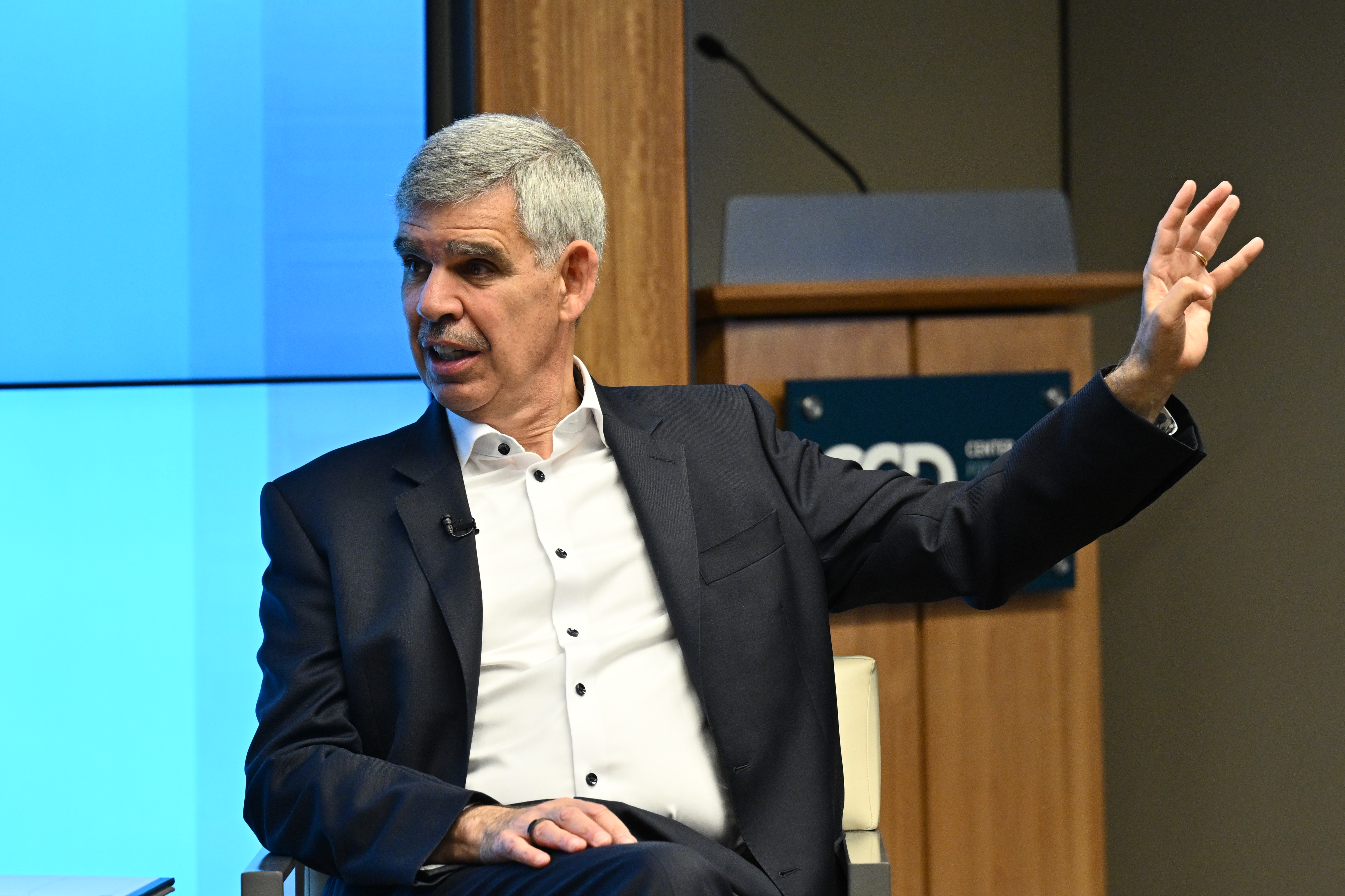
A Fireside Chat with Mohamed A. El-Erian
HYBRID
June 18, 2026 9:30—10:30 AM ET | 2:30—3:30 PM BSTThe Iran war has already led to a spike in oil prices. While wealthier countries focus on fuel prices, for those in low- and middle-income countries (LMICs), this could mean something far worse: a sudden increase in hunger and poverty, as rising food prices erode purchasing power. We are already seeing emergency measures being taken to ration fuel in some countries, but the World Food Programme (WFP) has estimated that 45 million people could be pushed into acute hunger if the current conflict persists.
High oil prices translate into food prices through three main channels. First, oil prices affect the trucks, ships, and supply chains that move food from where it is grown to the markets where it is eaten. Dillon and Barrett (2016) show a direct effect from global oil price shocks to local food markets in East Africa from these higher transport costs.
Second, there’s the general inflationary pressure of an energy price shock that erodes the purchasing power of wages, especially in countries that import both fuel and food.
Third, nitrogen fertilizers are almost entirely natural gas derivatives and their prices typically track oil prices. A fifth of global liquid natural gas supplies pass through the Strait of Hormuz. Continued disruption could cause a spike in ammonia and urea prices well before the next planting season. When fertilizer becomes more expensive, the next harvest gets smaller and costlier. We won’t see the full effects of fertilizer prices spiking until the harvest season 6-12 months later. But the time to act is now, not after the higher prices are baked in.
Why the poor are hardest hit
Rising food prices hit the poorest the hardest. The share of household income spent on food falls as incomes rise. Poor households in LMICs spend up to 50-70 percent of their budget on food. A 10 percent increase in food prices is, for them, a 5-7 percent cut in real income. Many households living in poverty are barely getting by, just about avoiding hunger—often not even that—and simply do not have 5-7 percent (or more) padding in their budgets.
The poor are hardest hit: Real income loss from the oil price shock, by income quintile. The poorest spend 65 percent of income on food vs 20 percent for the richest—so the same food price increase hits them 3× harder.
Note: Oil at $110/barrel represents a ~55 percent increase from the late-February 2026 baseline of $71. With a pass-through elasticity of 0.26 this implies an increase in food prices of 14 percent. The income loss for each quintile is simply the average food price increase multiplied by that quintile's food expenditure share, from World Bank household surveys.
What gets cut matters as much as how much. Protein, fruits, and vegetables go first when incomes of the poor fall. For young children, this can mean a major developmental setback, affecting long-term health, education, and, ultimately, lifetime earnings.
Which countries are most vulnerable?
While all countries face at least some risk from this crisis to their hunger and poverty headcounts, there are some that are at risk of famine conditions from these oil price shocks.
We assess this acute vulnerability to this shock using two measures: how much of the food supply is imported (and is therefore exposed to oil price shock transmission), and how many people are already teetering on the verge of acute hunger. The figure below plots these two dimensions for every country using available trade flows data and the current share of a country’s population experiencing acute food insecurity—ranging from a food crisis to an emergency, and famine, as classified by the Integrated Food Security Phase Classification (the system used by humanitarian agencies to monitor and assess famine risk).
Six countries—South Sudan, Haiti, Yemen, Afghanistan, Central African Republic, and Somalia—sit at the extreme, with a third to half of their populations already facing acute food insecurity, AND these countries import large shares of their food.
Vulnerability to food price shocks
Note: The vertical axis shows the share of the population in IPC Phase 3 (Crisis) or above, meaning they face acute food insecurity and insufficient food consumption. The horizontal axis shows food imports as a share of merchandise imports, from World Bank trade statistics. Bubble size is proportional to population. Hollow circles indicate countries where World Bank trade data is unavailable and food import shares are estimated from FAO and WFP country briefs. The dashed lines mark the median on each axis; the shaded quadrant identifies countries above the median on both dimensions.
How should governments respond?
This is not the first time the world has faced a food price crisis. In 2010, a drought in Russia and Ukraine led global wheat prices to double in the space of a few months, pushing millions into poverty. The start of the Russia-Ukraine war in 2022 did the same. We’ve learnt plenty from this prior experience, as well as economic theory, about the range of possible policy responses.
The bluntest tools are price controls and export bans. Price controls rarely work—countries that have tried to fix food and fuel prices have typically seen shortages, queues, smuggling, and black markets. Export bans are a collective action problem—they may help individual countries in the short-term, but push global prices even higher.
Food subsidies can provide some relief, but they are completely untargeted, so the rich benefit as much as the poor.
Targeted cash transfers are far more effective. They let price signals work while supporting consumption for the poorest. Routine cash transfers in normal circumstances have small effects on what poor households eat, with perhaps as little as 3 cents of every dollar received in cash transfers going to food. But humanitarian cash transfers in the context of an acute shock are often spent differently. One study on emergency cash to women microenterprise owners in Nairobi just as COVID-19 cases were surging found that food expenditures rose 8 percent relative to those who didn’t get a transfer, and almost doubled during the period of the most acute restrictions. So, when both income and food access take a hit, cash transfers can help preserve nutrition levels.
As we show below, as oil prices rise, targeted cash transfers would reduce poverty by roughly twice as much per dollar spent as the untargeted subsidy, because it concentrates relief on the households for whom the food price shock is a genuine income crisis rather than an inconvenience. Price controls perform the worst, increasing rather than decreasing poverty and food insecurity.
Targeted cash transfers are much more cost-effective than generalised subsidies
Note: Each point shows a policy's fiscal cost against the number of additional people left food insecure (income below $2.50/day PPP) at $110/barrel oil. The model simulates 200,000 synthetic individuals drawn from a log-normal income distribution calibrated to a mean of $5.50/day and a Gini of 0.40, scaled to a population of 2.3 billion—the approximate number of people in net oil-importing low- and middle-income countries. A cash transfer is modelled as $0.15/day to the bottom 30 percent. Fiscal cost is the total transfer value annualised across recipients. Food subsidy is modelled as universal, with government absorbing 50 percent of the food price increase. Price controls are modelled as 70 percent effective at holding down prices for most consumers, but with a 20 percent probability that food is simply unavailable at controlled prices—consistent with observed market withdrawal in Zimbabwe (2007–08) and the broader pattern documented by Headey (2009), who estimated that policy responses including price controls accounted for ~75 percent of the 2008 rice price spike. This mechanism produces the counterintuitive result that price controls leave more people food insecure than no intervention.
A note of caution is also appropriate: in remote areas with thin food markets, cash can push up local prices and hurt non-recipients—a dynamic documented in detail for the Philippines but with implications for cash transfers more broadly. Transfers paired with supplementary in-kind food transfers, which have been shown to reduce food prices, may be more appropriate in some cases where markets are poorly connected.
Further, countries with a sizable share of smallholder farmers—the situation in many LMICs—may want to provide poverty- or farm-size-targeted fertilizer subsidies at the time of the next planting.
Finally, the six countries identified above as being at the gravest risk from this crisis are all fragile settings and have experienced various crises in recent years. Large price shocks could tip them into protracted crisis and even potential civil unrest and conflict. Cash transfers and targeted fertilizer subsidies may not fully offset all the risks in these places; donors and international organizations must actively monitor both prices and hunger levels to mount a full and adaptive response in these contexts.
The time to act is now
The Iran conflict is moving faster than most policy systems were designed to respond. But a lesson of COVID-19 is that, in fact, rapid response is feasible: 131 countries had implemented emergency response cash transfers by June 2020. That was the fastest expansion of social protection in history. The infrastructure now exists in those countries to do it again and this crisis calls for a similar response.
And the time to act is now—before the fertilizer channel hits harvests later this year and before the distributional impacts do irreversible damage. Governments, especially in low- and middle-income countries must protect people in the bottom two quintiles, and prioritize remote and import-dependent markets, where food price shocks might do the most damage. And just as they did in 2020, donors—led by the MDBs and the World Bank, as was the case in 2020—should pre-fund emergency top-ups through existing platforms. Crucially, the G20 must also hold the line on avoiding export bans—the 2008 and 2010 food price crises made clear that beggar-thy-neighbour trade restrictions amplify the price spikes for everyone while protecting no one.
Without a coordinated and rapid response, the poor will pay most dearly for this crisis—and they will do so through erosion of real income, hunger and malnutrition, and lasting developmental setbacks to children.
We thank Charles Kenny for comments.
DISCLAIMER & PERMISSIONS
CGD's publications reflect the views of the authors, drawing on prior research and experience in their areas of expertise. CGD is a nonpartisan, independent organization and does not take institutional positions. You may use and disseminate CGD's publications under these conditions.
Thumbnail image by: Salahaldeen Nadir / World Bank