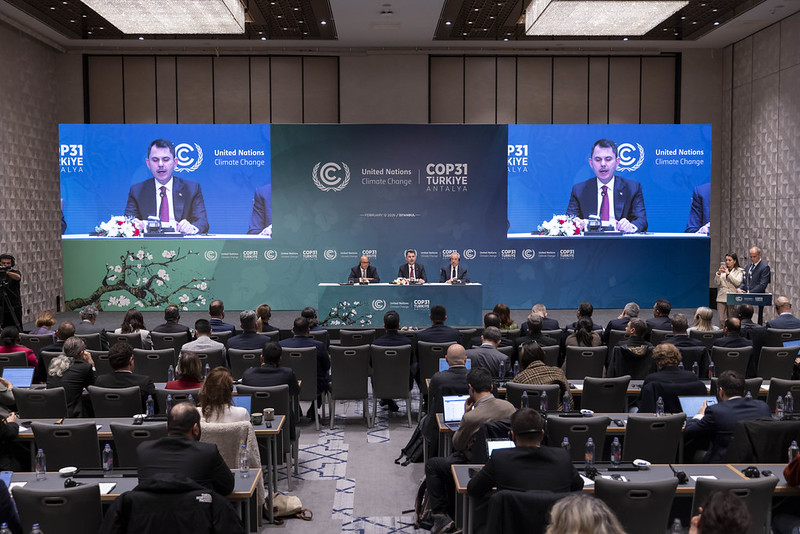
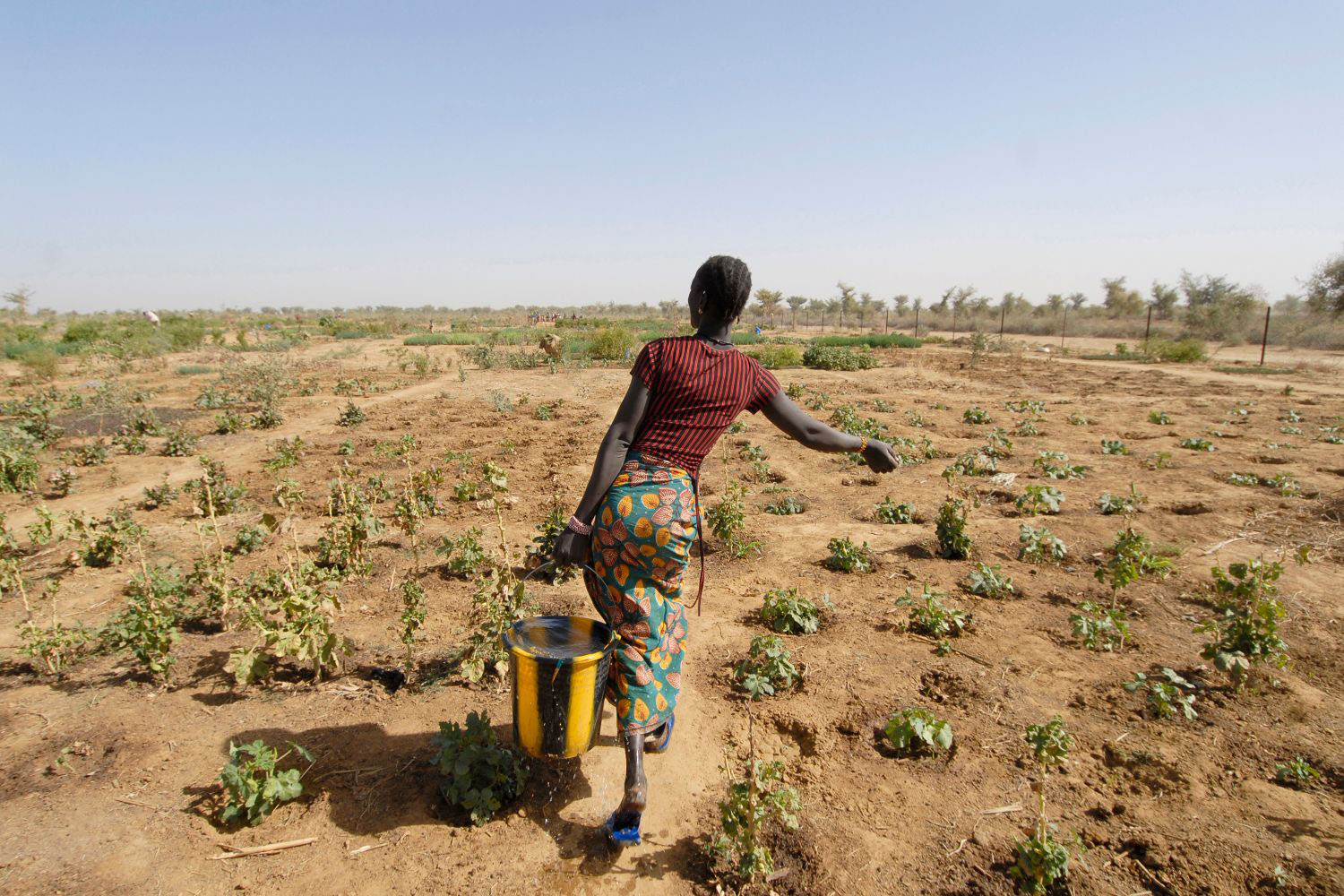
The international climate community is gathering for COP31 in Antalya, Türkiye (with Australia holding the pen on negotiations). The summit comes after a year of record-breaking global temperatures, devastating flash floods in Nepal, and wildfires across large swathes of developed and developing countries alike—and during an exceptionally strong El Niño that is still intensifying and will persist through February 2027.
This COP is being heralded as one of “implementation and acceleration,” with a focus on how to achieve existing commitments rather than brokering any new major agreements. With this in mind, CGD experts will be watching for progress in a number of key technical and political areas.
Climate finance impact
Under the UN climate system, countries have agreed a number of ambitious climate finance goals: in 2024 at COP29, countries set a target of $300 billion in public and mobilised climate finance to developing countries by 2035, within a broader envelope of $1.3 trillion in overall flows. At COP30 in Brazil, countries built on this by setting a target to triple adaptation finance to $120 billion.
It is more important than ever to ensure these commitments are implemented, but conditions for success are challenging: climate needs in low- and middle-income countries are rising and unmet, international public budgets are under pressure, geopolitical upheaval is complicating cooperation, and the World Bank has dropped its climate target. In a new blog, Rob Moore and Ian Mitchell argue that the UN’s best bet for this COP is to provide greater clarity on collective goals and strengthening accountability, so we’ll be keeping a close eye on whether they do this at COP31.
In this context, it is also vital that the effectiveness of scarce finance is maximised. Beata Cichocka, Rob Moore, and Ian Mitchell have proposed a set of twelve principles to transform how the international climate finance system can achieve this across three areas:
- The first of these examines how the allocation of public resources—particularly grant-based and concessional finance—can be targeted where needs and additionality are greatest: there is limited evidence that this is currently the case. It also considers how the full range of financial and non-financial levers should be used in a coherent approach, grounded in evidence of what works.
- The second group of principles focuses on system optimisation: how providers and delivery partners can coordinate better to reduce fragmentation, align with country platforms and national plans, and ensure finance is accessible—a key priority of the COP31 Australia-Pacific Partnership.
- Finally, they look at how finance can be oriented towards impact through ambitious results-based targets and rigorous monitoring and evaluation to facilitate mutual learning and the sharing of best practice: the 7th Biennial Assessment encourages the continued improvement of the “consistency, transparency and comparability of outcome measurement”, and we will be watching to see how these principles are advanced through COP31, especially through technical work on the 59 Belém Adaptation Indicators under the Global Goal on Adaptation.
Carbon markets
Although carbon markets are not due to be a main agenda item at COP31, Türkiye’s COP President Murat Kurum notes that elevating their use will be one of the objectives of the meetings. As Philip Mann and Jonathan Beynon set out, carbon markets can materially contribute to sustainable development: though the full potential of carbon credits is far from being realised, from the mid-2030s they could begin to deliver tens of billions a year. Financing on this scale has the potential to cover the costs of achieving universal access to clean, modern cooking (which requires around $8 billion per year), or universal access to electricity in Africa, which will require around $15 billion per year by 2035.
Article 6—the part of the Paris Agreement that covers carbon credits—also makes provision for a share of those proceeds to fund adaptation in developing countries, the vehicle for that being the Adaptation Fund. However, to receive funding the Adaptation Fund will need to transition to exclusively serve the Paris Agreement—a transition that has been stymied by disputes over who is considered a “developed” country within the UN climate regime.
Greenhouse gas emissions
Recent work from Jonathan Beynon, Ed Wickstead, and Tom Veale, and further work from Euan Ritchie, explored whether the “Annex” lists—the lists of “developed” and “developing” countries on which climate finance obligations and the Adaptation Fund dispute referenced above are based—which were drawn up in 1992 are an appropriate way to divide the world. They find this rigid binary distinction has not kept pace with the changing patterns of economic growth and emissions over the past 35 years—just nine large middle-income countries are now responsible for over 30 percent of emissions since 1850. Ian Mitchell spoke with Jonathan Beynon and Melanie Robinson of WRI in the CGD podcast to discuss the implications and tell us their wish lists for policy change for COP31 and beyond.
Some large middle-income countries are already stepping up their contributions on a voluntary basis, including China: Beata Cichocka and Ian Mitchell take stock of its growing role in the multilateral system over the past decade, providing updated figures on its provision of climate finance.
Methane
There has been a widely held view—boosted by the Global Methane Pledge launched at COP26 in 2021—that sharply curtailing methane emissions from human activity by 2030 is an urgent priority given its disproportionately large impact on global warming and adverse health outcomes. We shall be watching whether Türkiye’s leadership role in this year’s COP, and notably its Action Agenda priority to reduce methane emissions from waste, will also bring renewed focus on other ways to reduce methane emissions from human activity.
Ongoing CGD work focuses on the curtailment of emissions from flaring and venting in the oil and gas sector, which promises to be the quickest avenue to emissions abatement as that sector alone is responsible for around 25 percent of human-generated methane emissions, and has relatively few individual sources compared to waste and food production. CGD experts argue that this is not an intractable technical problem, but a policy failure: well-designed fiscal measures can simultaneously generate government revenue, improve public health, and advance climate commitments.
Climate vulnerability and planned relocation
In its 2026 review of adaptation finance, UNEP finds that climate impacts are intensifying while adaptation funding is far from meeting needs. Recent work from Jonathan Beynon examines the extent to which this finance has so far been allocated according to fragility and vulnerability to climate change, and recommends ways Australia can champion the needs of Pacific SIDS, noting for example that the impacts of slow-onset disasters are not well reflected in vulnerability assessments.
We know that adaptation has limits: “hard” limits, in which adaptation is impossible, and “soft’” in which technological or socioeconomic constraints restrict action. With limited funding, maintaining habitability in some locations (especially coastal) will be unsustainable. For many countries, this will mean preparing for planned relocations to less hazard-exposed areas—a process that needs careful policy, consultative processes, and funding. Planned relocation is already present in UNFCCC workstreams, but is often underdeveloped in national policy. CGD experts have proposed ways for multilateral development banks to play a role in this space, brought together global experts and practitioners to explore challenges, good practice, and the role of development finance. Funding from multilateral development banks, for example, is only starting to be sought, and we will be watching to see what attention this agenda receives in Antalya.
Concrete steps
COP31 offers an opportunity to make progress on some of the practical challenges that have held back climate action. We will be watching particularly closely for concrete steps to improve the effectiveness of climate finance, accelerate emissions reductions, and support countries facing the most severe climate impact.