



UPCOMING
Support More Work Like This.
Your contribution makes it possible for the Center’s researchers to devise practical, evidence-based solutions for today’s most pressing development challenges.


Since its inception, CGD’s innovative solutions and rigorous research have helped change global development policies and practices, making a real difference in the lives of people in low- and middle-income countries. Our work addresses a wide range of development challenges, all connected by a commitment to evidence-based policymaking that benefits the poorest.
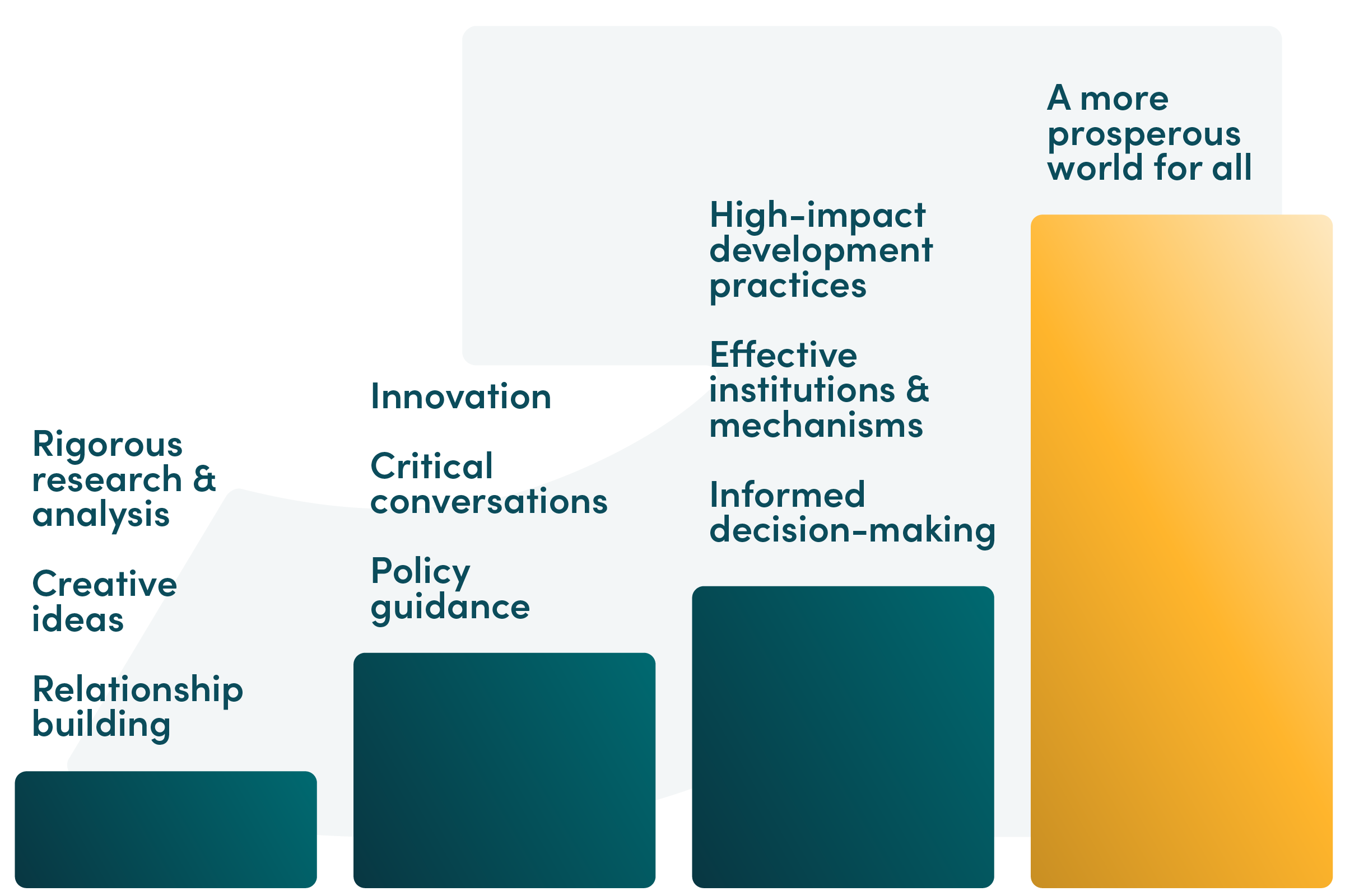
CGD’s mission is to reduce global poverty and improve lives through innovative economic research that drives better policy and practice by the world's top decision makers. To achieve this, we focus on shaping better development policies, driving the discourse, and creating new institutions and mechanisms; examples of this are detailed below.


Your contribution makes it possible for the Center’s researchers to devise practical, evidence-based solutions for today’s most pressing development challenges.
Ideas to action: independent research for global prosperity
© 2026 Center for Global Development|Privacy Notice and Cookie Policy
The Iran War
From energy price spikes to shipping restrictions and supply chain disruptions, the onset of war in the Middle East has resulted in almost-immediate rippling effects around the world. Low- and middle-income countries, already exposed to shocks, face energy emergencies, food insecurity, fertilizer shortages, health risks, declining remittances, and more.
Blog Post
CGD Podcast: The Lasting Impact of the Middle East War for Low- and Middle-Income Countries
Blog Post
Doing the Right Thing at a Cost
Blog Post
CGD Podcast: What Does the Iran War Mean for Low- and Middle-Income Countries?
Blog Post
Between Iran and a Hard Place
Blog Post
Stress-Tested by War: Modernizing IMF Support in a Volatile World
Blog Post
The Iran War Oil Shock Will Hit the Hungry Hardest
Blog Post
Beyond Oil: The Budgetary Costs of Conflict in the Middle East
Blog Post
Will the Iran War Be the Breaking Point for Vulnerable Countries?
Blog Post
Oil at $100 a Barrel: Fiscal Strain and Risks of Social Unrest